Stucco Contractor in Dammeron Valley, UT: Repair, Recoating & Installation | St. George Elite Stucco
St. George Elite Stucco has worked as a stucco contractor for 15 years, handling exterior stucco on houses and outbuildings across Dammeron Valley, Utah. If your stucco has cracked, come loose, or let water behind it, we can repair the damaged area, replace a failed wall from the sheathing outward, or find and remediate the moisture problem. Sheathing is the solid panel beneath the stucco system. If the wall remains sound but looks worn, we can recoat or resurface it to renew the color and texture. We also add raised bands and surrounds to break up long, plain walls.
For new construction, we install stucco from the lath out, beginning with the mesh base that supports each coat. We also stucco block walls and set stone veneer, a thin stone facing. Almost all our work is residential stucco, but Dammeron Valley jobs often cover several structures. Your large-lot property may include a house, detached shop or garage, and connecting wall, and you want every finish to belong together. A house may also have one long exterior wall without windows. We quote the property rather than only the wall you called about. We handle commercial buildings. We do interior plaster as well.
Dammeron Valley is an unincorporated valley along State Route 18, within the Washington County area we serve from our St. George shop. It has no city government, and Washington County is the building authority. Tell us the address and what buildings and walls are on your property, and we will visit and provide a free written estimate. Call (435) 236-2699 or use our quote form.
Why Choose St. George Elite Stucco in Dammeron Valley
The valley went in as a set of separately recorded plats, filed by phase, on one-acre and five-acre lots. This is not a production tract where every house follows the same plan, so we measure your actual walls instead of pulling dimensions from a drawing. Those measurements support the price on your estimate. Our stucco company is a licensed stucco contractor, and we put the scope of work in writing before we book a crew.
We measure every wall you want included when we first visit your property.
Your written estimate identifies the wall system, plaster thickness, and finish material we will use.
Before we work on your wall, you can verify our license and insurance coverage. We carry general liability and workers' compensation. Certificates are available before work starts, and our license number goes on every written estimate.
One person manages your job from the first walk-through to the final visit.
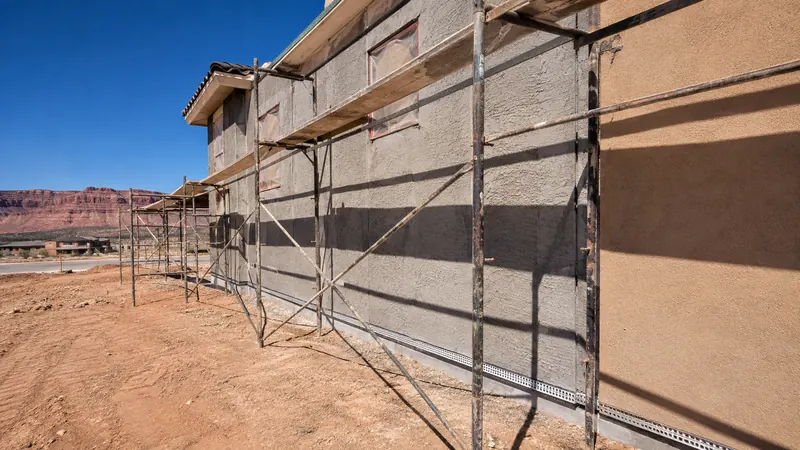
Before we set staging, the temporary platforms and access equipment, we locate gravel drives, well heads, and septic lids so loaded scaffolding never sits over them.
Code requires the weep screed, which drains the wall base, and the drainage plane, which sheds hidden water; both are working parts of the wall rather than trim added for looks.
A one-coat system, a full three-coat build, and EIFS with drainage (an exterior insulation and finish system, in the drained version rather than the older face-sealed one) are three different wall systems, and each is priced and built against its own set of requirements.
Licensed & Insured | 15 Years of Experience | Free Written Estimates | Residential & Commercial
Call (435) 236-2699 or use our quote form to schedule a free on-site estimate. You can also call us when you need a stucco contractor in Veyo, the next community north along the highway, where we send the same crews.
Stucco Contractor Services for Dammeron Valley, Utah
Two conditions shape almost every stucco job we quote in this valley: exterior walls often run a long distance without windows or doors, and one property may have several buildings. We account for both when we measure your walls and prepare the scope.
Stucco Repair
On a wall with few openings, the crack that matters may run straight along the broad surface instead of diagonally from a window or door corner. When a long wall has no planned place to absorb movement, the stress can create its own path. You may see a field crack, a straight break across the middle of an otherwise plain elevation, with no nearby opening to explain why it started there.
Before we recommend a repair, we determine what made the crack open. Sealing the visible line keeps water out of that break, but it does not correct continuing wall movement. If the cause remains, the crack can return through or beside the repaired area, so we separate the surface repair from any work needed to address the underlying problem.
Stucco Painting & Coatings
Many houses here have been recoated several times since the 1970s, but the records rarely tell you which product was applied last. Because a new coating must work with the material already on the wall, we first check whether the existing layer is firmly attached and how its surface responds during testing.
Those results tell us whether your wall can accept a mineral coating, which allows moisture vapor to pass through, or an elastomeric coating, which forms a flexible film over the surface. Choosing between those coating families without checking the wall can lead to poor adhesion or trapped moisture. Settling that question first lets us specify a compatible product before coating the house.
Stucco for Block Walls
The ground beneath property and corral walls on an acre lot rarely stays level. As the land falls, the block wall steps down with it. We carry the same texture and finish across each step so the entire run looks continuous when you see it from the drive.
We also keep the stucco above the soil at every step, not just at the wall’s lowest end, so dirt and ground moisture do not remain against the finish. If the block is sound and has a suitable surface, we can apply stucco directly to the masonry. Smooth, painted, or sealed block needs a bonding coat first, which gives the new stucco a surface it can grip.
Commercial Stucco
The valley has one commercially zoned parcel along the highway. A commercial stucco job here is therefore more likely to involve one building than a shopping center with several tenants. We quote it much as we would your house. We measure the building, define the work for each elevation, meaning each exterior side, and schedule the crew around the activity continuing inside.
Stucco Replacement & Removal
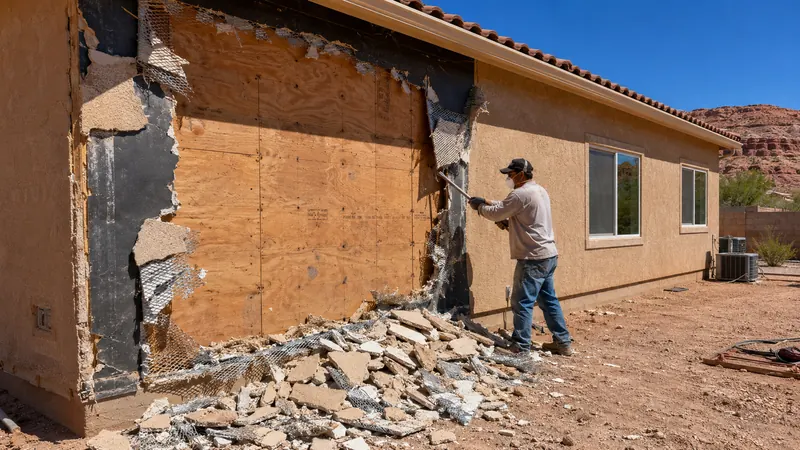
The valley’s subdivisions all date from after the early 1970s, so very few walls here predate 1978, the year used for federal lead-paint rules. That is unusual in Washington County and means most local tear-offs, where we remove the existing stucco to expose the wall beneath it, involve newer materials.
We still establish the build date before we scope a tear-off. If your house was built before 1978, we do not presume lead is present; the older coatings go to a laboratory for lead testing before anything comes off the wall.
Stucco Remediation
On a large lot, water reaching your wall usually comes from the roof rather than the landscaping. A roof plane can discharge a large amount of water in one spot. Repeated splashing and runoff that collects beside the house can then soak the base of the wall and damage the stucco from the bottom upward.
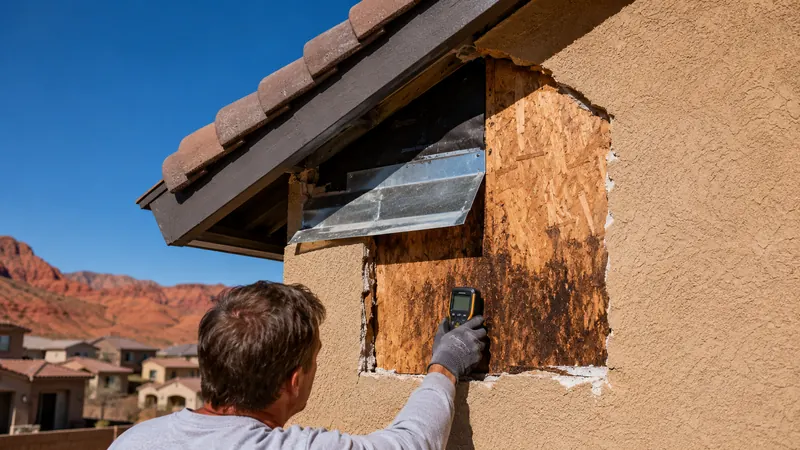
Before deciding how much stucco to remove, we trace the moisture to learn how far the wet area extends behind the finish. The stain or discoloration you see on the surface is generally smaller than the damp or damaged area concealed inside the wall.
Plastering Services
We also plaster interior walls, using materials that differ from cement plaster, which is what stucco on the outside of the house actually is. Because buildings in this valley are too recent for traditional lime plaster, we focus interior work on smoothing modern wall assemblies and restoring damaged areas rather than matching historic material.
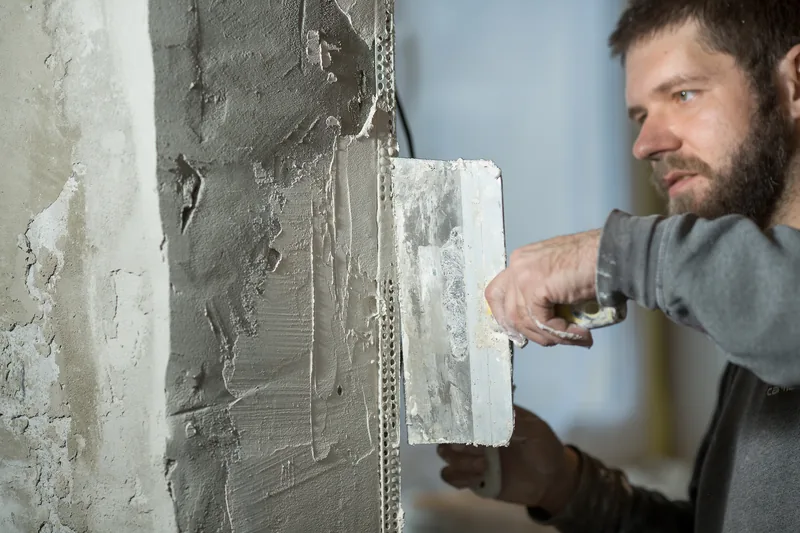
Instead, we apply thin-coat veneer plaster over blueboard, a drywall panel made to hold that plaster finish. ASTM C843 sets the requirements for installing this interior system. We also patch the plaster where plumbing, electrical, or other work has required someone to open your wall.
Stucco Installation
Many shops and detached garages here were left unfinished or covered with cladding that has since deteriorated. Installing the first stucco system on one of these buildings begins behind the visible plaster. The way your building was framed determines which supporting materials we need before mixing and applying the stucco.
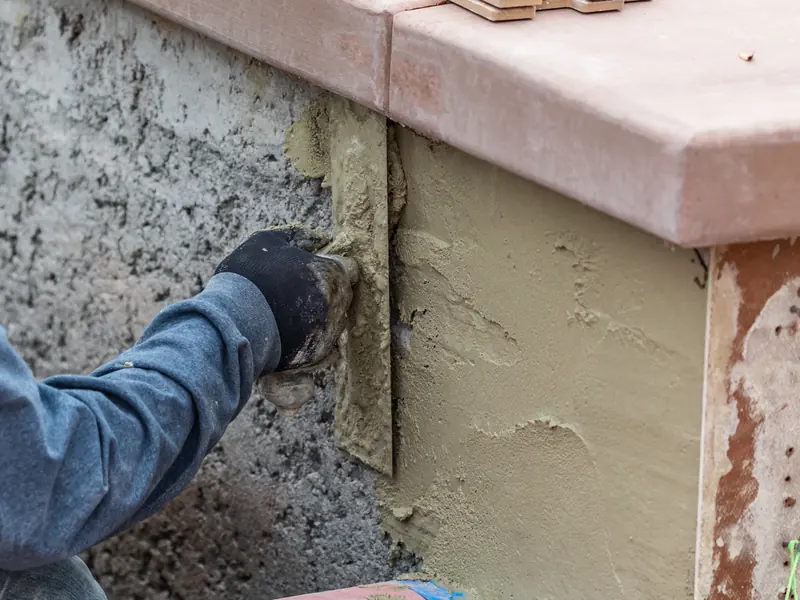
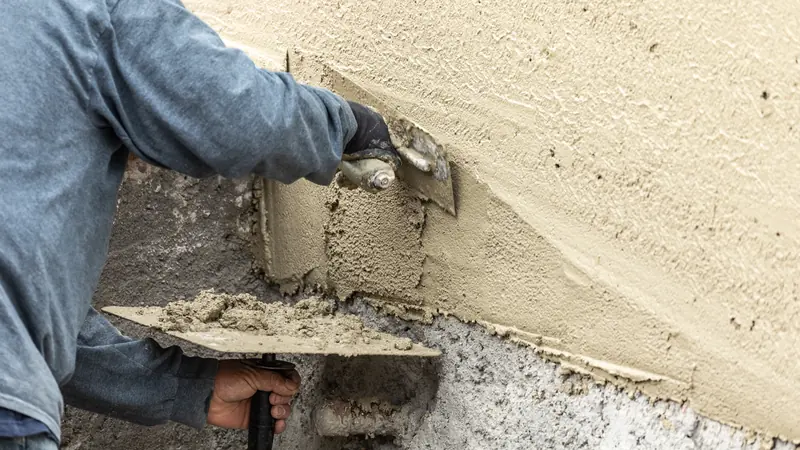
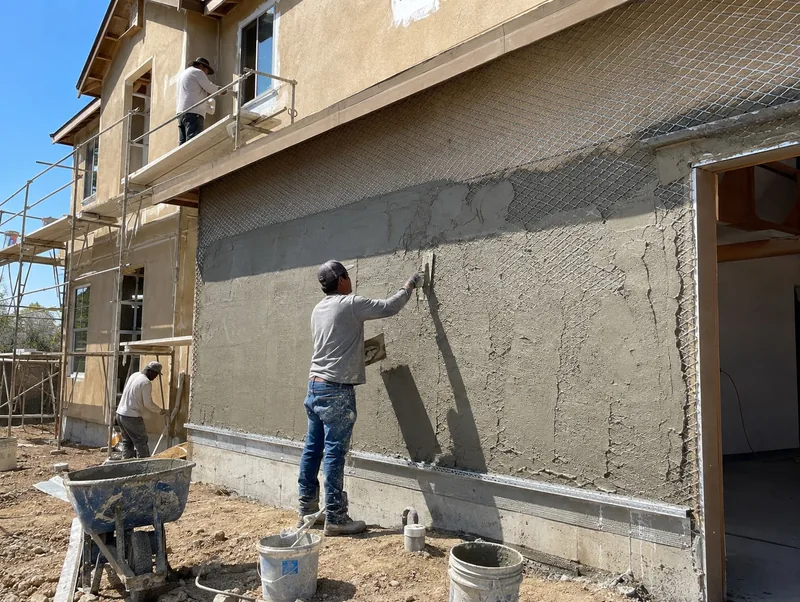
We first install two layers of water-resistive barrier, which help keep water from reaching the framing. Next come the metal lath that holds the plaster, the casing bead that finishes exposed edges, corner reinforcement, and the joints required for that elevation.
Stucco Resurfacing & Recoating
A long wall rarely weathers evenly from end to end, and those differences determine how we renew it. A fog coat, a thin cement-based coating that restores color, works only when the existing texture remains consistent. If one end of your wall is more worn or uneven, that difference will still show through the coating.
When the surface has become inconsistent, we apply a new finish coat to restore its texture. If the deterioration goes deeper, we re-skin the wall by building a new stucco surface over the existing one. With a fog coat, finish coat, or re-skin, we can use integral color, meaning the pigment is mixed into the material instead of painted onto it afterward.
New Construction Stucco
Vacant lots are scattered among the valley’s recorded plats, so houses here usually go up one at a time rather than as part of a thirty-home building phase. We schedule the stucco around your individual construction project instead of tying the work to a production builder’s larger timetable.
Before we plaster the exterior, the framing, roofing, windows, and flashing must be ready. Flashing is the metal or waterproof material that directs water away from openings and roof connections. Your plans determine whether we install an engineered one-coat system or a full three-coat build, which uses separate base layers before the finish. We follow that specification rather than choosing the system ourselves.
Decorative Stucco & Architectural Details
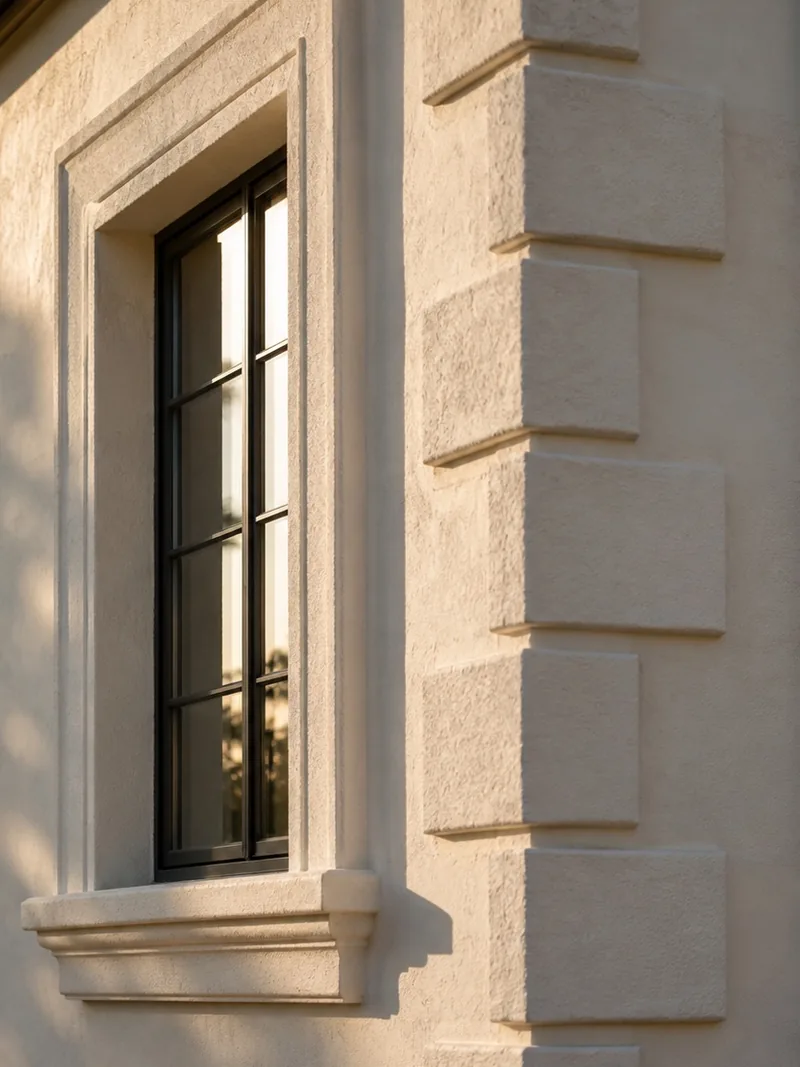
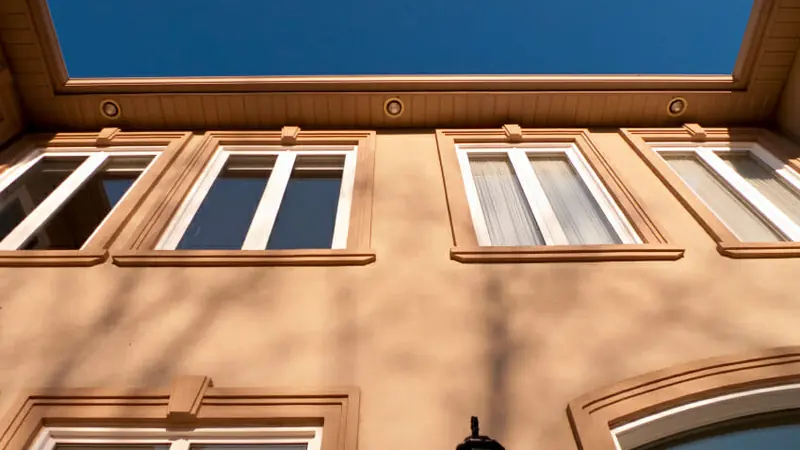
Architectural details can break up a plain wall. A horizontal band, window surround, or similar profile adds depth and creates a clear focal point. Its location must also avoid the joints where the wall is expected to move, so we consider the joint layout along with the appearance.
We cut and shape each profile from lightweight foam, then cover it with a base coat and reinforcing mesh that strengthens the surface. The final texture and color can match the stucco behind it for a unified appearance or contrast with the wall so the detail stands out.
Stone Veneer
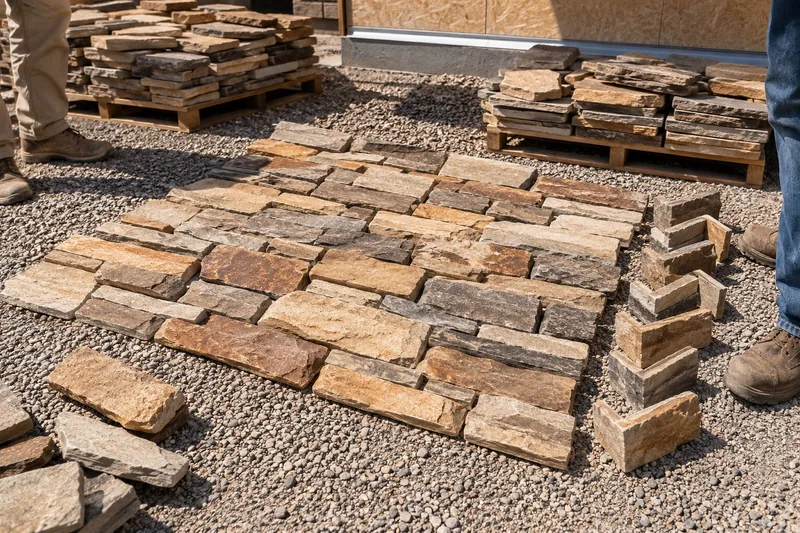
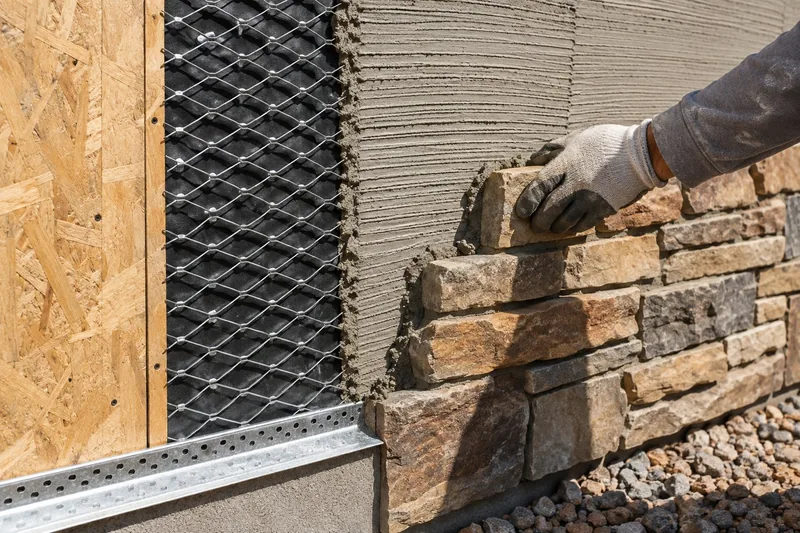
We usually put stone veneer on the face you see when arriving at the property rather than carrying it around the entire building. Because that front wall has both stone and stucco, we lay out the two finishes together. This lets us bring their exposed faces level instead of leaving the stone or plaster projecting beyond the other.
We install both finishes over the same drainage plane, the concealed layer that channels water down and out of your wall. Adhered masonry veneer, which is stone bonded to the wall rather than stacked as structural masonry, follows the same water-resistive barrier requirement as cement plaster.
What a Stucco Contractor Does on Dammeron Valley's Long Elevations
A long, unbroken elevation creates two planning problems for an exterior stucco contractor: the wall needs places to move, and the finish color must stay consistent from end to end. We settle both before we unload a mixer at your property.
Deciding Where the Wall Is Allowed to Move
Every plaster wall moves slightly, whether anyone planned for that movement or not. On a short elevation, windows, doors, and returns, the short wall sections that turn a corner, divide the surface into smaller panels. The gaps between those sections help absorb movement. A long blank wall run has no natural breaks, so stress can build across the wall instead.
Before the metal lath goes up, we lay out control joints, narrow planned breaks that let separate wall sections move without forcing the plaster to crack. Their spacing and location depend on the shape of your wall, including its openings and corners. We decide where those joints belong before plastering rather than waiting for the first crack to show us where the wall wanted to move.
That order matters. If someone cuts a joint into a finished wall, they are repairing a crack rather than creating a properly planned joint, and the result will not look the same.
Carrying One Color From One End of a Wall to the Other
A long face also reveals every place where a crew stopped and later started again. On an ordinary elevation, a corner or return can hide that transition. Your long wall offers nowhere to conceal it, so we choose the stopping points as part of the application plan.
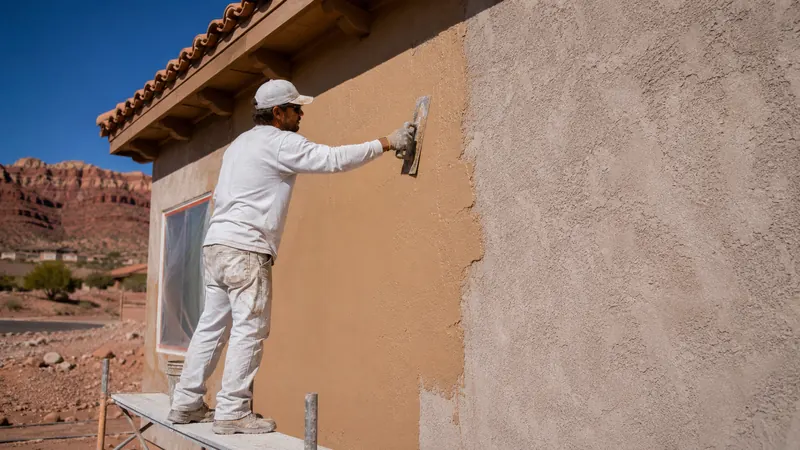
Sun and wind pull water from fresh finish while the crew is still applying it. If one section dries before the next section meets it, you may see a change in color or texture at that line. We keep a wet edge, the still-workable border of freshly applied material, moving along the wall. Where the layout allows, we finish the whole face in one pass instead of dividing it into two.
Choosing the starting face is part of that plan. We do not begin with the exterior elevation sitting in full sun, where the finish would dry fastest before the crew could carry that wet edge across the wall.
About Dammeron Valley, Utah
In central Washington County, Dammeron Valley is an unincorporated community. It spreads across both sides of State Route 18 north of St. George, with Veyo farther up the highway and Diamond Valley to the south. The valley floor sits 4,626 feet above sea level. At the 2020 census, 871 people lived here, mostly on one-acre and five-acre platted lots. The one-acre parcels give a house more space from its neighbors, while larger properties can include a home, detached garage, shop, and boundary walls. Your ZIP code is 84783, but Dammeron Valley has no town government of its own.
Developers began platting the valley, legally mapping it into lots, in the mid-1970s. Dammeron Valley Ranches came first, followed later by Pinion Hills. The Dammeron Valley Landowners Association is the body owners here deal with about changes to the outside of a building.
Where We Work Around Dammeron Valley
Dammeron Valley consists of several recorded plats, legally filed maps that divide the land into lots, rather than a single subdivision. Your plat gives us a general idea of when your house was built and who you may need to contact about an exterior change. It cannot tell us which materials or previous repairs are on your walls, so we still inspect them in person.
Dammeron Valley Ranches: Repairs Where the Valley Was Platted First
Dammeron Valley Ranches was the valley's first recorded plat, filed in May 1976. It is one of the valley's two five-acre-lot areas. After fifty years of southern Utah sun, we look beyond the most obvious crack or chip. We determine which portions of an elevation remain sound, then scope stucco repair around the sections that have reached the end of their useful life.
Dammeron Valley Meadows: Recoating and Resurfacing Large-Lot Homes
Dammeron Valley Meadows is the other area with five-acre lots, laid out alongside the Ranches with houses of a similar age and a similar amount of exterior wall. When every side has weathered at roughly the same rate, we resurface and recoat the whole house instead of treating one face at a time. We identify localized preparation in the written estimate before coating begins.
Dammeron Valley Homesteads: Replacement and Removal on a Built-Out Plat
Dammeron Valley Homesteads is reported fully built out, with no vacant lots remaining, so every project here involves a structure that is already standing. On a plat of this age, the layers behind the finish are less predictable than they are on a wall completed last year. We therefore scope replacement and removal with room for concealed conditions that become visible only as the existing material comes off.
Pinion Hills: Plastering Homes Still Under Construction
Pinion Hills came later and was first recorded in January 1990. It climbs the hillside along the valley's south side, where new construction often includes detached shops as well as houses. The roads here are paved, unlike the gravel roads across the valley floor, and most of Dammeron Valley's unbuilt lots are in this plat. On new construction, we begin at bare sheathing and schedule plastering after the trades ahead of us have finished.
Dammeron Valley Farms: Finishing Block Walls and Outbuildings
Dammeron Valley Farms is another recorded plat filed in numbered phases, including 2A. Homeowners here usually call us to finish block walls or the exterior walls of a shop. We also stucco courtyard and property walls, checking the existing masonry, openings, and material transitions before we finish surfaces that were left bare when the structures were originally built on the property.
Finishing a Whole Dammeron Valley Property to Match
Buildings on the same Dammeron Valley lot often went up years apart, and property owners rarely want us to consider only the structure that prompted the call. As a residential stucco contractor, we therefore treat the property, rather than one building, as the unit of work. That approach changes how we prepare your estimate and how we coordinate the color and texture across the house, shop, outbuildings, and walls.
Why an Estimate Here Covers More Than the House
We can include every building on one estimate while listing the work and cost for each structure separately.
That breakdown lets you choose how to schedule the project. You might finish the house now and the shop next year, or complete both while the staging is already in place. We still measure walls you are not ready to finish, so you can see the cost before deciding what to include. The estimate gives you options without choosing the order for you.
It is also worth asking us to measure a perimeter wall while we are on your property. Unlike a building wall with one exposed face, a freestanding wall has two faces and a top that need finishing. Its total length usually affects the cost more than its height.
Bringing a New Shop Up to the House Beside It
Your house has weathered, but a new shop has not, so we match the shop to the color your house has today rather than the finish formula used when it was built. Following the original specification can leave the new building looking out of place beside the house.
We apply a trial area to the building itself, then compare it with the nearby house wall at the same time of day. The changing light in Dammeron Valley can make the same color appear noticeably different. We complete the texture match by hand before settling on the color. If you finish both buildings in one season, their surfaces begin aging under similar conditions and remain closer in appearance for longer.
The Landowners Association and the County: Two Different Approvals
Association approval depends on where your property is located.
The County Permits the Work, and Nobody Else Does
Because Dammeron Valley is unincorporated, the Washington County building department handles each building permit for new construction here. The applicable building and zoning requirements therefore come from the county. Contractor licensing is handled statewide by Utah's Division of Professional Licensing, not by a city.
You therefore work with one local office rather than separate county and city departments. Check the requirements directly with Washington County at washco.utah.gov. For your project, that means confirming the current requirements with the department rather than relying on information published on a contractor's website. Its building department also handles zoning, so the county determines both what you may build on your property and how you must build it.
Your Plat Determines Whether the Association Reviews the Work
The Dammeron Valley Landowners Association is the body many owners here deal with about anything that changes the outside of a building. It has never covered every plat in the valley, though. The Meadows and the Ranches withdrew in 2016, and in May 2017 three more of the ten subdivisions that voted left as well. You first need to confirm your plat and whether it still belongs to the association.
Your recorded plat documents and the association are the sources for that answer. It is not something we can tell you and it is not something the county tracks. If your plat withdrew, no other association took its place. The covenants recorded against your lot, meaning its legally filed property rules, may still control a color or finish change.
Where an architectural review asks for a submittal, we supply what it asks for, and we do not book a crew until an approval comes back in writing.
Stucco Questions From Dammeron Valley Homeowners
Who signs off on the work when the valley has no town government?
Washington County. The same county office that issues your permit also sends the inspector, giving you one place to deal with. Whether a given job needs a permit at all is the department's call, not ours.
My back wall runs the whole length of the house with no windows in it. Does that change the job?
Yes, mainly in what we set out before we mix. We write the joint layout for that wall into your estimate, so you can see where the breaks will fall before the work starts.
Can you stucco a detached shop or garage that has never had it?
Yes, we often stucco detached shops and garages here. If the building was framed without plaster in mind, we may first need to add trim and flashing. We list those details on your estimate rather than surprising you with extra preparation when the crew arrives.
How far up State Route 18 do you go?
Dammeron Valley is inside our regular coverage area, not an out-of-area call. When you call about the work, tell us how many separate buildings are on the lot, including detached shops or garages.
Do I need the Landowners Association to approve a new stucco color?
Sometimes. Approval requirements vary across the valley because they depend on your plat, the legally recorded area that contains your property. If you are unsure which plat you live in, check your deed or title paperwork. Ask for the association’s answer in writing and keep it with your project records. The county and the association maintain separate files, and neither keeps the other’s decisions.
Will a new shop wall match a house that has been standing twenty years?
Closely. We match the house as it looks now rather than the color originally mixed. If the two end up more than a shade apart, recoating the house is usually cheaper than chasing an aged color onto a new building.
Get a Free Stucco Estimate in Dammeron Valley
Tell St. George Elite Stucco the property address and what stands on the lot, including the house, garage, shop, other buildings, and walls between them. One of our stucco contractors will visit once and measure everything you want included. We price each building and connecting wall separately, so you can see what each part costs instead of trying to make sense of one combined figure.
You receive the estimate in writing, and the visit is free. Call (435) 236-2699 or request a free estimate through our quote form.