Stucco Contractor in Pine Valley, UT: Repair, Recoating & Cabin Exteriors | St. George Elite Stucco
St. George Elite Stucco has worked in this county as a stucco contractor for 15 years, and Pine Valley, Utah is the highest ground we serve. Homeowners usually call when they can see damage on one elevation, meaning one outside face of the building. We repair isolated damage, remediate the wall when water gets behind the finish and keeps returning, or replace a broadly failed system. If the base plaster, the solid layers beneath the finish, remains sound but the surface looks worn, we resurface and recoat it. We also paint and coat stucco to give it fresh color and a new surface.
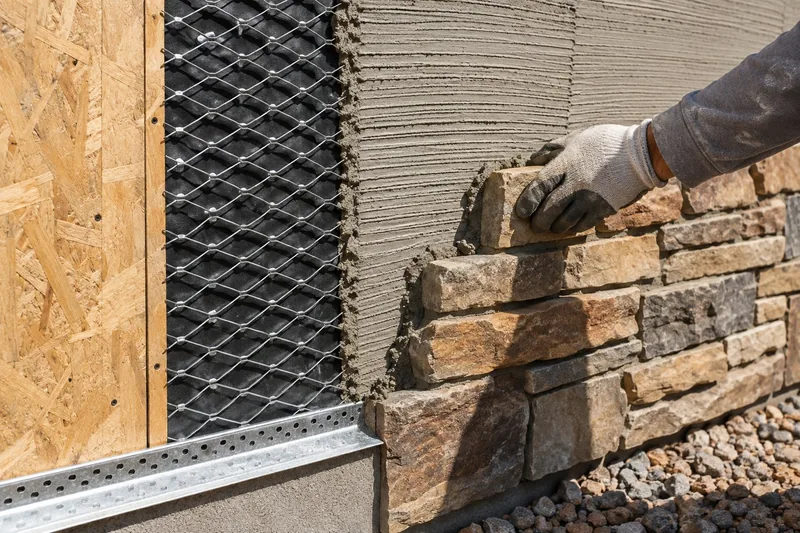
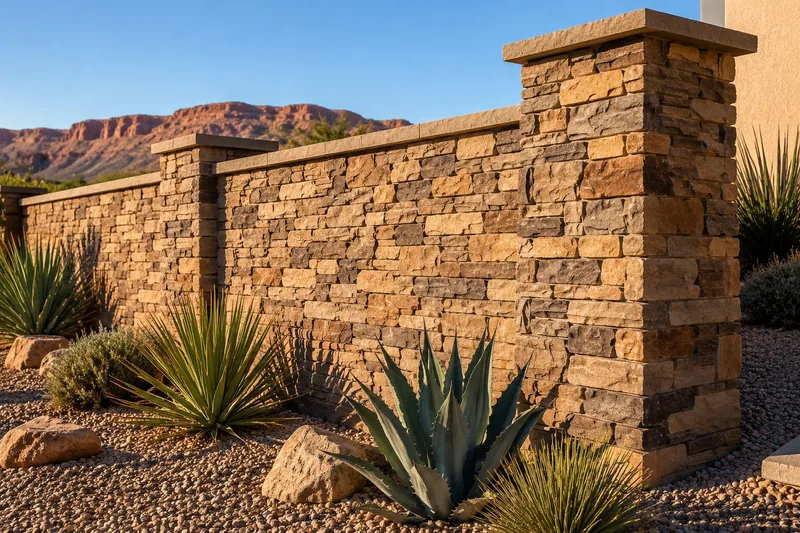
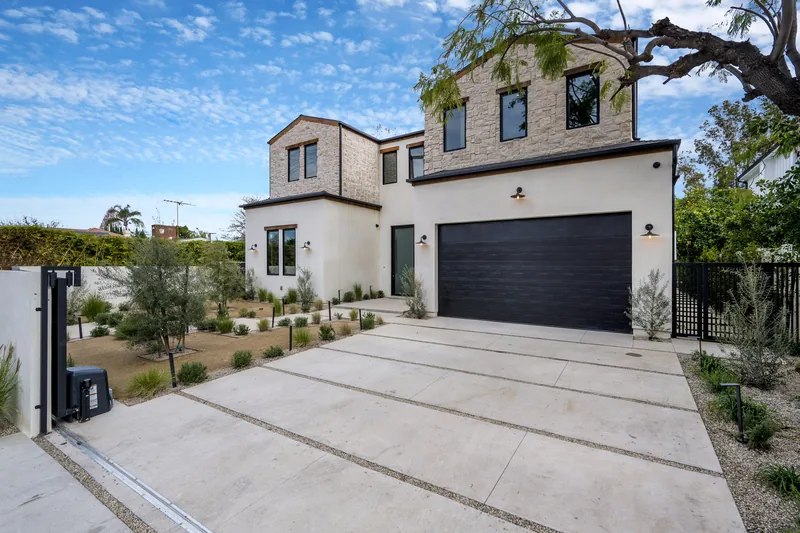
On new construction, we begin the stucco system at the supporting metal or fiberglass mesh rather than the finish. We also stucco block walls and set stone veneer, which gives a wall the appearance of natural stone. Most of our Pine Valley work is residential stucco, and our exterior stucco work includes cabin exteriors, but we also handle interior plaster, commercial buildings, and decorative details.
Snow sets Pine Valley, a mountain valley, apart from the rest of our service area because it can remain banked against your exterior walls for weeks. That prolonged contact makes the bottom of a stucco wall more than decorative trim, and it means the month we start matters as much as the mix we use.
Pine Valley is within the Washington County area we cover from our St. George shop, although it sits thousands of feet above us. The valley is unincorporated, so building work goes through Washington County. Many properties are second homes, and their owners spend much of the year elsewhere, so we plan access and scheduling around that absence. For a free written estimate on your Pine Valley property, call (435) 236-2699 or send the address through our quote form.
Why Pine Valley Owners Choose St. George Elite Stucco
Sometimes the most useful thing we can tell a Pine Valley owner is that the wall can wait. This valley has the shortest working season of any place we cover. As a stucco company, we would rather lose a job in the short term than book a coat that will not have the weather it needs to cure properly.
Your written estimate includes the written scope, price, and weather window in which we can do the work.
If your wall can wait, we say so in writing and name the year we should inspect it again.
Before work begins, your estimate gives you the information needed to check our license and insurance.
One person from our local stucco company follows your job from the first walk through the final visit.
You receive the same free estimate visit from a local stucco contractor whether the job turns out to be one patch or a whole elevation.
Before we work on your wall, you can verify our license and insurance coverage. We carry general liability and workers' compensation. Certificates are available before work starts, and our license number goes on every written estimate.
Licensed & Insured | 15 Years of Experience | Free Written Estimates | Residential & Commercial
Call (435) 236-2699 or use our quote form to schedule a free on-site estimate. The Santa Clara River begins in this valley and follows the canyon past Gunlock, and we serve properties along that whole route. You can also call us when you need a stucco contractor in Gunlock.
As your residential stucco contractor, we account for snow that remains against exterior walls.
Stucco Repair
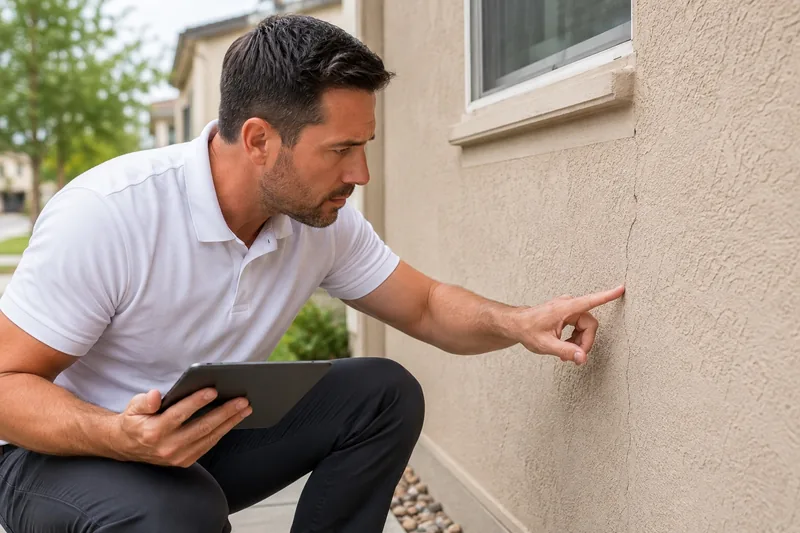
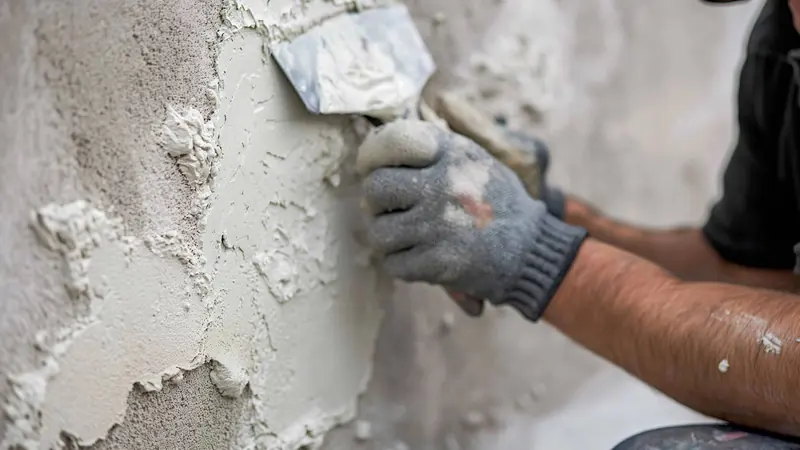
We often come up for a stucco repair in spring, after the owner has been away since October. For crack matching, our stucco experts compare the edges of each split because they help us tell recent damage from older movement. A clean, sharp split is usually recent, while dirt worked into the opening points to older movement.
We then match the patch to a weathered finish that may have changed unevenly across the wall. Before repairing the full area, we test the texture and color in a small spot so your patch blends with the surrounding stucco.
Stucco Painting & Coatings
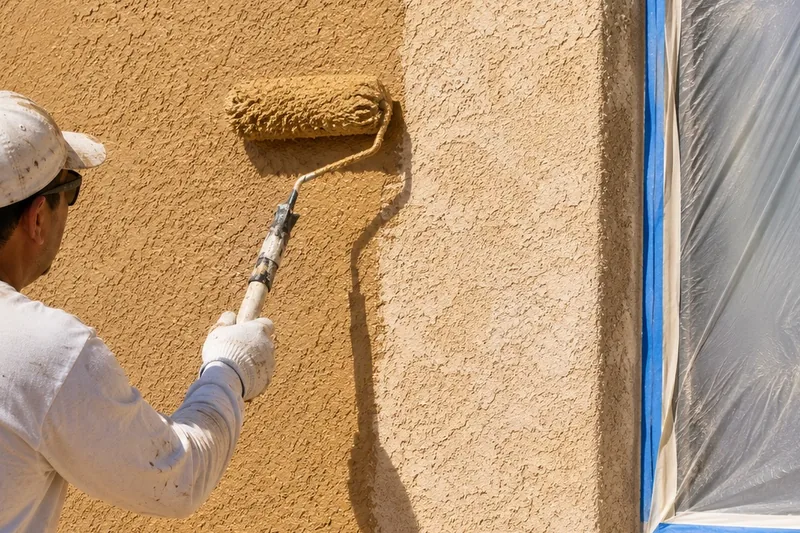
The weather leaves a narrow coating window for stucco in this valley, so we set your recoat schedule around suitable conditions rather than color preference alone. Once we choose the date, we wash the wall, remove loose material, and allow the stucco to dry completely. Paint or coating cannot bond properly to damp or dusty stucco. If nobody visits the building for months, a small adhesion failure can spread before anyone notices it.
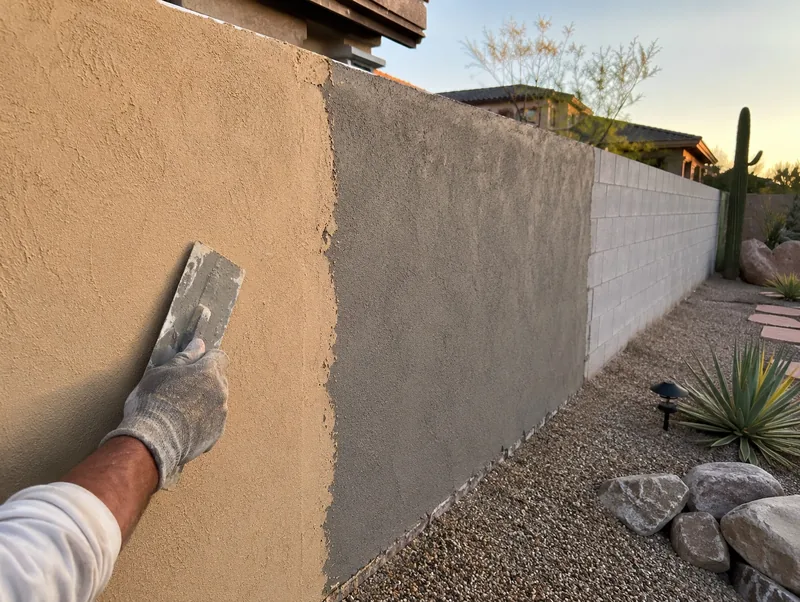
Stucco for Block Walls
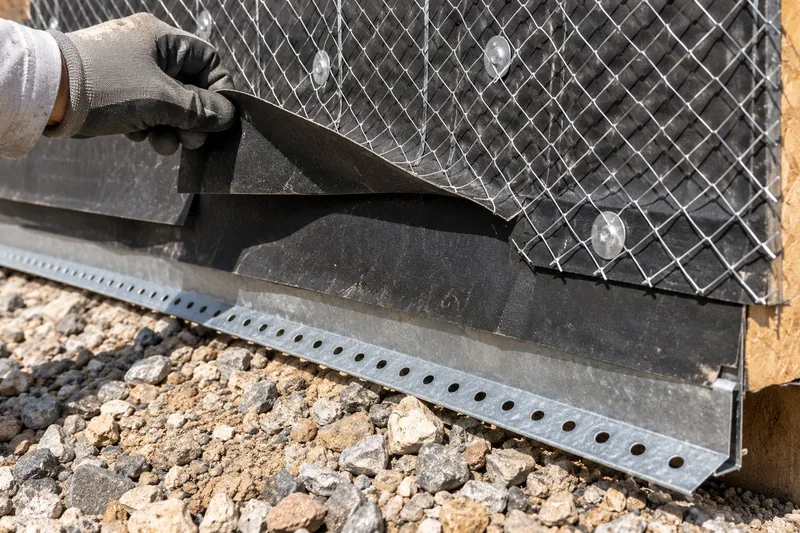
Snow often gets pushed against block walls here. Plowed and shoveled banks collect along property walls and the lower walls of shops, where moisture can remain at the weep screed, the perforated flashing that lets water drain out of the base of the wall. Before we stucco concrete masonry units, or concrete blocks, we check how the bank affects the lowest rows and whether the base can still drain.
When a block wall steps down a slope, we continue the same texture across each change in height.
Commercial Stucco
Washington County’s community plan describes a commercial center near the fire station, post office, restaurant, and motel facility. Here, a commercial stucco contractor usually works on one small commercial building rather than a row of tenant spaces.
As the stucco company on the job, we take one elevation at a time and keep the door customers use open while the work proceeds.
Stucco Replacement & Removal
Once we remove stucco from a wall, we need enough workable weather to rebuild it before conditions turn. We therefore schedule a tear-off according to how much of the working season remains.
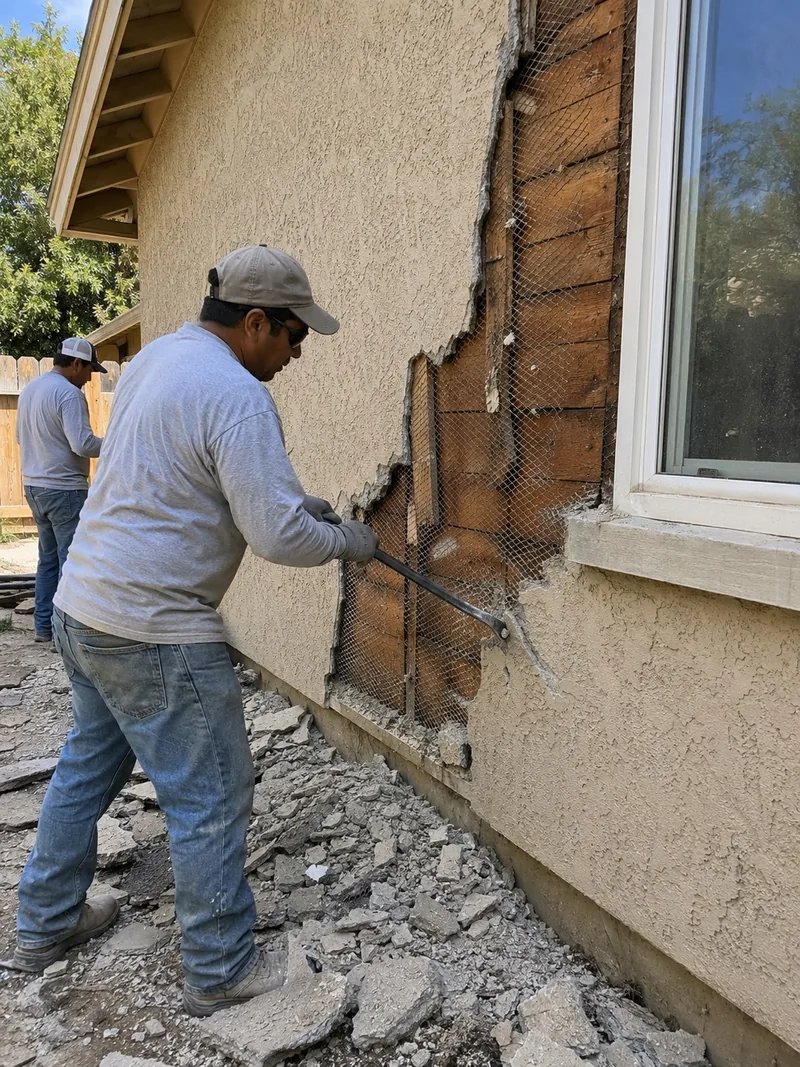
During removal, we take the finish down to the sheathing, the structural panels beneath the wall system, and expose two layers of water-resistive barrier that keep incidental water from reaching the wood framing. What we find behind your stucco determines the actual scope of replacement. Because the wall cannot remain open indefinitely, we avoid starting this work too late. If little of the season remains, we usually place the project near the front of the following year’s schedule.
Stucco Remediation
Frozen ground cannot absorb rain or melting snow as it normally would. Instead, meltwater travels over the surface toward your building and looks for a way behind the stucco. Much of our remediation work involves tracing the moisture path that water followed before we open the wall.
We first check for missing kick-out flashing, the small diverter where a roof edge meets the wall that directs runoff away from the stucco. Without it, water can run directly behind your finish. We then examine how the ground near the building directs water before opening the base course, the lowest section of the wall assembly. We remediate the route water followed, rather than covering the stain or damage it left behind.
Plastering Services
A house left unheated for months experiences larger temperature swings than one where somebody lives, and you often see that movement in the interior plaster. Cracks may return each spring along the same joints, through the same corners, or above the same door openings. When that pattern repeats, seasonal movement is usually responsible rather than a failed earlier repair. Our stucco applicators use a repair method that accounts for the movement instead of simply filling the same line again.
We also handle ordinary interior plaster work, including ceilings disturbed by leaks and full skim coats.
Stucco Installation
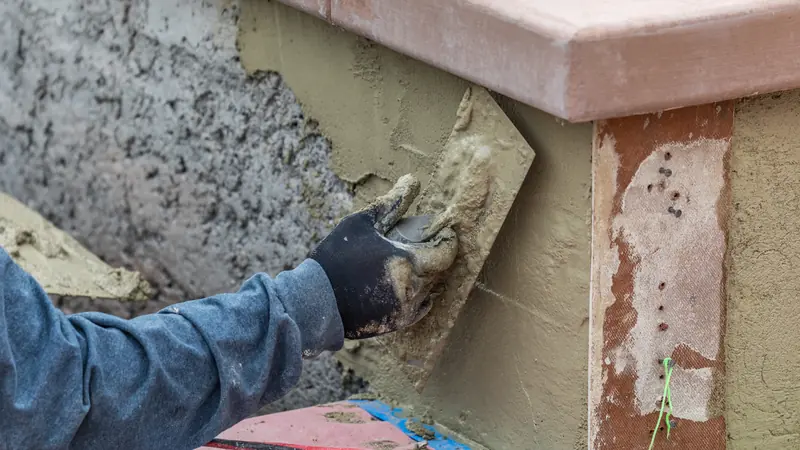
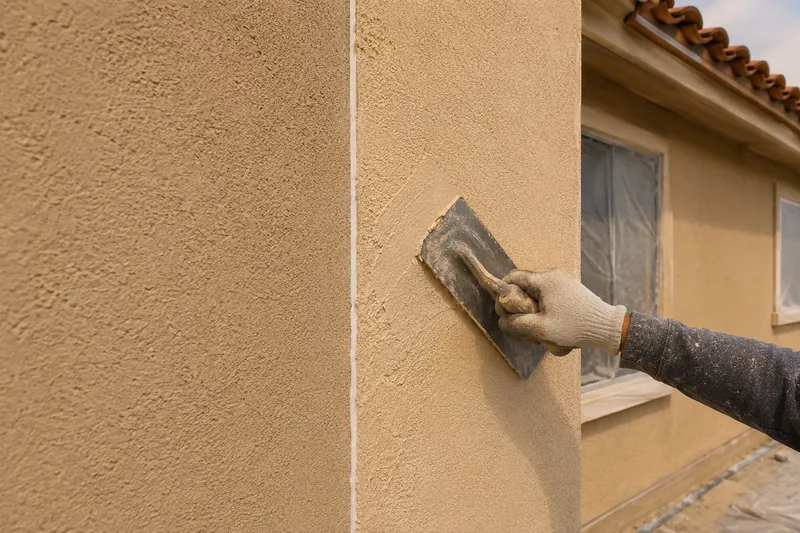
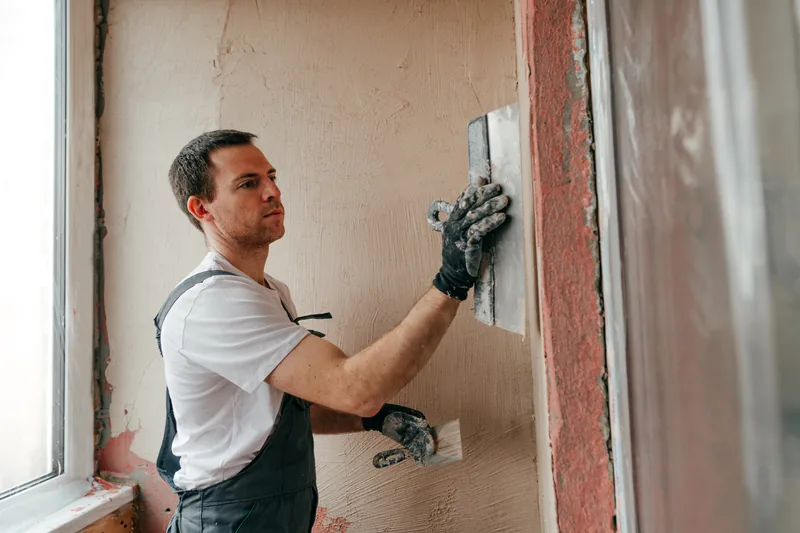
We install three-coat stucco over metal lath on a framed wall. The system starts with a scratch coat, a rough base layer scored to grip the next coat, followed by a brown coat that levels the wall and the final textured finish.
Before mixing those coats, we prepare the wall and inspect what sits behind the sheathing. As your exterior stucco contractor, we also determine what your window and door openings need where they meet the new stucco. If a wall has never been plastered, this preparation is usually the larger half of the installation. It also determines how well the coats above it remain attached and manage water over time.
Stucco Resurfacing & Recoating
One side of your house may spend winter behind a snow bank while another takes full summer sun, so the walls can develop very different problems over time. Before recoating anything, we assess elevation wear by inspecting and grading each elevation separately.
We choose the treatment according to what each face has lost. If the existing surface is sound but faded, we apply a fog coat. If weather has worn away the surface itself, we apply a new finish coat, which forms the visible texture and color of the stucco.
New Construction Stucco
Washington County’s 2011 addendum records a permit count of 73 building permits across 2001 to 2010 as a historical count for that decade. For your new build, we plan the stucco work around the season and coordinate our date with your builder’s roofing and window dates.
Before we arrive, the flashing around window and door openings must be in place. Having it installed first allows us to tie the stucco into those areas correctly.
Decorative Stucco & Architectural Details
Washington County’s community plan for this valley encourages earth tones on new houses so they blend with the surrounding ground and trees. That is guidance in a plan, not an approval anyone applies for.
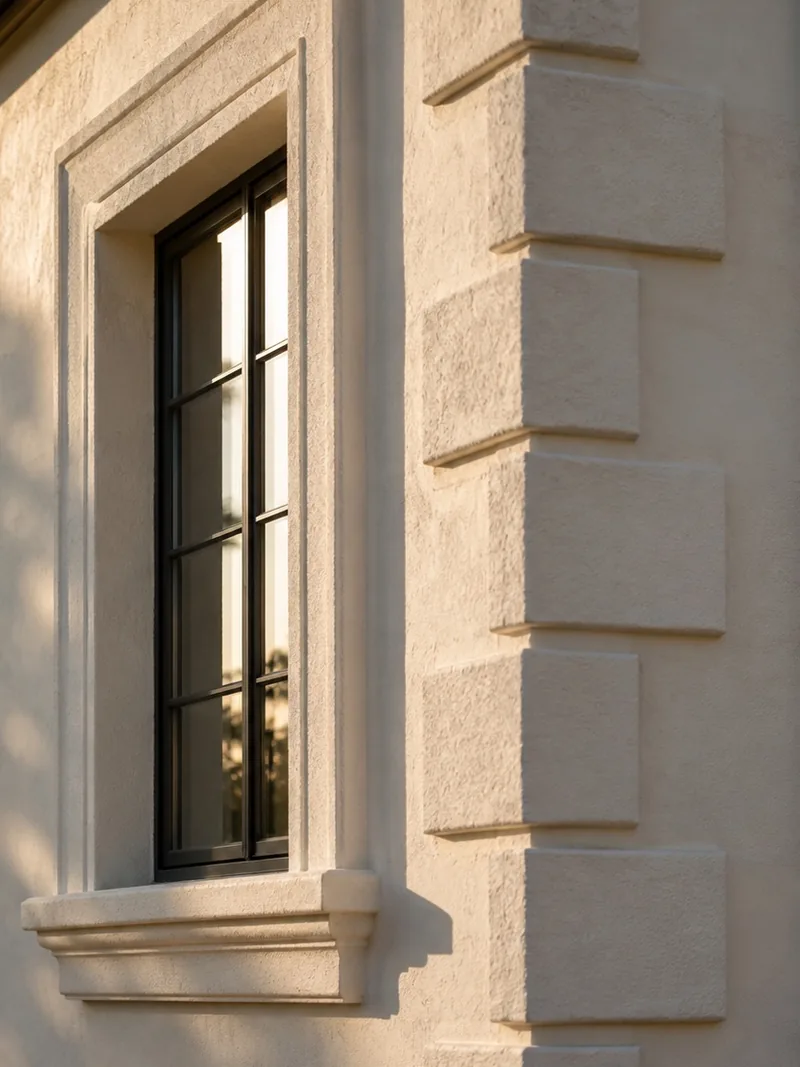
When you want architectural detail, we can shape it directly into the stucco instead of attaching trim over the finished wall. Options include a hand-worked trowel texture, a shallow raised band, or a formed surround at a window. We generally keep these features restrained because subtle texture and depth fit the valley setting better than heavy ornament.
Stone Veneer
Under IRC R703.12.1, part of the residential building code the county adopts, adhered stone has its own base clearances, including at least half an inch above exterior walking surfaces on the same foundation. That required space above the ground matters because a snow bank can sit against a stone base just as it can against stucco, while the roof framing rather than the veneer carries the snow load. We therefore position the bottom of your stone wainscot, the facing along the lower wall, according to winter conditions as well as how it will look from the driveway.
Where stone and stucco share one elevation, we lay out both materials and decide exactly where they will meet before installing either one.
What a Stucco Contractor Does 4,000 Feet Above St. George
At this elevation, the main difference is how long snow touches your wall, not simply how cold the air gets, because longer snow contact keeps moisture against the surface. Water can damage stucco anywhere in the county when it enters a wall, freezes, and expands. Because that trapped moisture repeatedly reaches the base of wall assemblies, an exterior stucco contractor pays especially close attention to the details near the ground.
The Bottom of a Wall, and What a Snow Bank Does to It
We measure the grade clearance at the weep screed from the adjoining ground or paved surface. This perforated flashing sits at the base of the stucco assembly and allows water to drain from the wall. IRC R703.7.2.1 puts it at not less than 4 inches above earth, or 2 inches above paving. When a snow bank rises above that clearance, it buries the drainage point and holds moisture where the rule assumes open air.
That is why we begin a Pine Valley visit by studying the ground around your wall. We look at where snow slides from the roof and where people pile it with a shovel or plow blade. We note what is planted or paved against the building and whether the ground slopes toward the wall, then record that condition in the estimate and set the base detail for that spot rather than for the code minimum. Roof snow can strike the wall below, then remain there as it melts.
Walkways, driveways, and planting beds also determine where banks form and how long they stay. We plan the wall’s base around what actually happens on your property in February, rather than relying only on a drawing.
Why the Date We Start Matters More Than the Product We Pick
We apply plaster in several stages, and each coat needs suitable time and temperature to set properly. A fresh coat needs warm weeks ahead of it, not a cold spell arriving soon after application. The real scheduling question is whether our stucco applicators can complete every stage before the coating window closes. Washington County's 2003 general plan for this community describes winter daytime temperatures that often stay below freezing, and a wall does not care that the calendar still says autumn.
We put that working season into the documents you sign instead of merely mentioning it during a phone call. You can plan your own year around that written window instead of waiting for a call. If we cannot finish your job cleanly this year, we would rather schedule it for next spring than begin too late and leave you with a finish coat that spent its first two weeks frozen. A patch, a fog coat, which refreshes the color, and a full recoat each need suitable conditions, but they do not all share the same working weeks.
About Pine Valley, Utah
Pine Valley sits at 6,542 feet, compared with 2,530 feet in St. George, and Washington County's plan for this community describes the valley as several thousand feet higher than the southern part of the county. That four thousand feet helps explain why a stucco contractor evaluates your wall for different conditions here than it would face below.
The sawmill came first. It was built in 1855 at the head of the Santa Clara River to send timber down the mountain to settlements below, and the town grew around it from 1859.
The Pine Valley Ward Chapel followed in 1868. Shipbuilder Ebenezer Bryce designed its upside-down boat scheme, using native timber for the frame. Known locally as the Pine Valley Chapel, this pioneer chapel is the oldest Latter-day Saint chapel still in continuous use, and it is a timber building rather than a plastered one.
The mountain valley is an island of private land within Dixie National Forest, surrounded by the Pine Valley Mountains. Farther south in the county, the St. George Utah Temple, completed in 1877, provides a surviving example of the plaster trade on local red sandstone. Workers left the stone rough so a plaster coat would grip it, then finished the building in white.
Where We Work Around Pine Valley
Washington County's plan divides the valley into three residential areas, though it does not present all three as named areas. The western area contains Pine Valley Ranchos, the central area is described as “the original town site,” and the third runs east from there to the forest boundary; the plan treats the meadows through the middle separately. Those divisions reflect real differences in the homes, lots, access, and ground conditions you find across Pine Valley. Each one changes how your stucco contractor approaches the work.
Pine Valley Ranchos: Adding Stucco to Cabins Built Without It
The Ranchos sit at the west end of the valley. Many cabins there were framed and clad without plaster in mind, so when you need stucco installation, we cannot simply apply stucco over the existing exterior. We begin with the lath base that supports the stucco coats and properly detail each door and window opening. We include that preparation in your estimate instead of presenting it as a surprise once work begins. Window flashing is much easier to correct before we apply the first coat.
The Original Town Site: Repairs Near Timber-Framed Homes
The county's plan identifies the central area as the original town site, arranged in lots, blocks, and streets. Several pioneer homes there remain occupied. Because the original lots are small and buildings stand close together, neighbors often see a stucco repair as clearly as someone passing on the road. We check the texture match from both viewpoints. When your house sits among timber-framed homes, we use a restrained finish that fits its surroundings instead of creating a sharp visual contrast.
The East End Toward the Forest Boundary: Stucco for New Homes
The east end extends from the town site to the forest boundary and includes both the newer subdivision and the small commercial area. The paved road continues through this area to the Pine Valley campground, bringing its heaviest traffic during summer. When we handle new construction stucco for a house here, we plan staging access before anything else. We position scaffolding away from the through route and schedule deliveries early in the day rather than during the middle of a busy weekend.
The Meadows Along the Santa Clara River: Repairing Moisture Damage on Low Ground
About 550 acres of meadow extend through the center of the valley. The Santa Clara River sub-irrigates this land, meaning groundwater feeds the soil from below, so the high water table never really drops. Houses stand along the meadow's edge rather than on it. If your lot slopes toward this low ground, water usually reaches the downhill wall first. We begin a stucco remediation visit at that wall's base course before inspecting the rest.
Working on Pine Valley Homes While the Owners Are Away
Most buildings in this valley belong to people who live elsewhere for much of the year. For an absent owner, being away does not change the stucco work itself, but it does change how we document the job, arrange site access, get approval, and hand the property back.
Deciding on a Job You Cannot Stand In Front Of
The 474 dwellings counted in this community in 2011 appear in Washington County's 2011 addendum, and the County Assessor's records identified 68 of them as primary residences. Because you may be elsewhere when a problem appears, we prepare a second-home estimate for remote approval that gives you enough photographs and written detail to make a decision without walking around the property yourself.
We photograph every elevation, meaning every outside face of the house, rather than only the wall you called about. The written scope from your residential stucco contractor identifies the stucco company responsible for the job, lists the work you are approving, and explains what we found on each face. You approve the finish sample before the crew comes up, rather than choosing from samples on a tailgate that morning. The estimate also addresses access, including who will let us in, whether a neighbor holds a key, and whether the water and power are on. Plaster needs water for mixing and curing, so a shut-off supply changes what can be done that day.
What You Come Back To When the Work Is Finished
When nobody can attend the hand-back, the record has to show what you would have seen in person. We prepare a condition record on the day we finish instead of reconstructing events in an email two weeks later. It includes photographs of every finished elevation, giving you something to compare with the building the next time you come up.
We also record what we did not do. If we find a crack, damaged finish, or another problem on a wall outside your approved scope, we list it and explain why we left it alone. We document any change from the quoted work instead of quietly adding it to the total. That record matters when a house stands empty for eight months of the year and nobody can watch the work. Ask about our stucco services at (435) 236-2699, or send the address through the quote form, and we will return the written scope wherever you are.
County Permits for Building in Pine Valley
Before you plan building work in Pine Valley, you need to account for two things: Washington County handles permits, and the county has adopted a general plan specifically for this valley. Together, they affect what you may build and where you may put it before you complete an application.
Without a Town Building Office, You Work Directly With the County
Pine Valley is unincorporated, which means it has no town government or municipal building counter. Washington County is therefore the building authority for construction in the valley. You work with its Community Development department, which says it manages the building permit and inspection process (washco.utah.gov/departments/community-development). Because the same county office handles both permits and inspections, you deal with one place rather than a city for one and the county for the other. For a valley this size, keeping both functions with the county gives you one office that knows the ground.
The department, rather than our company, decides whether your particular job needs a permit. We can give you a written description of exactly what the stucco work includes, so you can take clear information to the county instead of trying to explain the project from memory over the phone. The county then makes the decision. We do not interpret its rules for you or claim to know how it will rule on a specific lot.
A Plan Written for This Valley Alone, and What It Already Settles
Washington County has adopted a community general plan specifically for Pine Valley, so some questions about where development can occur already have answers. The plan keeps the meadow ground out of development because its water table is too high for septic systems, and the valley has no sewer. As a result, the ground conditions and the plan may limit what you can build on a particular lot before you submit an application.
The plan also includes recommendations rather than requirements, including guidance about exterior colors for a new house. Guidance in a land use policy is not an approval you apply for, and we say so rather than let an owner assume a review panel is waiting on a finish decision. Washington County interprets and applies its own plan. A stucco contractor does not make those decisions. If the answer could affect how you plan work on your lot, ask the Community Development department directly and ask early.
Stucco Questions From Pine Valley Property Owners
Snow drifts against the back of our place all winter. Is that hurting the stucco?
Yes, a drift can harm your stucco when it remains against the wall for a long time. Snow also settles on the flat top of a stuccoed chimney chase, the enclosure around the chimney. A properly shaped cap sheds snow and water, while an intact sealant joint blocks moisture at the penetrations.
Can you get up here in the winter, or does the work wait for spring?
Exterior stucco work waits for spring, and winter access is a separate question. Only the road into the valley from Central is paved, while most local streets are gravel. Conditions over the final few hundred yards can therefore decide whether we can reach your property even when the highway is open.
We are only up in the summer. How do we approve the work and see it finished?
We handle both your approval and the final hand-back in writing, so you can make decisions and review the completed work from elsewhere. Before we start, we need to know who can let us onto the property and whether the water is turned on. Those arrangements can stop the job even after you have selected the finish.
The place has been a summer cabin since the seventies. Is stucco right for it at all?
Yes, stucco can work on an older summer cabin, but its age does not settle the question. We first inspect what lies behind the existing cladding. A building never finished with plaster may lack window flashing that directs water away and the trim needed around door and window openings.
The houses around us are old timber. Will a stucco house look wrong next to them?
No, a stucco house need not look wrong beside older timber buildings when its design responds to them. The 1868 chapel is timber, making it a heritage reference rather than a stucco model. The county’s plan asks owners to compare height and scale with surrounding buildings, while we choose color and texture against what is standing next to you.
Do you actually come up to Pine Valley, or only work down in St. George?
Yes, Pine Valley is an ordinary part of the area we cover as your stucco contractor. It is still an unusual place to work on a wall because each property can present a different collection of buildings and winter occupancy. When you call, tell us how many buildings are on the lot and whether any remain empty over winter, since both shape the visit.
Get a Free Stucco Estimate in Pine Valley
St. George Elite Stucco first needs to know when you next expect to be in Pine Valley, or whether you will be away entirely. We build the free estimate around that answer. The working season and access to your property determine what the job will involve, so any stucco company you call should settle both points early. During the visit, your stucco contractor walks the entire property with you, including the house and every other structure on the lot. You receive the estimate in writing, and the visit is free. Call (435) 236-2699 or send your address through our quote form.