
Stucco Painting & Coatings in St. George, UT | St. George Elite Stucco
St. George Elite Stucco is a licensed and insured stucco contractor that has worked on residential and commercial properties in St. George, Utah for 15 years. Stucco painting and coatings include a masonry paint repaint or elastomeric exterior coating for a worn finish or color change. Mineral paint, limewash and a pigmented finish coat suit bare or never-coated plaster; mineral finishes require removal of existing paint.
You should know whether the surface will accept a coating before you spend money on it. A chalking test for surface powder and an alkalinity check help us make that decision. We apply masonry primer to bare and patched areas, and the coating manufacturer's application specification governs the coats that follow.
We apply two coats by default and calculate the spread rate from the actual texture rather than the label. An airless sprayer loads the texture, and back-rolling fills the areas the spray bridges. We choose the coating family according to vapor permeability and how much the wall moves during the 50 to 60 days a year when temperatures rise above 100 degrees.
We coat stucco for homeowners and commercial property owners across Washington County. When you approve the work, we write the surface condition into the estimate so you can see what the wall needs and what it does not.
Request a Free Estimate
We're ready to take on your project!
Stucco Painting & Coatings for an Existing Wall: What We Apply and Why
When you are coating an existing stucco wall, the wall you already have sets the options and how long the result holds. Our stucco painting services sit over what is already standing rather than becoming part of the wall itself. The same principle applies whether you need an exterior repaint or a first coat on new plaster.
Masonry Paint, Elastomeric Coating, and Mineral Finishes
Choosing the right material matters because the three coating families behave differently after they are applied to your wall. Acrylic masonry paint is the thinnest, forming a pigmented film that follows the existing texture and adds almost nothing. An elastomeric coating forms a much thicker, flexible film that bridges the hairline movement caused as the wall heats and cools. It does not repair the wall, and the thicker film reduces breathability.
When cement plaster needs to keep drying outward through the coating, mineral paint and limewash provide that path through their mineral binders. Mineral finishes work on bare or never-coated plaster; on a previously painted wall, the permeable route requires removing the old film first. The ability to pass moisture outward is called vapor permeability, and the perm rating on the product data sheet tells you how readily the product allows it. The condition of the wall guides the choice. Hairline movement on a dry wall favors elastomeric, while a damp wall favors permeability. Dampness that has not been traced to its source calls for stucco remediation work.
Paint Versus a Pigmented Finish Coat
When you are deciding between paint and a pigmented finish coat, the difference is whether the material covers the plaster or renews its surface. Paint is a coating that forms a film on the plaster and ages as its own layer, so the film is what eventually wears out. A pigmented finish coat is cement-based stucco material that is troweled or sprayed onto the wall, adding a new surface instead of covering the existing one.
The texture underneath determines which option fits the wall. Where the texture is intact, a coating is the smaller job. Where the texture has worn flat or become patchy across an entire face, the work needs to add cement thickness. Our resurfacing and recoating work covers that surface renewal, ranging from a thin colored wash up to a complete new skin. Integral pigment carries color through the new coat, so a later chip does not show a different color underneath, and it also belongs with that work.
Where a Coating Is Not the Answer
A coating covers a wall; it does not fix one. We address an open or moving crack first through crack repair as part of our stucco repair work. When the wall sounds hollow or fails again in the same spot, the cause lies behind the finish and calls for stucco remediation. If a whole elevation, meaning one entire face of the building, has lost its texture, resurfacing is the answer rather than a coat of anything.
If your cement plaster has an acrylic finish over it, the finish material does not change the wall into another type of assembly. It remains a cement stucco wall. EIFS, meaning exterior insulation and finish system, belongs on our commercial stucco page. When an acrylic finish is specified as part of a new assembly, it belongs with our stucco installation work.
Chalking, Alkalinity, and Primer: Check the Surface First
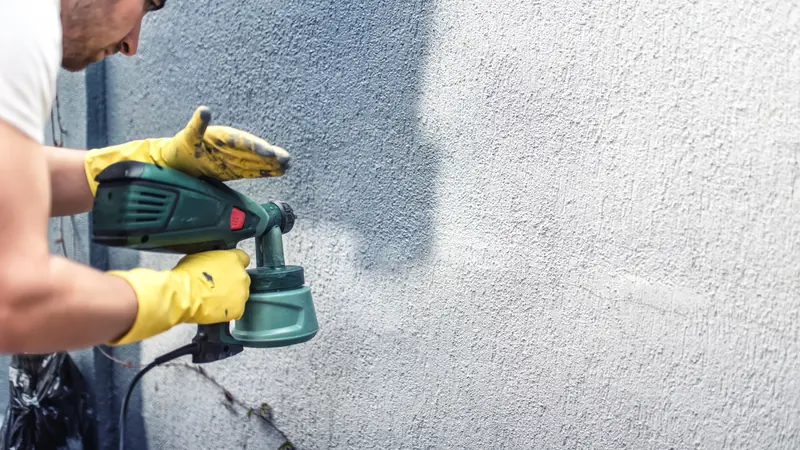
Surface preparation decides whether your coating lasts because adhesion can be no stronger than the material underneath it. When you compare stucco painting contractors, ask how each one evaluates chalking, alkalinity, and the existing film. We use the chalking test, an alkalinity check with a pH reading, and controlled pressure washing before opening masonry primer or a coating specified for two coats.
The Chalking Test
Chalking is the loose pigment powder left behind when sunlight and weather break down the binder in an existing coating. To test your wall, we draw a dark cloth or bare hand across a sunny elevation and look for dry powder rather than a colored stain. A new film applied over that loose material bonds to the powder instead of the sound surface, creating an adhesion failure that can release the coating in sheets.
We wash the wall to remove the chalk, then test it again after it dries. Where a light residue remains, masonry primer made to bind chalk provides a suitable base for the coating. If heavy powder still comes away after washing, the old coating must be removed instead of covered.
The Alkalinity Check on New and Patched Plaster
Fresh portland cement plaster remains strongly alkaline as it cures, and patched areas can produce a different pH reading from the older wall around them. We dampen a small spot and use a pH test strip or pH pencil for the alkalinity check. If the reading is too high for the selected product, the alkalinity can attack its binder and cause the film to lift.
That is why your wall is not coated on the same day the plaster work is finished. The coating manufacturer's data sheet sets both the permitted pH and the required waiting period for that product. The plaster itself follows the cure schedule established for stucco installation, while this check determines when the surface can accept its coating.
Washing First, Then Primer on Bare and Patched Areas
We adjust the wash pressure, fan width, and working distance so pressure washing removes dust, chalk, cobwebs, and efflorescence without cutting into your texture. Efflorescence is the white salt bloom left as moisture passes through the plaster and evaporates at the surface. If it returns after washing, the wall needs moisture-source remediation before coating. We allow the cleaned surface to dry fully before applying primer.
Sprinkler heads that wet the wall base each day can carry salts through the plaster, leaving a band of efflorescence and failed coating along the bottom. Re-aiming or moving the head stops that source before work begins. The weep screed, the drainage track at the base of a framed stucco wall, also stays clear so coating does not block drainage.
Masonry primer goes over bare plaster, patches, and chalk that remains after washing. It balances suction so those areas absorb the coating at a similar rate, reducing visible differences in the finish. A sound previously coated wall may not need primer across every surface.
What Is Already on Your Wall
The existing coating helps determine which products your wall can accept. An elastomeric coating feels thick and slightly rubbery, and it tends to soften or round off the texture. Acrylic masonry paint forms a thinner film that follows the small details beneath it. Adding another elastomeric layer over an existing one can compound a permeability problem, so identifying the current material matters before a product is selected.
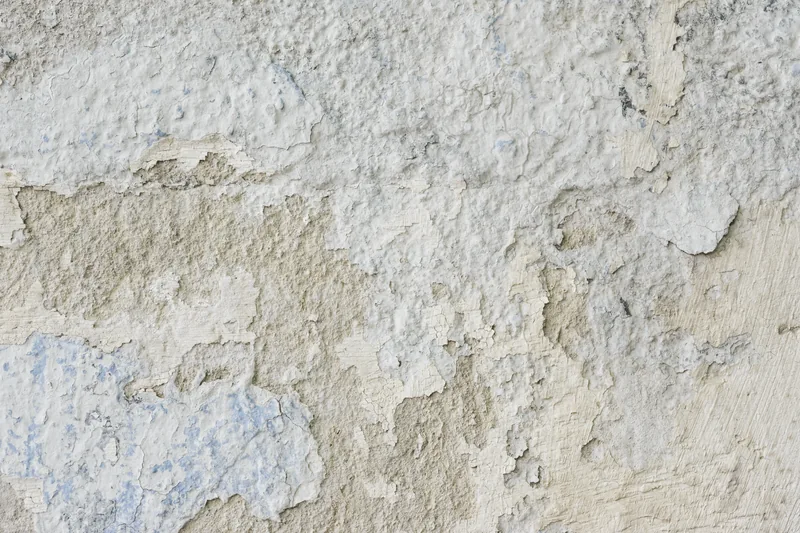
The way a coating fails also provides useful evidence. Blistering suggests that the film is losing contact with the surface, while sheets of loose coating point to a broader adhesion failure. A damaged band near the bottom directs attention to moisture at the wall base. Crazing or mud-cracking can appear where an elastomeric film was applied too heavily.
If the surface remains doubtful, we apply a test patch and perform an adhesion check before committing your entire elevation to the coating.
Two Coats Under the Manufacturer's Specification
A wall can look finished before it has enough coating to perform as intended. The manufacturer's application specification governs the job, including how many coats to apply, how far a gallon should reach, how long to wait between coats and the conditions the film needs while it sets. Under the manufacturer's specification, a two-coat application is the default. Our stucco painting services follow the specified film thickness, spread rate, application method and working conditions.
Film Build and Spread Rate
Your wall may look evenly covered after one coat even though the film is thinner than the product was tested at. That is why two coats are the default. The published spread rate tells us how many square feet a gallon covers over a smooth surface. Because lace or dash texture contains much more surface area within the same square foot, it requires more material. We calculate quantities for the texture that is actually on the wall.
Elastomeric is the most demanding example because it is specified by film thickness rather than coverage. It reaches only a fraction of the square footage that paint covers per gallon, so the stated film thickness matters more than how far the bucket seems to go. During the first week on your wall, a film that is too thin can look identical to one applied at the correct thickness.
Spraying, Back-Rolling, and Working Conditions
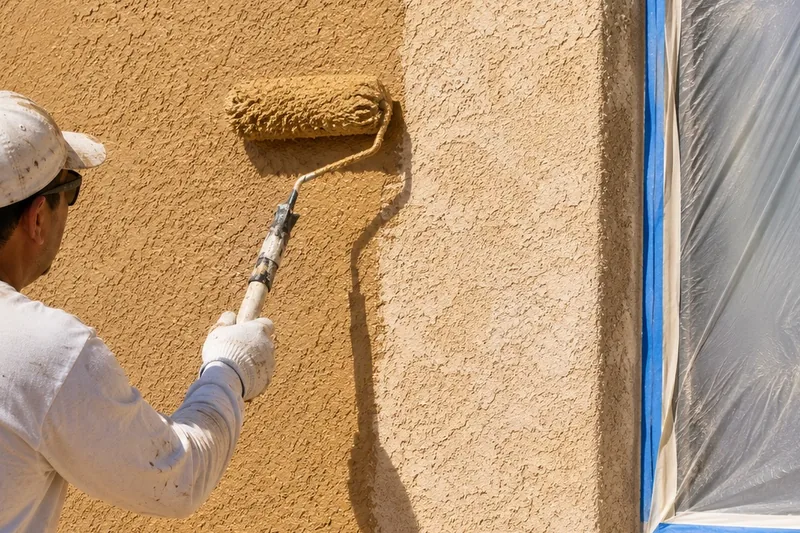
Textured stucco has low points that need to be filled so the finished surface does not contain pinholes. Before spraying, we cover light fixtures, house numbers, downspouts and satellite mounts. We also protect solar conduit, air conditioning units and dryer vents, and the estimate names anything that must be removed. An airless gun applies most of the material quickly, but the spray can bridge over low areas instead of reaching the bottom of the texture. A roller follows the gun to push material into those spaces, while brushes handle the edges, cut-ins and trim. The sequence is spray and back-roll, in that order.
Even the right application method can cause problems when your wall is too hot or the wind carries material away. Surface temperature governs the work rather than air temperature, and a west wall on a summer afternoon can run far hotter than the air beside it. Our crews follow the sun around your building and start early.
From July through September, monsoon winds can force us to pause or reschedule a coating day. The wind can carry overspray onto cars and neighboring walls or drop dust into a wet film. The product data sheet sets the recoat time and permitted surface-temperature range, and the film must finish setting before the overnight drop. Those requirements leave a long working season in the St. George valley but a shorter window in higher Washington County communities.
Why Choose St. George Elite Stucco for Stucco Painting & Coatings
The coating on your wall has to suit the existing texture, sun exposure and need for vapor permeability. St. George Elite Stucco selects the coating according to the wall's texture and exposure, along with whether moisture needs to keep drying outward. We work on houses and commercial elevations, and we are licensed and insured. On a coating job, those qualifications show up in two practical ways: a detailed written estimate and credentials you can verify.
The Preparation Is in the Written Estimate
You should know exactly what preparation and coating work the estimate covers before a crew arrives. Your written estimate names each item, including what gets washed, which areas receive masonry primer, how many coats go on and which products will be used. It also lists the parts of the wall we are not touching, so the boundary of the job is on paper. Because the product name appears there as well, you can look up the data sheet for whatever is about to go on your house.
If a crack, patch or failed sealant joint needs attention first, the estimate shows it as repair work on its own line instead of folding it into the painting number.
Credentials You Can Check Before the Sprayer Comes Out
Before we work on your wall, you can verify our license and insurance coverage. We carry general liability and workers' compensation. Certificates are available before work starts, and our license number goes on every written estimate.
On a spray job, material can travel on the wind, so general liability is what answers for a car, a window or a neighboring wall. When you hire a licensed stucco contractor for this kind of work, you are hiring someone who carries that exposure while the spray gun is running. You can also review the paperwork beforehand rather than waiting until there is a problem. Call (435) 236-2699 or use our quote form to schedule a free on-site estimate.
Square Footage, Story Height, and Access
Your stucco painting cost depends on more than the number of square feet being coated. Two walls with the same measured area can require very different amounts of material and crew time, so the price is built on site rather than taken from a rate card. We build the price for stucco painting services from the six factors below.
- Wall area, measured elevation by elevation. Two houses with the same footprint can have very different amounts of wall once we count the gables, returns, which are short wall sections that turn a corner, and courtyard walls.
- Story height and reach. Anything above the first floor must be reached safely, and the required ladder work, scaffold or boom lift appears as its own line on the estimate.
- Access. Narrow side yards, walls above a slope, and planting or paving that needs to be covered can slow the crew before any coating goes on.
- Surface condition. A wall that only needs washing costs less to prepare than one with large bare or patched areas, since those areas need primer first.
- The coating specified. A thicker film puts more material on the same wall, so an elastomeric job and a masonry paint job do not have the same price.
- Cut-in and detail. Trim, fascia, garage doors, courtyard and block walls, along with each additional color, require brush work that a sprayer cannot do.
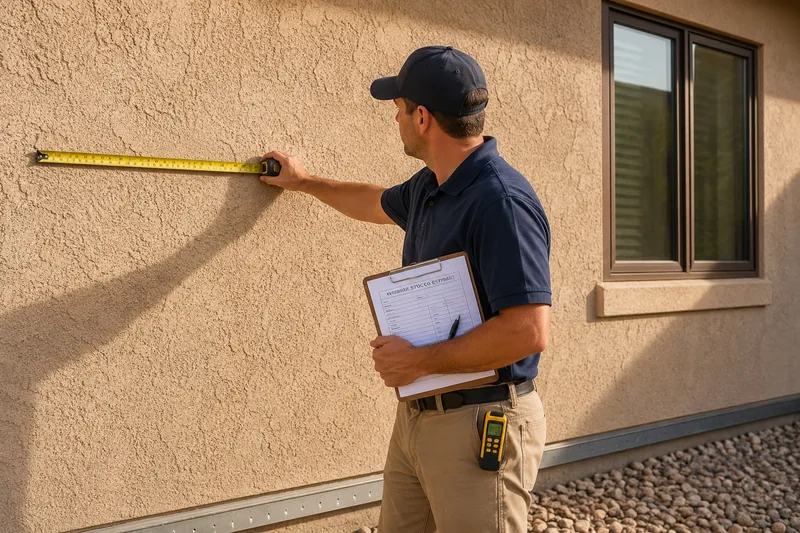
Once we have measured your wall areas on site, the estimate comes back in writing with all six factors behind the number. Any work needed to repair the stucco before coating has its own price and is quoted as repair rather than painting. For an on-site inspection, call (435) 236-2699 or use our quote form.
Test, Wash, Prime, Coat
A coating project is easier to plan when the surface assessment, color choice and preparation are settled before application begins. St. George Elite Stucco uses this stucco painting process to carry out the four stages named here. The first two settle the scope and the color before we touch your wall.
-
On-Site Surface Assessment and Written Estimate.
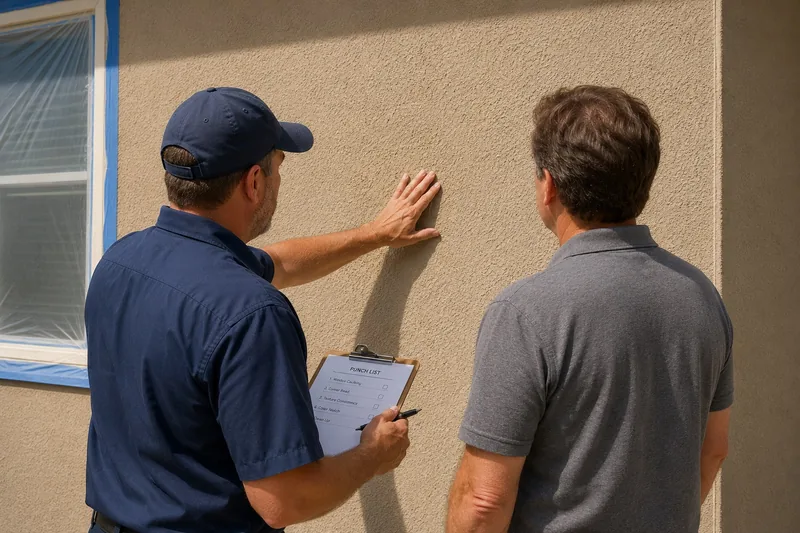
When you are deciding on the work, you need to know what condition the wall is in and what the job will cover. We walk the elevations with you, run the chalk rub, and take an alkalinity reading anywhere the plaster is bare or newly patched. We note those areas on the spot, then provide the scope in writing. There is no charge for the assessment.
-
Color Selection and Community Approval Where It Applies.
A color can look different on the wall than it does on a card in your hand, so candidate colors go onto the wall itself. Where your community reviews exterior color, written approval must come through before the work can be scheduled. Choosing early gives the review time to run.
-
Masking, Washing, and Drying Time.
We cover windows, roof edges, light fixtures, landscaping and paving before washing begins. Once the wall has been washed, it needs time to dry. The weather that week determines how long drying takes, so we work to the wall rather than to the calendar.
-
Primer on Bare and Patched Areas.
Your elevation may look distinctly patchy for a day because primer goes only on the bare and patched areas that need it. That uneven appearance is what a correctly primed wall looks like before the first coat covers everything.
-
Two Coats, Then a Walkthrough.
Both coats are applied with the recoat time required by the product between them. Afterward, we walk each elevation with you in daylight so you can review the finished work. We clear the masking, staging and debris before leaving.
To get a coating job onto the schedule, call (435) 236-2699 or send the details through our quote form.
Fade, Chalking, and Sun Exposure on a Stucco Wall
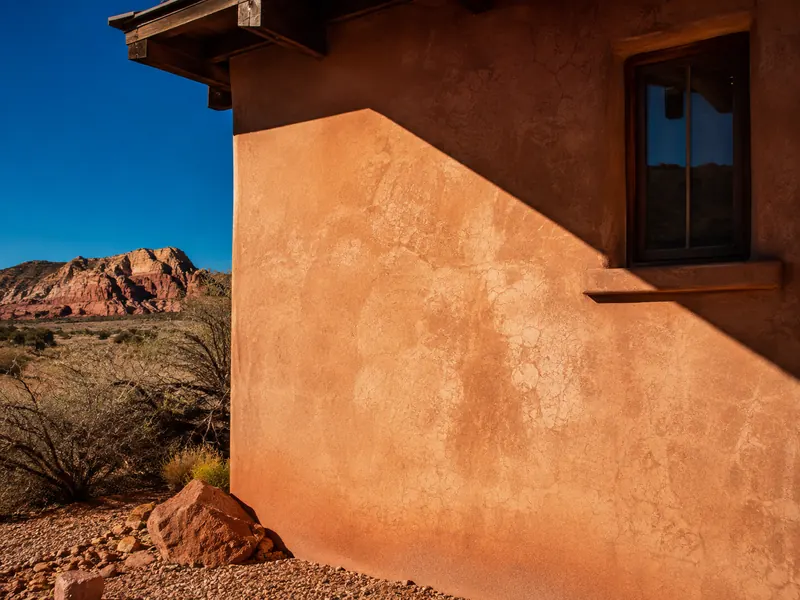
When the color on your stucco starts fading, the finish is showing the effects of years in the sun. Strong sunlight puts the greatest strain on stucco coatings down in the valley, where most of the county's houses sit, while moisture adds to that strain in the higher country. Around 255 sunny days a year reach your walls, and the coating takes that exposure so the plaster underneath does not have to. Renewing a finish that has absorbed years of sunlight is part of our stucco painting services.
How Sunlight Breaks Down a Coating
A loss of sheen, powder on the rub test and fading color can all show that sunlight is breaking down the coating. Ultraviolet light attacks the binder that holds the pigment together, a process the trade calls UV degradation. The changes usually follow a predictable order. The sheen goes first, so a slightly satin wall begins to look flat. The surface then starts releasing powder. You usually notice the color fading last, and by then the film has been thinning for a while.
The different sides of your house can age at different rates even when they have the same coating. South and west elevations usually show wear first because they receive the most hours of direct sun each day. The finish on the north side may still look sound even when the west elevation is spent.
Color Choice, Exposure, and When to Recoat
As you settle on a color, consider how your color selection will handle strong sun based on its pigment and shade. Colors made with mineral pigments hold their tone longer than bright organic colors do. Darker colors also absorb more heat than lighter ones, and that heat increases movement in the surface beneath the film.
We put no year count on a coating, because the product, the color, the exposure and the preparation underneath all move the answer. Instead, look for powder on the rub test, color that has gone flat or film beginning to lift at an edge. Any of the three is worth a call while the plaster behind the coating is still sound.
HOA and CC&R Color Approval for a Stucco Repaint
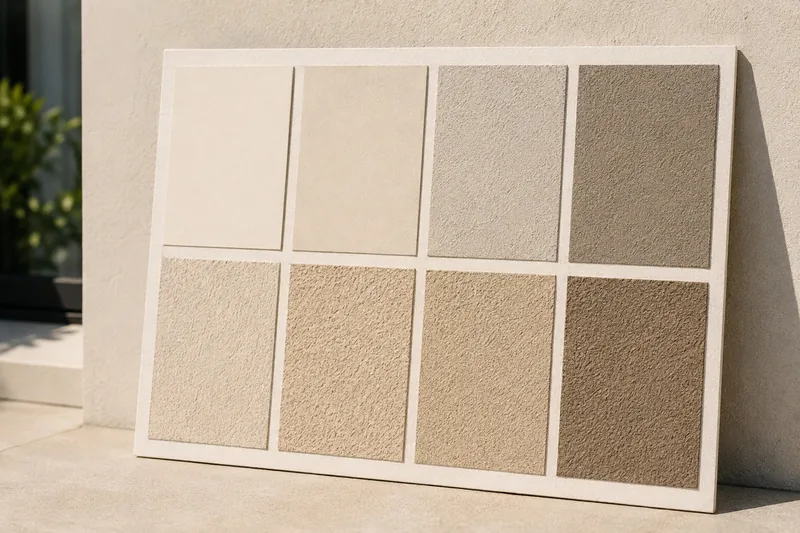
If your community reviews exterior changes, find out whether it must approve a new color for your stucco house. Many communities around St. George are governed by CC&Rs, and their committees review exterior color. We work samples up at the same two coats your wall will get, so what a committee signs off on is what goes on the house.
What an Architectural Committee Reviews
Checking for an architectural committee early can prevent approval problems after you have chosen a color. The rules recorded against a property are its covenants, conditions and restrictions, or CC&Rs. In many master-planned communities, those rules establish an architectural committee that reviews exterior changes.
When a committee reviews a stucco repaint, the three items it usually asks for are the manufacturer and color name, a physical sample, and the location of each color across the elevation. The application names each surface separately, including the body, trim, garage door and courtyard wall. The decision itself belongs to your community, not to us, and we do not speak for it.
Samples, the Submittal, and Written Approval
To see how a candidate color will actually look, you need to view it on the elevation where the finished coating will live. Strong outdoor sun can change its appearance, and a chip held in your hand cannot show the same effect. A single thin pass cannot show it either, so we apply the sample at the same build the wall will get.
Written approval protects you from having to repaint a color the committee rejects. We supply the product color and texture samples for the submittal, then schedule after written approval. Most owners have never prepared a color submittal before, so we assemble it for you. The sample step still happens when no committee is involved because it lets you see the color on your own house before committing to it.
Stucco Painting Across St. George and Washington County
St. George averages about 8.8 inches of rain a year, so surface washing is an important part of preparing your stucco for a new coating. With so little weather to rinse the wall, the dust that settles there tends to stay. We wash before coating so we are not applying a new finish over that buildup.
The conditions your coating faces also depend on where you live in Washington County. In the valley, heat and grit off the desert do most of the aging on a finish. In the higher communities, winters are genuinely cold, and a coating has to handle moisture as well as light. Where your property sits changes what we check when we arrive.
Where St. George Elite Stucco Paints Stucco
St. George Elite Stucco serves communities throughout Washington County, from the connected cities around St. George to smaller settlements near the county's valleys and mountain approaches. Our service area includes the following communities.
- St. George, Washington, Santa Clara, Ivins, Hurricane, La Verkin, Toquerville, and Leeds
- Winchester Hills, Diamond Valley, Dammeron Valley, Veyo, Brookside, Central, and Pine Valley
- Gunlock, Shivwits, Virgin, and Apple Valley
Questions About Painting Stucco in the Desert Southwest
Coating decisions can affect how your stucco looks, handles moisture, and fits your community's requirements. Common questions involve surface condition, materials, color approval, adjacent work, irrigation, and partial repainting.
What is the chalky powder on my stucco wall?
Pale streaks running down the wall after rain are often the first sign owners notice, especially on the sunniest elevation. Chalking can also leave loose powder on the surface. During preparation, bare or patched areas that remain sound receive masonry primer.
Why does vapor permeability matter when you coat cement plaster?
Blistering or lifting in patches, often first on the elevation that stays damp longest, can occur when the chosen film prevents moisture from moving outward. To account for vapor permeability, the product data sheet lists a perm rating for each coating, including mineral paint.
How does color approval work in a master-planned community here?
Changing only the trim or coating one elevation can still require a submittal because approval commonly covers the complete exterior scheme. We prepare an on-wall color sample and the information required by your community's CC&R architectural guidelines, then wait for written approval.
Does elastomeric coating fix cracks or only bridge them?
A hairline crack may still need repair beneath the coating. Elastomeric coating bridges hairline movement, but it does not repair a crack in the stucco beneath it. Its heavier film build is especially unforgiving over chalk because the coating's weight pulls against the weak material to which it was applied.
Do you paint the trim, fascia and garage doors as well as the stucco?
Your project may include more than the stucco walls. We also coat the fascia, trim, and garage doors included in your project scope. Because those detailed surfaces require brush and roller work rather than spray application, the written estimate itemizes them separately from the wall area.
Will sprinkler spray hitting the wall affect a new coating?
Yes. Repeated sprinkler spray can cause a new coating to fail near the base of your wall. The practical fix is usually re-aiming or moving the sprinkler head, rather than a service we sell, and it should be completed before the wall is coated, not afterward.
Can you coat one elevation instead of the whole house?
When one wall has deteriorated ahead of the others, coating only that elevation can lower the project cost. A fresh coating beside a weathered finish will not match, however, so this option works better when a uniform appearance across your house is not the priority.
How often does a stucco house need repainting here?
A fixed year count will not tell you when your stucco painting is due. Use the rub test instead, checking the south and west elevations first because their stronger sun exposure usually causes the coating to lose color and leave powder sooner than the other walls.
Ask us about your wall through the quote form.
Book a Color and Surface Assessment
A visit is the fastest way to find out what your wall will take. St. George Elite Stucco inspects the surface, explains which coatings it will hold and which it will not, and puts the answer in writing with the preparation named alongside it. You receive the estimate in writing, and the visit is free. Call (435) 236-2699 or request a free estimate through our quote form.