
Stucco Repair in St. George, UT | St. George Elite Stucco
St. George Elite Stucco has provided stucco repair for residential and commercial properties in St. George, Utah for 15 years. We are licensed and insured, and we repair damaged areas when the rest of the wall is still sound.
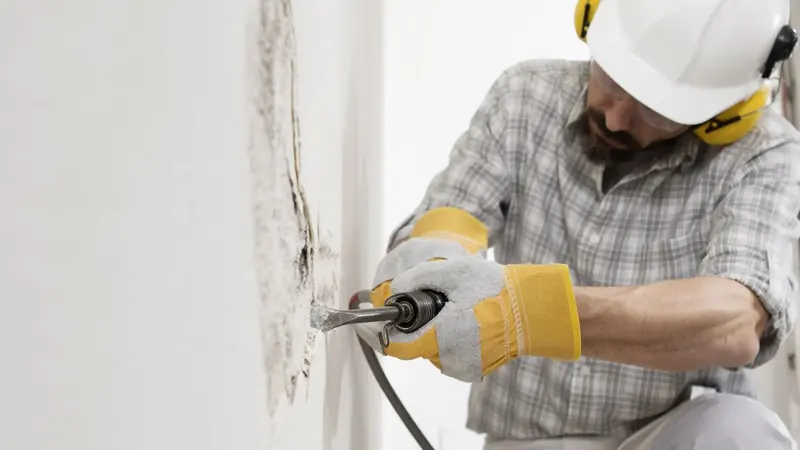
Crack repair is for hairline cracking at window and door corners. Patching takes care of holes left by removed fixtures and spalled corners where the finish has flaked away. We also address impact damage, failed sealant where trim and pipes pass through the wall, and patches that did not hold. Texture and color matching are part of the work, and you approve a sample panel first.
St. George temperatures top 100 degrees on 50 to 60 days a year. The kind of crack, whether it formed as the plaster cured or is still moving, determines the repair. Depending on the damage, the scope can include flexible sealant, a bonding agent, and a compatible patch mix to rebuild the wall's full thickness under ASTM C926.
When the problem is behind the finish, you need remediation rather than a repair. Resurfacing is for an elevation, a whole wall face that needs even treatment, while replacement is for a finish that comes off. We repair stucco across Washington County, from St. George to Santa Clara and Hurricane, with the scope limited to the damaged area rather than the entire elevation.
Request a Free Estimate
We're ready to take on your project!
What Counts as a Stucco Repair, and What Does Not
Not every problem in stucco, the plaster material used on the exterior, can be handled as a local repair. The deciding factor is the condition of the material around the damage, not how severe the damaged spot looks. When the plaster beside a crack is solid, still bonded and holding its finish, we can cut out the broken section and replace it with material that behaves like the surrounding wall. On a localized repair we work one damaged area at a time while the rest of the wall remains sound. We inspect the wall before we write the scope, so you know which level of work the condition requires.
The Damage a Local Repair Covers
A walk around the exterior usually turns up one of a handful of repairable problems. Crack repair starts at the top corners of windows and doors, where the wall has the least material holding it together. Patching is for holes left after something has been removed, including an old hose bib, or outdoor faucet, a light fixture, a dryer vent or a satellite mount. Outside corners can chip when they are struck by a ladder, a mower or a car door. The resulting spalling leaves the finish broken across two faces at once.
Sealant is another common trouble spot. Where trim edges and pipe penetrations, the points where pipes pass through the wall, meet the wall, the sealant usually fails before the surrounding plaster does. Once the sealant opens, it no longer keeps water out of the joint. You may also have an earlier patch that has started pulling away at its edges. Each of these problems stays within a defined area, so we can repair it while the plaster on either side continues doing its job.
Where a Repair Stops Being a Repair
Four conditions take the work beyond a local repair, and the wall gives us a clear sign of each one. When a repaired area fails again in the same place, the water or movement causing the damage is behind the finish. Stucco remediation means finding and correcting that underlying water or movement rather than repairing the surface. When an entire elevation has become patchy or unevenly faded, a new repair will remain visible against the rest of the surface. Evening out that wall requires resurfacing and recoating.
Stucco replacement and removal apply when the plaster must come off down to the sheathing, the structural board behind the plaster. The paint or coating that goes over the completed wall is a separate decision handled through our painting and coatings work. If one of these larger conditions is treated as a local repair, the patch fails and you still have to complete the actual scope afterward.
Houses, Rentals, and Commercial Buildings
Residential stucco repair usually involves one defect on an owner-occupied house. The repair method does not change with the type of building, but the schedule does. For rentals and managed properties, we perform the same work while booking around a tenant. Commercial stucco repair on an occupied building has to fit around business hours and customer doors. A larger program completed in phases runs through our commercial work. If your community reviews exterior changes, it may require color approval before we make a street-facing patch.
How We Assess a Crack Before We Fill It
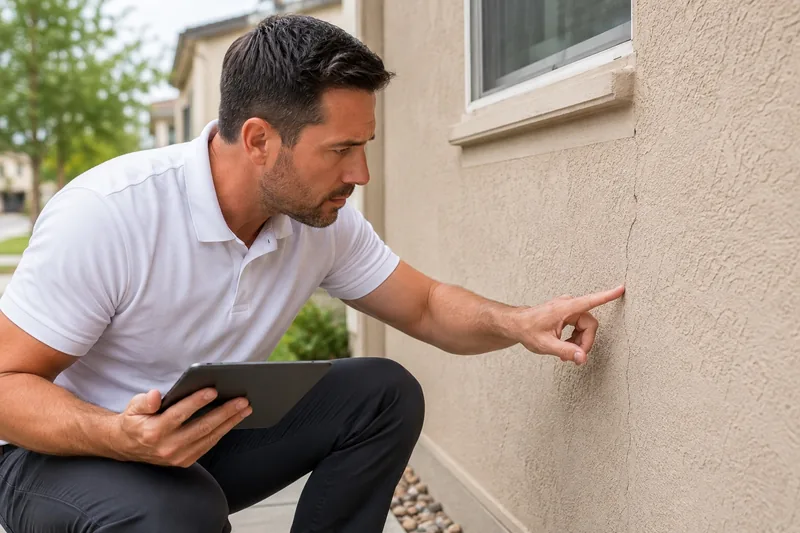
Two stucco cracks can look identical from the driveway and still call for different approaches to crack repair. The cause matters, but so does whether the crack has finished moving. A settled crack can hold a hard-setting repair material because the wall is no longer pulling the crack apart. When movement continues, a rigid filler simply splits again along the same line.
Shrinkage Cracks and Cracks That Are Still Moving
A shrinkage crack is a fine crack that has settled. It begins while the plaster cures and loses water, then the wall nudges the crack open and closed as the surface heats and cools. Prolonged summer heat keeps the wall in constant thermal movement, so fine hairline cracks are common in stucco. Eventually, however, a shrinkage crack stops growing.
A moving crack behaves differently because it follows a line where the building continues to shift with heat, cold and settlement. These cracks often appear at the corner of an opening, at a corner or step where two wall shapes meet, or along a joint built into the wall. We look at the crack’s pattern, location and changes over time rather than relying on its width alone. A photograph taken six months ago tells us more about that movement than a tape measure does.
We also do not treat every crack as proof that the foundation is moving. Structural cracks are a structural engineer's call, and we will say so rather than guess.
Routing Out a Moving Crack Instead of Skimming It
Skimming, spreading a thin layer of patch material over a crack without opening it first, puts something rigid across a line that will keep flexing. The patch then breaks again in the same place. For a moving crack, we route out the break by opening it into a clean channel with sound edges on both sides. Routing clears away the loose material and gives the movement somewhere to go. We fill the channel with elastomeric sealant, a rubbery material that stretches and recovers as the wall moves. The resulting flexible joint can hold where a hard fill would split.
Once the sealant is in place, we tool it down and carry the texture across the repair so the line sits level with the surrounding finish. Elastomeric sealant is meant to handle one moving line inside a routed joint. A flexible coating rolled across an entire elevation has a different job. Choosing and applying the coating over the completed repair falls under our painting and coatings work.
Rebuilding a Stucco Patch So It Stays Attached
Patch failure usually has nothing to do with the color of the stucco patch. The new material either did not bond properly to the old plaster, or someone spread it too thinly across a hole that needed to be filled to its full depth. A lasting patch needs enough material and a firm connection to the surrounding wall. When both are right, the repair moves with the wall instead of pulling away from it.
Using a Bonding Agent Over a Sound Base
Before we put any new material on the wall, we remove everything that is loose or no longer holding. We tap outward from the damaged spot and cut the opening back to plaster that remains firmly attached. When the hollow area continues well beyond the damage you can see, the problem is larger than a patch, so the work moves into remediation.
After reaching sound edges, we apply a bonding agent to the cut face. Cured portland cement plaster, the stucco already on the wall, has hardened, leaving fresh material with almost nothing it can grip through a chemical bond alone. The bonding agent connects the old plaster on your wall to the new mix. We also key the edges, undercutting them so the new material locks in behind the old plaster instead of only butting against it. Before filling the opening, we check all of this patch preparation.
Restoring the Full Thickness with a Compatible Mix
We fill a hole to the full depth of the plaster around it rather than bridging the opening at the surface. A thin skim over an empty space has no support behind it, so it can crack away in a sheet when the wall flexes or takes a knock. Deep damage requires more than one pass. We let each lift, a single application pass, set enough to support the next because material applied too thickly can slump and shrink away from its edges.
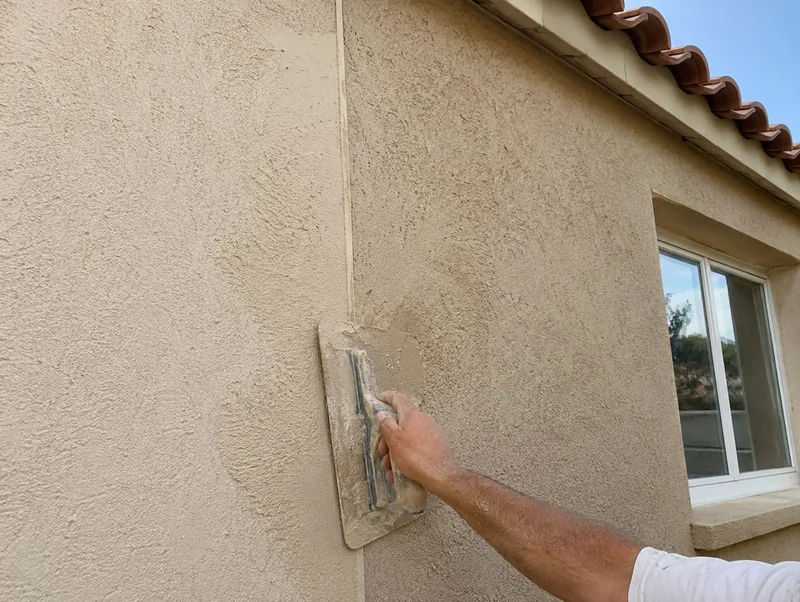
The material used for stucco patching matters just as much as its thickness. We use a cement-based patching compound that is compatible with the existing plaster instead of a general-purpose filler. As a result, the cement patch expands, contracts and accepts texture in the same way as the neighboring plaster. For small fills, a margin trowel, a small hand trowel, lets us stop the material precisely at the cut edges.
Building an original wall coat by coat is part of our installation work. For a local patch, once the new material is in place, we give it the required curing time and wait through the full cure time before applying anything over it. The written scope includes that curing allowance, so the patch is not coated before it is ready.
Matching Texture and Color on a Local Patch
Making the repair is only half the job. The harder part is matching the patch closely enough that it does not immediately catch your eye, so we plan the match before applying any material. For texture matching and color matching, we compare the texture and color together, outdoors and against the wall itself. A texture that is slightly too coarse and a color that is slightly too light can look acceptable separately but plainly wrong when combined. You approve the full result on a sample panel first, and we explain honestly what the match can and cannot achieve.
Approving the Sample Panel Before We Touch the Wall
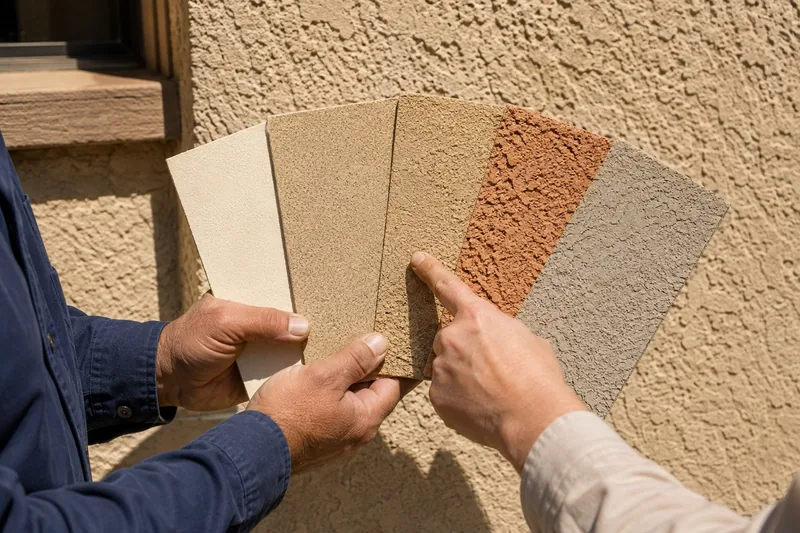
A sample panel is a test piece made with the same material, at the same thickness and with the same tool we will use on the patch. Unlike a color chip or a photograph on a phone, the panel shows the actual finish you can expect. We hold it flat against the elevation where the repair will go, outdoors and in the light that will fall on the completed work. You can then judge the texture and color where they need to match instead of trying to evaluate them under a work light.
You sign off on the sample panel before any material goes onto the house. When the panel is not close enough, we rework it during another visit at no cost to you. What we will not tell you is that the match will be invisible. The age of the wall, any coating already on the finish, the depth of the texture and the time of day all affect what you see. Even a carefully matched patch can still be found if you go looking for it on a wall that has spent years in this sun.
How Aggregate Size, Tool Pressure, and the Pigment Lot Affect the Match
Three parts of the work determine whether the new texture matches your wall. The first is the aggregate, the grade of sand in the finish coat that determines how coarse the surface feels under your hand. The second is the pressure and stroke used with the tool, which affect the finished pattern more than the mix itself.
The same bucket of material can produce sand with an evenly gritty surface, skip-trowel with scattered flattened patches, lace with overlapping raised ridges or dash with a rough field of small droplets when it is floated hard, knocked back with a trowel, or thrown and then flattened. We identify the finish on the wall and reproduce the hand movements that created it, because matching the material alone will not reproduce the texture.
The third part is color, and faded walls are where patches usually reveal themselves. Because colorant is mixed in batches, and two batches with the same color code can differ, we record the pigment lot used for the repair and keep that batch information on file in case you want a touch-up later. A pigment lot cannot correct fading that has already occurred across the wall. With around 255 sunny days a year, a fresh batch mixed to the original color code, the manufacturer’s reference for the selected color that you may find in the original product or project records, will look brighter than the elevation beside it.
When the color gap is too wide to correct within a local patch, we can even out the entire face with a fog coat, a thin cement-based color wash, or a wider recoat. Those options are part of our resurfacing and recoating work. For a new coat, we can also use integral pigment, which carries the color through the material instead of leaving it only on top.
Why Choose St. George Elite Stucco for Stucco Repair
We plan every repair around two decisions. After inspecting the wall, we keep the scope local by identifying each damaged area in the estimate and leaving sound stucco alone. We also agree on the matching plan before work begins, including the bonding agent, mix and finish texture chosen against the existing wall. You approve the result on a sample panel first. Because a faded wall will not match a fresh batch exactly, the approved panel gives you a clear expectation before we start the repair.
St. George Elite Stucco is a licensed and insured stucco contractor serving houses and rentals throughout Washington County, along with commercial walls and elevations.
Repair Scoped to the Damage, Not the Elevation
Your written estimate lists every damaged area separately and identifies the sound parts of the wall that we will deliberately leave alone. A clear stopping point matters because you can see exactly what the repair covers and what you are not paying us to repair. We provide the same written scope and advance matching process for small repairs.
What You Can Check Before We Start
Utah licenses stucco contractors at the state level rather than through a city or county, so you can check the same license number from anywhere in Washington County. Before we work on your wall, you can verify our license and insurance coverage. We carry general liability and workers' compensation.
Certificates are available before work starts, and our license number goes on every written estimate. Insurance does not protect you when the certificate is out of date, so ask us for a current certificate when you book rather than waiting until the crew arrives. Call (435) 236-2699 or use our quote form to schedule a free on-site estimate.
What Changes the Price of a Stucco Repair
The figures below come from published national and regional cost guides, last reviewed in August 2026. They are approximate, they are not specific to St. George, and they are not our prices. Those guides place many repair projects between $600 and $2,700. The range is wide because we price a repair from the conditions we find at the house. Most questions about stucco repair cost come down to the same six factors.
- How much wall needs repair, and where the damage sits. Repairing one crack at one window costs differently from making six patches across three elevations, even when the total repair area is the same.
- The height and ease of access. A short crack on a second story still requires us to set up a ladder or scaffold safely below it. You pay for that setup whether the repair extends six inches or six feet.
- How deep the damage goes. Sealing a hairline crack involves far less work than rebuilding a hole to the full thickness of the wall around it.
- How difficult the finish is to match. A heavy lace texture or badly faded color requires a sample panel for your approval first, and sometimes more than one. We may also need to blend the repair across more of the surrounding wall.
- How far we need to carry the blend. Extending the finish to a corner or joint uses more material than stopping at the edge of the patch, but the wider blend often keeps the finished repair from drawing attention.
- What we need to remove first. When a fixture, sealant joint or piece of trim must come off and then be reset, that work adds another step before we can apply any patch material.
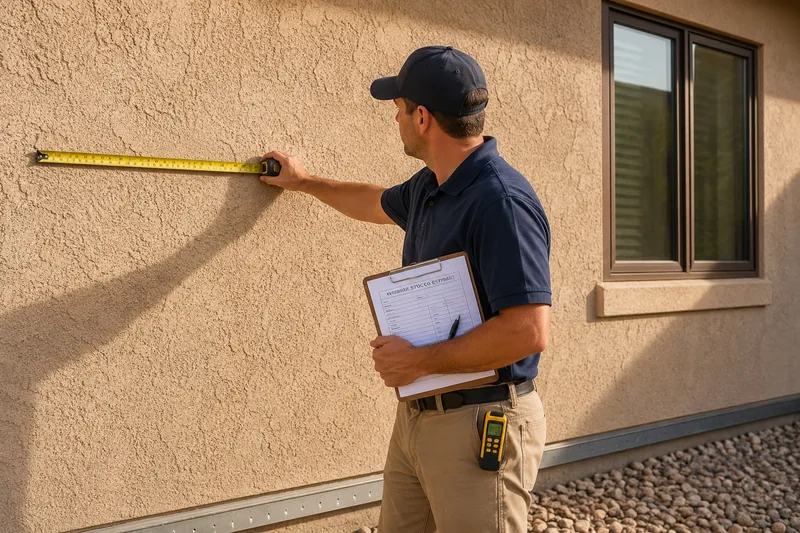
Small stucco repairs are normal work for us, so one crack at one window is still worth calling about. We will not give you a per-square-foot rate over the phone because we have not yet seen the access, the depth of the damage or the existing finish. After we measure the repair areas on site, we send the scope and estimate in writing before scheduling any work, so you can review the full repair estimate. To arrange an on-site inspection, call (435) 236-2699 or use our quote form.
From Inspection to a Blended Finish
St. George Elite Stucco handles the stucco repair process in five clear steps, beginning with an inspection and ending with a walkthrough after the finish has blended in. You meet with us twice before the first trowel touches the wall, then once more when the work is complete.
-
On-Site Inspection and Written Scope.
We walk through every damaged area with you and take photographs, recording the date on each file. You then receive a written scope with a separate price for each area.
-
Sample Panel and Color Sign-Off.
Before work begins, you view the sample panel outdoors against the wall itself and sign off on it. If your community reviews exterior work, we supply the color and texture samples for the package its homeowners association architectural committee reviews, and the color approval comes back in writing before we schedule.
-
Cutting Back and Preparing the Area.
We first cover the windows, plants and paving around the repair. For surface preparation, we remove the loose material, trim the edges back to solid plaster and brush on the bonding agent.
-
Rebuilding and Texturing the Patch.
During patching, we build the patch back to the full depth of the surrounding wall instead of skimming over the damaged area. For texture matching, we work the new texture to the sample panel you approved, and a deep repair may require more than one visit.
-
Curing, Walkthrough and Cleanup.
We give the patch the cure time it needs before applying any coating over it. Afterward, we inspect each repaired area outdoors with you and remove the masking, scaffolding and debris before closing out the job.
To put a repair on the schedule, call (435) 236-2699 or send the details through our quote form.
Stucco Damage and Your Homeowners Insurance Claim
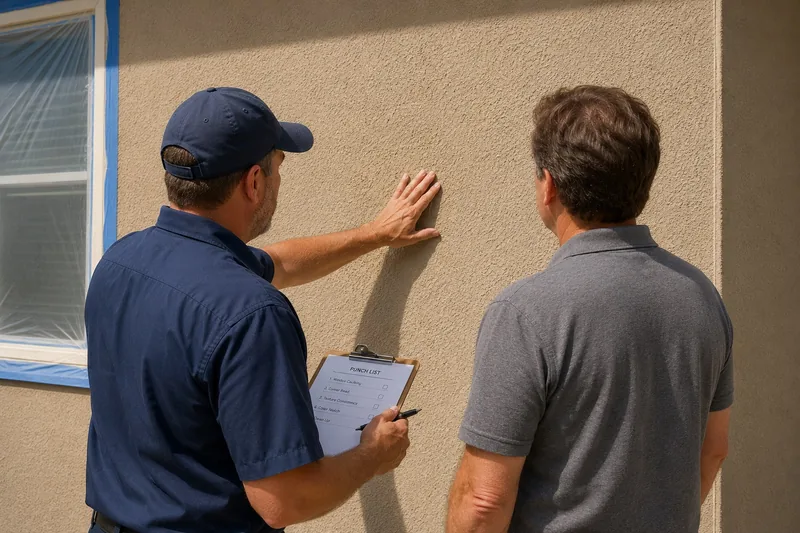
When you file a homeowners insurance claim for stucco damage, two separate jobs are underway, and we handle only one of them. Our job is to document what the wall looked like before the repair and what work it needs. Your policy and your adjuster decide what is covered, not us. For the claim, we provide documentation including the following records.
- Dated photographs showing the damage before anything is disturbed, because repairing the wall changes the evidence.
- An itemized written scope of the recommended repairs, broken out line by line so your adjuster can review it alongside the rest of your claim documents.
- The measured area of each repair, allowing every number in the scope to be traced to a specific place on the building.
- Any moisture reading taken during the inspection, along with its location and the date it was taken.
- A written record of what we found and what we recommended, whether or not you decide to go ahead with the work.
Before you call anybody, take photographs of the damage yourself. Stand far enough back to show where the damage sits on the wall instead of photographing only its close-up appearance. Finding where water actually entered the wall requires a separate investigation, and stucco remediation is the service that handles it.
Stucco Repair Across Southern Utah
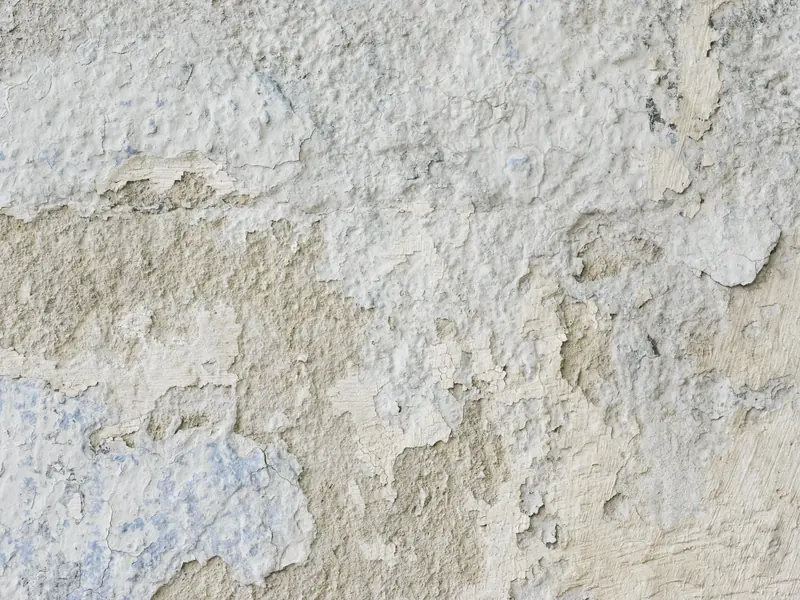
Elevation changes the conditions we find on stucco walls across Washington County. The valley floor sits 2,530 feet above sea level at the edge of the Mojave Desert transition, while the county rises steadily beyond it. In the valley, sun, heat and windblown dust age the stucco through fading and movement. Those are the main concerns we look for when repairing a wall there.
Homes in higher Southern Utah communities face a different pattern. Winter temperatures there become genuinely cold, so water that enters a crack can freeze, expand and thaw. As the opening widens, its edges begin to loosen. We account for the move into higher ground when inspecting your wall, but the elevation does not affect whether we travel to your property.
Where St. George Elite Stucco Repairs Stucco
St. George Elite Stucco serves homeowners throughout Washington County. Our service area includes the connected cities around St. George, along with smaller settlements near the county's valleys and mountain approaches.
- St. George, Washington, Santa Clara, Ivins, Hurricane, La Verkin, Toquerville, and Leeds
- Winchester Hills, Diamond Valley, Dammeron Valley, Veyo, Brookside, Central, and Pine Valley
- Gunlock, Shivwits, Virgin, and Apple Valley
Whether your property is in the valley or the high country, we take stucco repair calls throughout the entire service area.

Stucco Repair Questions from Washington County Homeowners
Washington County homeowners often ask us these questions about stucco repair. Here are the same straightforward answers we would give while standing beside the wall with you.
Why did my last stucco patch crack again in the same line?
A hard patch cannot flex with a crack that is still moving underneath it, so the patch eventually splits along the same line. We fill a moving crack with a flexible sealant that can accommodate that movement. If the crack returns a second time after that repair, the wall needs remediation rather than another patch.
What does the sample panel actually compare?
The sample panel lets you compare four parts of the finished repair, including the sand grade in the finish, the pressure and stroke used to build the texture, the pattern itself, and the pigment lot that gives the color. We work the panel in the same material used for the patch instead of handing you a color chip. You can therefore approve the texture and color together before work begins on the wall.
What documentation do I get if I file an insurance claim?
You receive photographs of the damage along with a written scope that itemizes each recommended repair. We take those photographs whether or not you ultimately file a claim, so you have a record either way. Your adjuster makes the coverage decision, and we do not represent you in that decision.
Should I wait and have the whole wall recoated instead?
When the damage is local and the surrounding plaster remains sound, a repair is the smaller job, and waiting only gives water more time to enter. Once an entire elevation has become uneven, however, a patch will stand out against the surrounding surface, so resurfacing is the better answer. If you already plan to recoat the wall, we schedule the repair before the recoat.
Can I patch stucco myself with a bagged repair mix?
A bagged repair mix can fill a small hole, but it needs a bonding agent to grip plaster that has already cured. Straight out of the bag, a fresh batch also will not match a textured wall that has faded in the sun. Most home repairs remain visible in two places, including the texture across the patch and the edge where it meets the existing finish. Blending both areas takes skill by hand.
When should I worry about a stucco crack?
Pay attention when a crack keeps opening, returns after a repair, or develops staining around it. The width alone does not tell you whether the crack is a settled shrinkage crack or is still moving. What matters is whether it has moved since you first spotted it.
Have the Damage Inspected First
Are you unsure whether the wall needs a stucco repair or a larger job? Having us look at the damage is the quickest way to get a clear answer. We inspect each damaged area, explain which scope applies, and give you the scope in writing. Photos are helpful before the visit, so attach any you already have to the form and we will know what to expect when we arrive. The visit is free, and you receive the estimate in writing. Call (435) 236-2699 or request a free estimate through our quote form.