Stucco Contractor in Leeds, UT: Repair, Coatings & New Walls | St. George Elite Stucco
St. George Elite Stucco is a stucco contractor serving Leeds, Utah, and the company has provided primarily residential stucco services for 15 years. If a wall has already failed, we repair the damaged area, remediate the cause when water has gotten in behind the finish, or take off and replace cement plaster, the material commonly called stucco, when it is past saving.
When the wall underneath is still sound and only the surface looks tired, we resurface and recoat it with an acrylic finish, paint it, or even out blotchy color with a fog coat, a thin cement-based color coating. On new work we build the wall from the lath out. We also stucco block walls, set stone veneer, add decorative detail, and do interior plaster, and we take commercial jobs on the Main Street frontage as well as houses.
Leeds is a small town, and an old one. Buildings on Main Street here date from 1868, while newer houses stand nearby. The local building stock includes both mining-era stone walls and newer framed walls.
The town sits at 3,504 feet in Washington County, just off Interstate 15 north of Washington City, and we cover it from our shop in St. George along with the rest of the county. For new and replacement exterior plaster work we follow the International Residential Code, and IRC R703.7 is the section of it that governs exterior plaster. The scope follows the diagnosis, so we settle what your wall is made of before we talk about color. For an on-site inspection, call (435) 236-2699 or use our quote form.
Why Choose St. George Elite Stucco for Leeds Stucco Work
In Leeds, we first determine which century your wall belongs to. The answer can change from one house to the next, and it determines the right material before price enters the conversation. We inspect every elevation, or outside face, then write the scope around what is actually there. We also plan the metal lath, the mesh that supports the plaster; casing bead, the trim at plaster edges; and control joints, the gaps that manage movement. As a local stucco contractor, St. George Elite Stucco brings 15 years of experience with historic masonry, framed walls, and modern cladding assemblies.
Our stucco experts record substrate changes and previous repairs on each elevation, so your quote reflects the walls actually standing on your lot.
On 1800s walls, we match texture and color from an on-building sample panel because color cards mislead on aged surfaces.
We place the lath, casing bead, and control joints before mixing because many supposed stucco failures start underneath.
Your written estimate names the wall system being priced, so you know exactly what you are buying.
Before we work on your wall, you can verify our license and insurance coverage. We carry general liability and workers' compensation. Certificates are available before work starts, and our license number goes on every written estimate. As a stucco company, we provide your on-site estimate at no cost.
Choosing the right service starts with identifying the wall assembly already on your property. Solid masonry holds and releases moisture differently from a framed wall built in layers, so they cannot take the same coating system. The stucco services below describe what we do, but your wall determines the materials and preparation we use. If the damage is confined to one area, you need a repair; if it keeps returning, we remediate the cause. When the outside face has failed, you need replacement, while you can choose resurfacing or coatings for a sound wall that only looks tired. We identify its construction first, then quote the building you actually own.
Stucco Repair
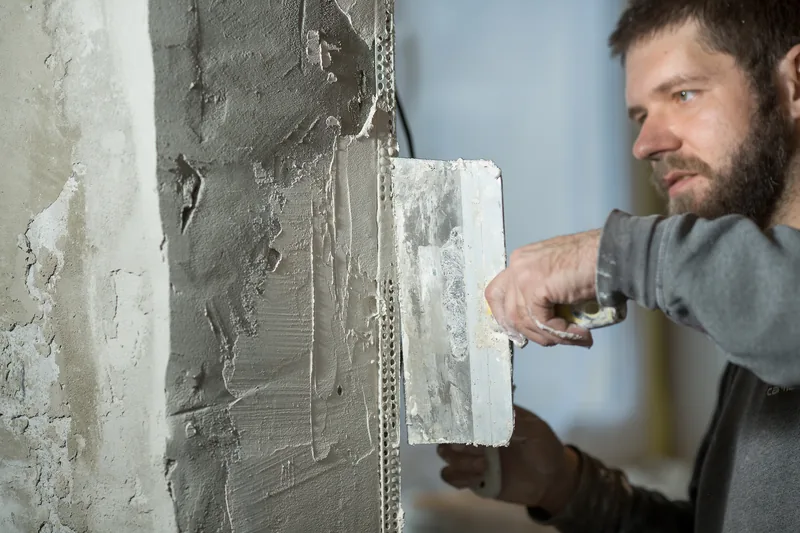
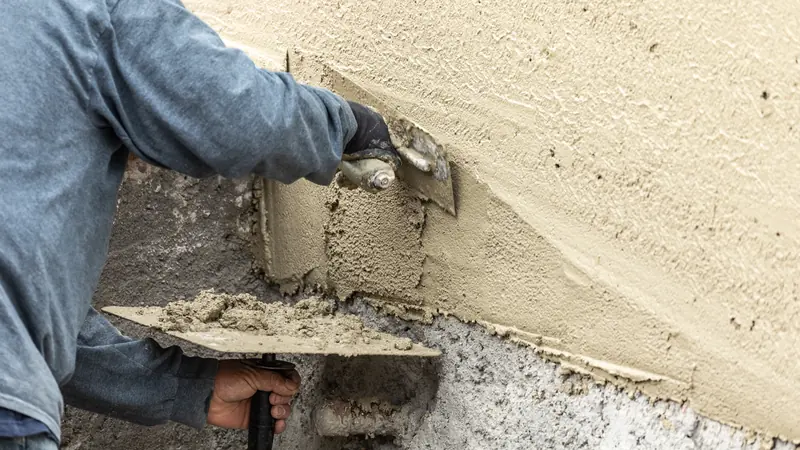
We start a repair by identifying how your wall was built. We remove and replace separate damaged patches, then choose a mix that will not cure harder than the surrounding plaster. We open each hairline crack and fill it with material that matches the surrounding cement plaster. Caulk is the wrong choice because it weathers differently, and the filled line can become plainly visible after you paint over it.
Stucco Painting & Coatings
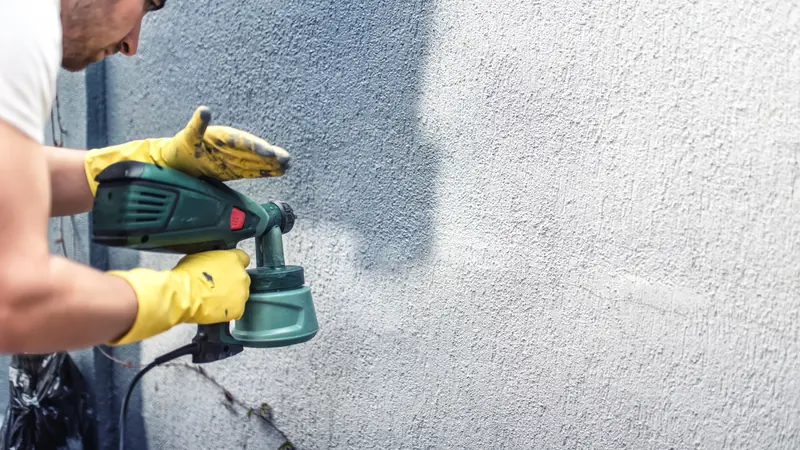
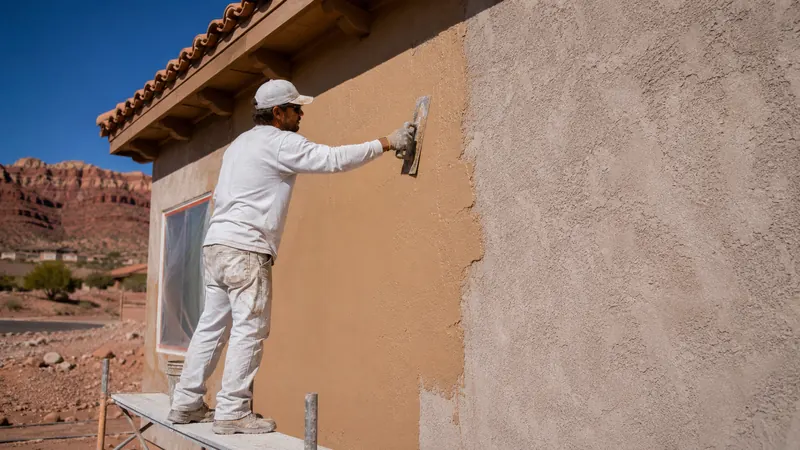
For an older Leeds wall, we choose the finish while standing at the building, where we can see the existing surface and its condition. Before applying anything, we explain which finish your wall will receive and why. One option is an acrylic finish; another is integral pigment, which mixes the color throughout the finish coat rather than leaving it only on the surface. If the wall chips later, you will not see a different color underneath.
Stucco for Block Walls
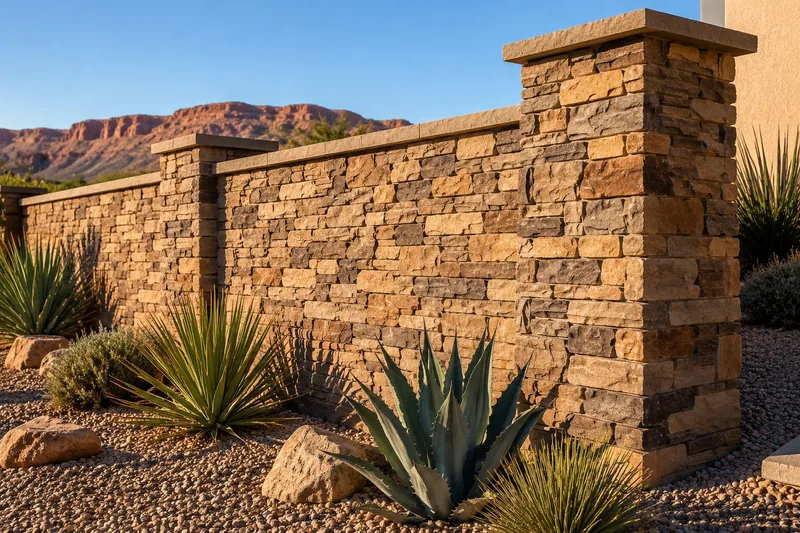
Property walls divide the small lots downtown and border larger parcels outside town, and we stucco concrete block in both settings. We clean and prepare the block, then work in a bond coat, the layer that helps the stucco grip the masonry. We also install control joints, planned gaps that give normal wall movement a place to occur without causing random cracks. You can match the finish to your house or choose a different one, and we list that work separately on your estimate.
Commercial Stucco
Commercial work in Leeds includes the short stretch of business frontage on Main Street and two RV parks on the east side. We schedule around your opening hours and complete one elevation, or outside face, at a time so you can keep operating. Where a narrow frontage leaves little working room, we arrange the scaffolding on your property instead of placing it in the street.
Stucco Replacement & Removal
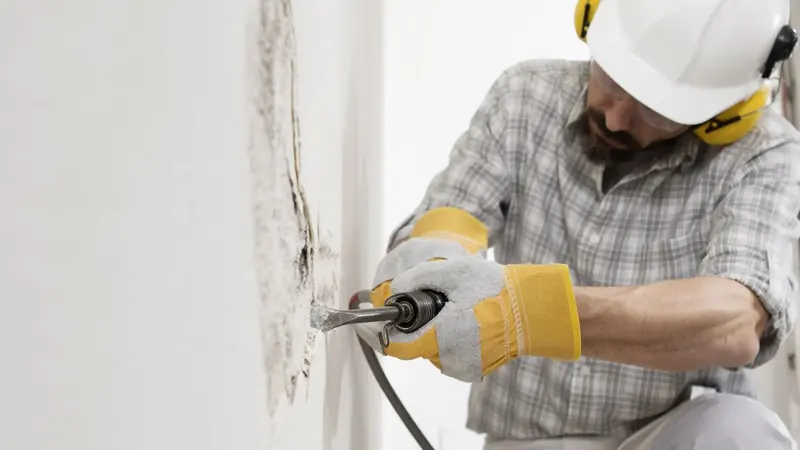
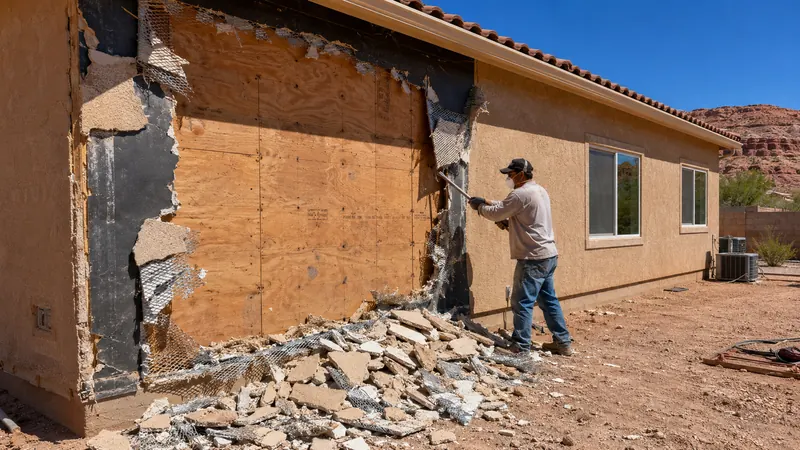
When the coating has failed across an entire outside wall rather than in a few patches, we perform a tear-off and replace it. On an older building, we first open a small section to inspect the substrate, the masonry or sheathing beneath the finish. Its condition determines how we rebuild your wall and whether any hidden damage needs correction. We base your quote on what that inspection reveals.
Stucco Remediation
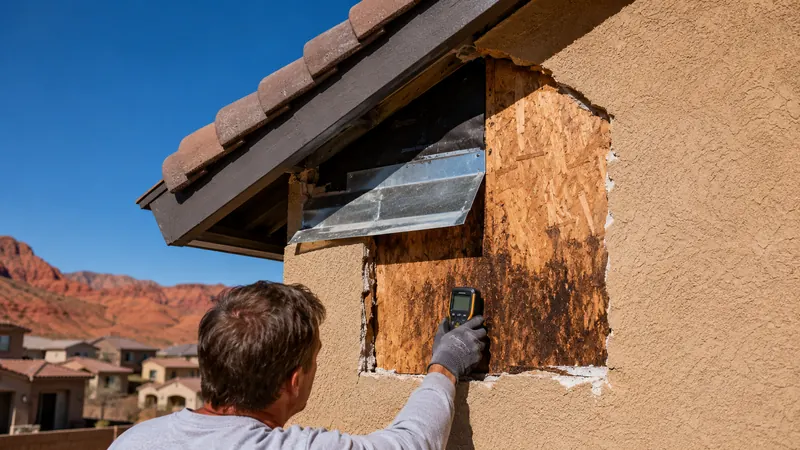
If water keeps getting behind your stucco and repaired areas continue to fail, we trace the leak before rebuilding the wall. The cause is usually the flashing rather than the plaster, meaning the thin metal fitted at joints and openings to shed water clear of the wall. We correct that entry point first. Rusting metal expands as it deteriorates, while roots and vines pressing against your wall can widen cracks and eventually cause spalling, where the surface breaks away in flakes.
Plastering Services
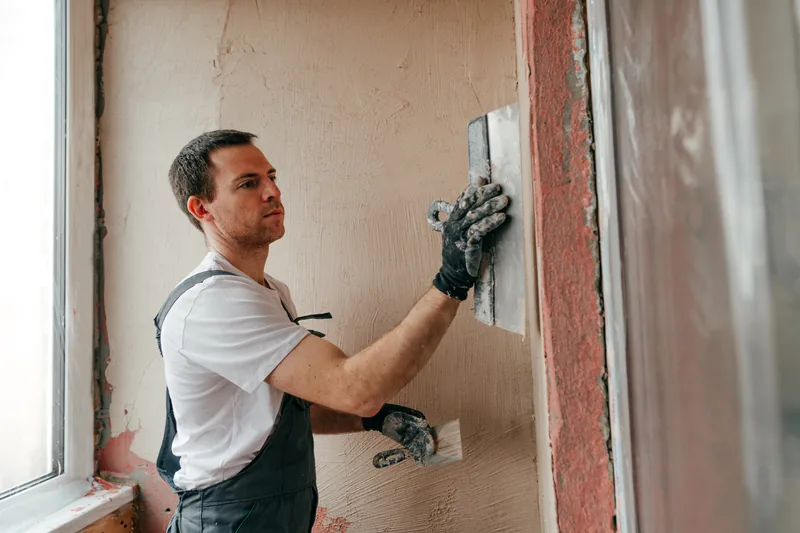
We also repair interior plaster. In an older Leeds house, we preserve a sound original surface whenever possible because removing it makes that character difficult to recover. If you are renovating a room down to the studs, we can apply veneer plaster, a thin plaster finish, over blueboard, a gypsum panel made to hold it. We perform that work to ASTM C843, the standard covering how gypsum veneer plaster is applied.
Stucco Installation
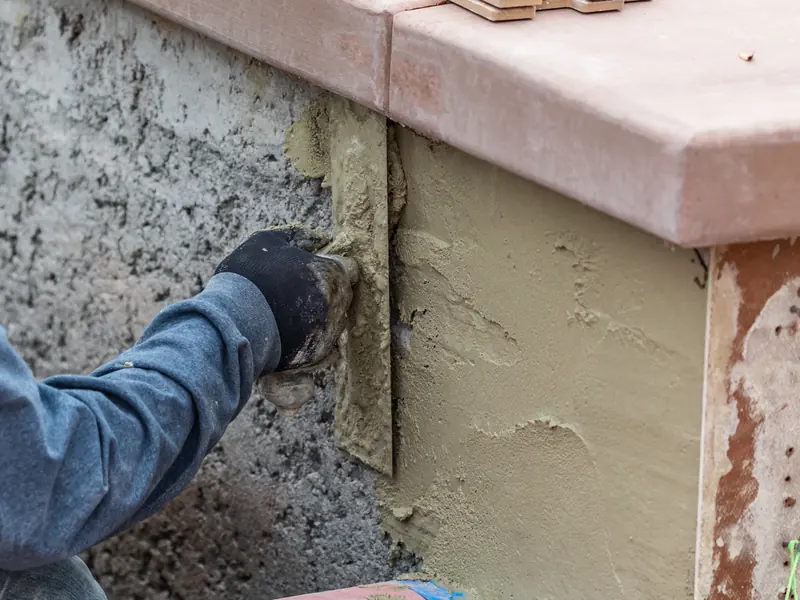
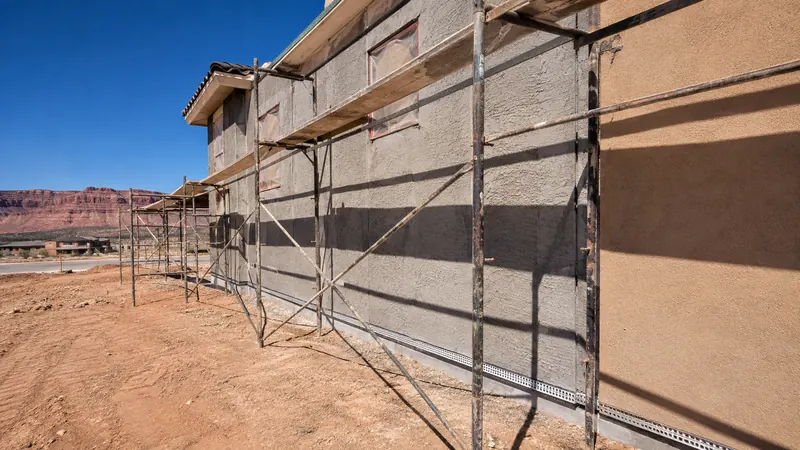
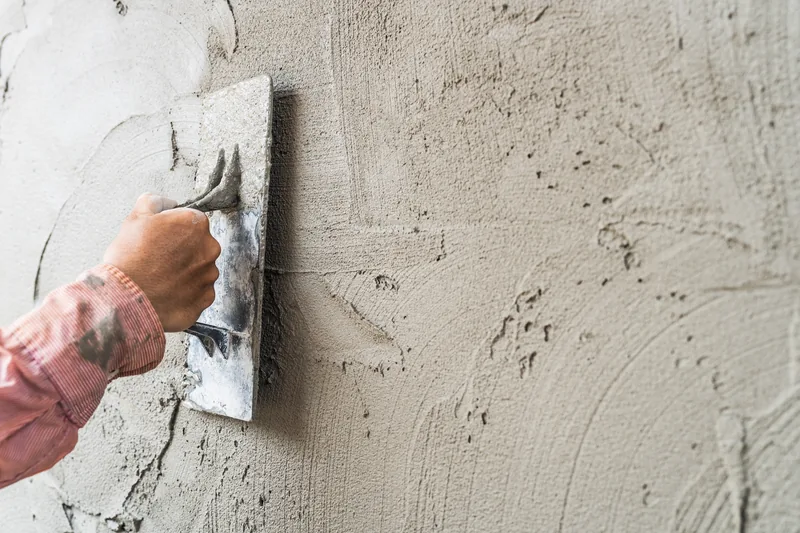
For new stucco, we build your wall outward from metal lath, the mesh that holds the plaster coats in place. Before mixing the stucco, we install casing bead to create clean finished edges and corner aid, the metal reinforcement set on an outside corner. We plan control joint spacing around the actual dimensions of your wall rather than using a generic layout. Those concealed supports give the finish stable edges, stronger corners, and planned places for normal movement.
Stucco Resurfacing & Recoating
If the plaster beneath your finish remains sound but the surface looks flat, blotchy, or faded, we resurface it instead of replacing it. We can apply a fog coat to even out inconsistent color across an entire exterior wall. If you want a different color and a completely new surface, we apply a full finish coat. Neither option adds unnecessary thickness for your wall to carry.
New Construction Stucco
We also stucco new houses as they go up around town. We coordinate with your builder and work to the builder schedule, beginning after the windows and water-resistive barrier, the drainage layer behind the stucco, are installed but before crews set the finish grade, the final ground level around the house. Following that sequence keeps completed sections from being opened again later and allows the wall system to come together in the proper order.
Decorative Stucco & Architectural Details
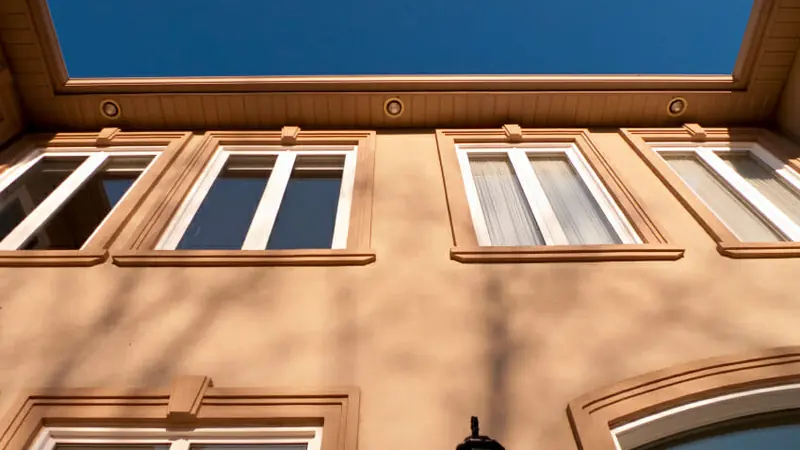
We shape bands and sills, form recessed lines called reveals, and build each window surround to give your exterior walls finished edges. For a Leeds house, the right reference may be an older building across the street rather than a standard detail from a subdivision pattern book. We use the existing architecture on your block to guide the proportions and shape. You can review the detail on a sample panel before we reproduce it at full size.
Stone Veneer
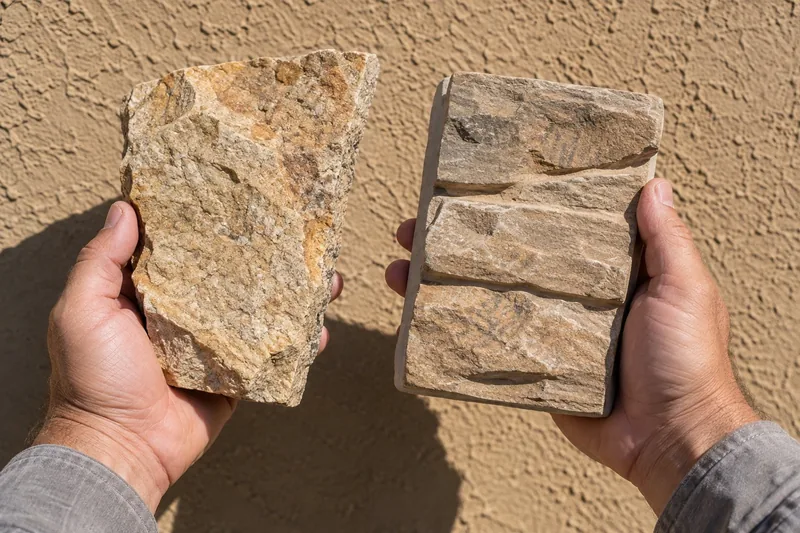
Stone fits naturally into the Leeds landscape, but the joint where it meets stucco needs careful construction. We install adhered stone veneer, a thin layer of stone bonded to the wall, and bring the stucco to it along a clean line. Behind both finishes, we keep the water-resistive barrier continuous across the transition. If the water-resistive barrier stops at the joint, water can enter behind your stone or plaster and damage the wall where the two finishes meet.
What a Stucco Contractor Finds on Leeds Masonry and Framed Walls
An older solid-masonry building and a newer framed house can stand on the same Leeds street, but they handle coatings differently. The right approach for your wall depends on the substrate supporting the existing finish, because that decides what the wall can take. That is the first question an exterior stucco contractor needs to answer. We settle it by inspecting the building in person rather than trying to diagnose the wall over the phone.
Finding Out What Is Already on an Older Wall
Older masonry buildings have often been patched several times, so the wall you see today may contain two or three different materials. The National Park Service explains this in its Preservation Briefs on historic stucco. A wall that began with lime-based stucco may have collected portland cement repairs over the years, and the two behave differently on the same wall, so what is already there changes what can go on next. Our stucco applicators inspect those layers instead of assuming that one material covers the entire building.
We walk each elevation before writing the scope. We first check the places where water commonly enters: kickout flashing that directs roof runoff away from the wall, head flashing above your windows and doors, and sealant joints around pipes, vents, and other openings. We rarely find that a leak begins in the field, the broad uninterrupted area of stucco. It usually starts at an edge, joint, or opening.
Why One Coating Strategy Does Not Serve Both Kinds of Wall
A modern framed wall is built to drain water that gets behind the finish. Water that gets past the finish runs down the water-resistive barrier behind it and leaves at the bottom of your wall. Because that drainage route remains open behind the stucco, the wall can accept a sealed film on its outer surface.
A solid masonry wall has no drainage cavity. Moisture that enters the masonry must escape through the wall face, so a sealed coating can trap it inside. That is why we may use a vapor-open finish, which allows moisture to pass outward, instead of a rigid sealed coating. Houses only a hundred feet apart can require different decisions. On older buildings, this also favors repairing individual patches instead of stripping an entire elevation, an approach the National Park Service recommends.
About Leeds, Utah
Leeds began in 1867, when families flooded out of Harrisburg settled here and named the town after Leeds in England, where many had come from. The town occupies 6.29 square miles and sits at 3,504 feet above sea level. Public land surrounds it, with the Dixie National Forest and Pine Valley Mountain Wilderness to the west and north and the Red Cliffs Desert Reserve along its other edges.
Silver Reef Road passes under the interstate and continues to the old mining camp that gave the road its name. Silver was extracted from sandstone there in the 1870s, but the mines went quiet within a decade. What remains is the Silver Reef ghost town, and the Silver Reef Museum preserves its history. We do not work on any of the surrounding public land, and the ghost town’s standing walls are historic remains, not a jobsite.
Back in town, Leeds Town Hall stands on Main Street, while Leeds Cemetery dates from 1870. What we work on is your wall, wherever your property sits in and around Leeds.
Where We Work In and Around Leeds
We provide stucco services throughout Leeds and its nearby residential areas. The locations cover older downtown properties, larger homes west of the interstate, block walls near Mulberry Street, and new construction around town. Homespun is the exception because it has a Leeds address but sits outside the town line.
Main Street and the Older Downtown: Repairing the Town’s Oldest Walls
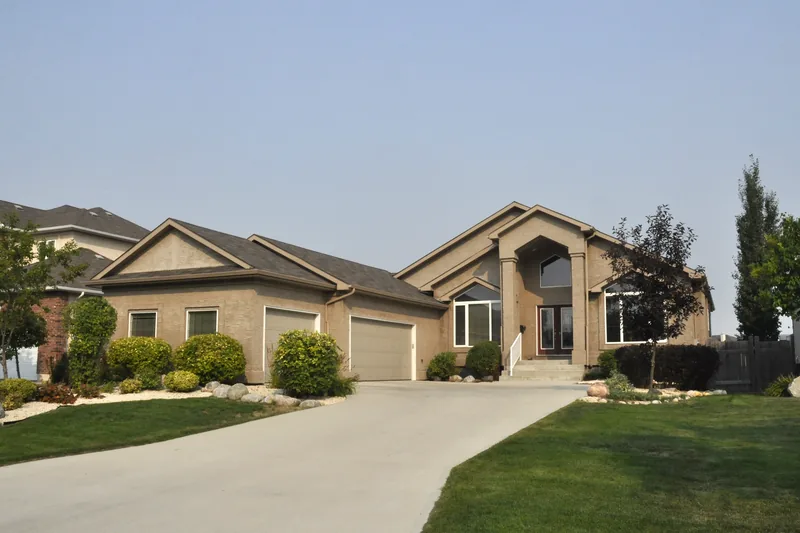
Downtown Leeds has the smallest lots and the town’s oldest buildings. Several properties on the historic list include both a house and its surrounding wall, which reflects much of the work we see here. We open only the cracked, loose, or failing sections, leave sound material undisturbed, and blend the repair into a surface that may have been there since the 1800s.
The Silver Reef Area West of Interstate 15: Coating Estate-Lot Homes
The general plan places this area west of Interstate 15 along Silver Reef Road, where larger lots hold estate-type homes. The ground is open, and different sides of a house receive different amounts of sun, so homeowners often call us about recoating them. We usually coat an entire elevation because a partial coating remains visible on such an open wall.
Mulberry Street Near Interstate 15: Building and Coating Block Walls
Mulberry Street is one of the nine areas used to organize the town’s historic list. It is also home to the Benjamin Stringham House, built in 1870, and the street runs directly toward Interstate 15. Block walls on this side of town usually serve a practical purpose, so we build and coat them for that job. On longer runs, we place joints where the wall needs room to move without cracking unpredictably.
Homespun and Possible Annexation Land: Recoating Older Finishes
The general plan identifies Homespun as existing housing within land Leeds could annex later. Homes there have Leeds addresses, but they remain outside the Town of Leeds today. Their older finishes usually need recoating rather than complete replacement. We resurface each wall, restore consistent color across the whole elevation, and leave the existing plaster wherever it remains firmly attached and sound.
The South, Central, and East Sides: Plastering New Homes
We often first see new-home projects before the walls exist, so we follow your builder’s drawings and construction sequence. After the protective barrier covers the wall, we hang lath. We then return to apply the finish after the roof, windows, and doors protect the interior from weather. We take the exterior walls once the shell is weather-tight, coordinating our return for the finish coat with the builder’s sequence.
A Small Leeds Housing Stock, and How Widely It Varies
Leeds has only a few hundred houses, and almost all of them are single-family homes. For a residential stucco contractor, the meaningful differences are the homes’ ages and lot sizes, from pioneer-era houses on compact downtown parcels to newer homes on larger properties.
Working on Downtown Lots and Five-Acre Properties
The town’s general plan shows residential lots ranging from about 7,000 square feet to over five acres. The smaller lots are generally in the older downtown area.
On a downtown lot, we often work close to your neighbor and the street, so scaffolding may stand close to the property line and bagged material must fit within a small staging footprint. A house on five acres may sit well back from the road, leaving more ground to cross and often more wall area to measure. We choose the plaster according to the wall itself, not the size of the lot.
Where the New Houses Are Going
New houses continue to be built in Leeds, mainly in the southern, central, and eastern parts of town according to the general plan. We take that new-construction work along with repairs to the walls already on your home.
On a builder’s wall, we follow a sequence set by framers, roofers, and window installers, while an owner’s repair begins by identifying what is already on the building and what remains sound. Tell us which kind of project you have so we can prepare for the right visit. Call (435) 236-2699 or send it through our quote form.
Leeds Town Permits, and What a Historic Address Does Not Require
Leeds is incorporated, so the town handles its own building process instead of sending applications to Washington County. Your paperwork stays local.
Permit Applications Go Through Town Hall on North Main Street
You submit a building permit application to town staff at the Town Hall on North Main Street. Staff first checks it against the town’s land use ordinance. A plan examiner then reviews the drawings for code requirements, and the town’s building inspector visits at the required stages.
The town’s application packet asks for several items, including a copy of a current contractor license, and we submit what it requires. You generally do not need a permit when we are repairing or recoating existing stucco as routine maintenance. If the work involves removing everything back to the sheathing, the structural panels beneath the finish, or stuccoing a new building, the requirements change. The town decides which type of project you have, not us, and it publishes its current requirements itself (leeds.utah.gov).
A Historic Overlay the Town Has Not Created Yet
If you own one of the old houses on Main Street, you do not have to ask anyone to approve a color. Leeds keeps its own inventory of historic sites and structures, with entries dating to 1868. Separate from that town inventory, two properties appear on the federal National Register of Historic Places and one more appears on a state historic list. None of those listings creates a local approval process. The zoning ordinance says the town has not yet created its historic overlay and currently provides no exterior design standards or architectural review board.
A National Register listing places no restrictions on a private owner using private money on their own building.
Stucco Questions From Leeds Homeowners
My house is one of the old ones on Main Street. Can you plaster over the original masonry?
Yes, provided the wall can release moisture and the new plaster is compatible with the material already there. NPS Preservation Brief 22 explains that rigid portland cement repairs are incompatible with early, mostly soft lime-based stucco. An older wall may also contain several materials from past patches, so we examine each layer before selecting a mix. If you do not know when the house was built, we can identify the wall’s construction and existing coats during the inspection.
Are you only doing repairs out here, or do you do new houses too?
We do both. The town counted 401 housing units at the 2020 census, compared with 352 ten years earlier. That increase means we work on newly built houses as well as the older walls that need repairs. We quote either kind of project, and if you have both, we can look at them during the same visit.
Our lot is five acres and the house sits well back. Does that change the job?
Your lot changes how we bring in materials, park, and set up the work area, but it does not determine the wall system. Although 99 percent of the housing in Leeds is single-family, the appropriate wall system depends on the house’s construction and substrate rather than the acreage. During the estimate visit, we settle the parking and staging plan for materials and equipment.
We want stone on part of the front and stucco on the rest. Do those go together?
Yes, but we need to plan the joint between them carefully. Adhered stone, which is bonded to the wall rather than stacked as a structural wall, and plaster finish build out to different thicknesses. We work out where they meet before installing the lath. The water-resistant barrier behind both finishes must remain continuous through that transition. If the joint is decided at the end, you can be left with a raised, uneven line.
It is a small town. How long before you can start?
We do not publish a turnaround. After we inspect your wall, we put what we can tell you about scheduling in the written estimate. If your job requires a permit, the Town of Leeds controls the front end through its own submittal process, which covers filing and reviewing the permit paperwork (leeds.utah.gov).
Is Leeds actually on your list, or do you mostly stay closer to St. George?
Yes, we work in Leeds. It is one of the nineteen communities in our published service area, and you pay nothing for us to visit your property and look at the work, even if you decide not to proceed. Have your street address ready when you call, and we will check it against our coverage on the spot.
Get a Free Stucco Estimate in Leeds
When you call, give our stucco contractor your property address and the approximate year the building went up. In Leeds, those details tell us more than anything else about what we may find and what to bring for the first visit. The building’s age changes what we arrive expecting; if you do not know it, say so, and we will work it out at the wall. The address also lets us confirm that your property falls within our service area.
You receive the estimate in writing, and the visit is free. Call (435) 236-2699 or request a free estimate through our quote form.