Stucco Contractor in Washington, UT: Repair, Recoating & Installation | St. George Elite Stucco
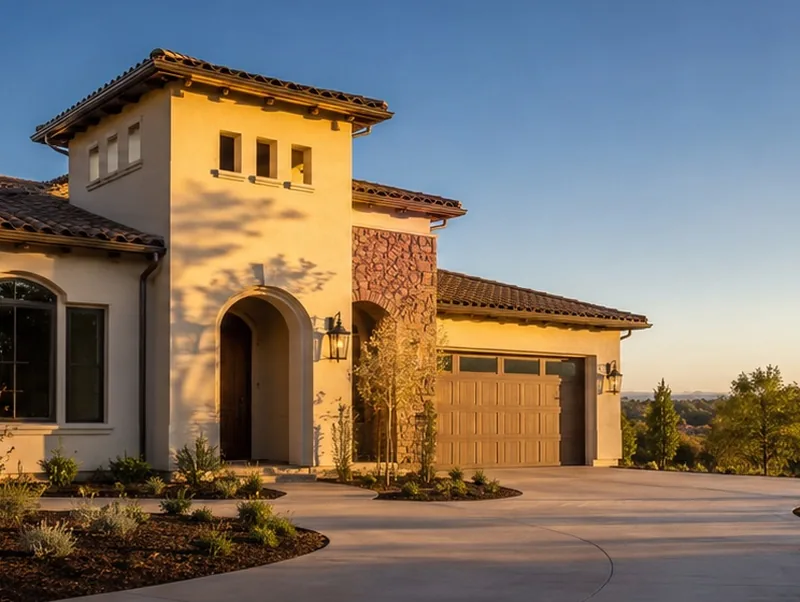
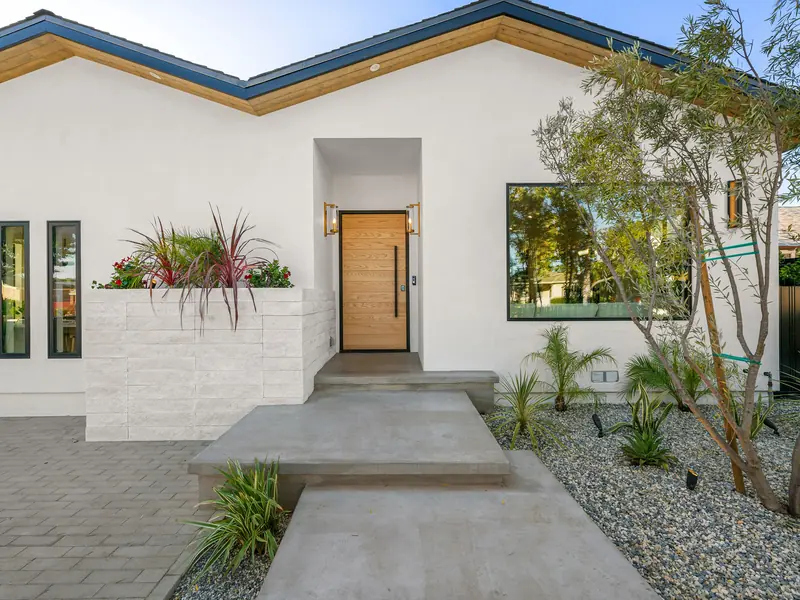
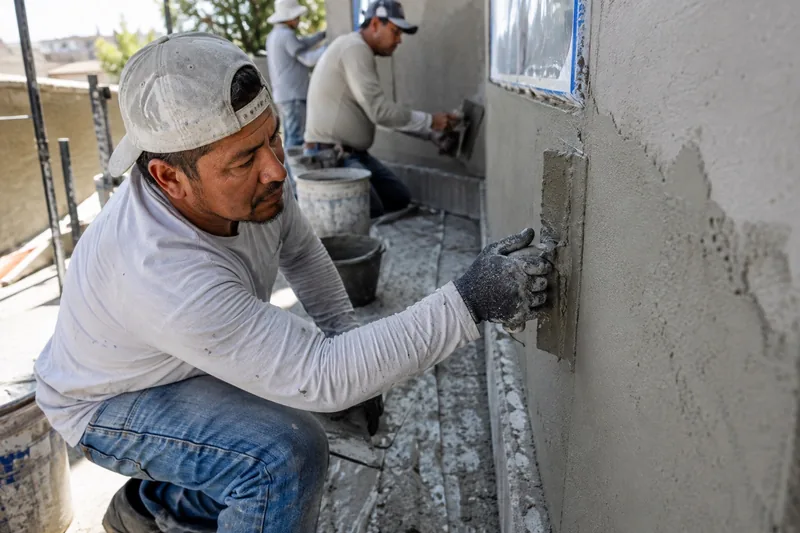
St. George Elite Stucco is a stucco contractor that has served homeowners and businesses in Washington, Utah for 15 years. For smaller areas of damage, we provide stucco repair to address cracks, chips, impact damage, and other isolated problems. When moisture or deterioration affects a larger section of the wall, we can remove and replace the damaged stucco or carry out a more complete remediation. If the stucco is still sound but looks faded or worn, we can refresh the entire exterior with resurfacing and recoating. We also offer painting, coating, and texture options, including fog coats and acrylic finishes, when the main goal is to update or restore the color.
We install stucco on new residential homes, additions, commercial buildings, and site walls. We do stucco installation for new construction, and install complete wall systems as well as smaller additions to existing properties. For masonry walls, we apply stucco directly over properly prepared concrete block - a practical finish for privacy walls, property walls, and other concrete masonry unit (CMU) construction. We also handle commercial stucco projects and interior plastering, along with decorative stucco details, architectural features, and stone veneer for homeowners who want to add more depth and character to an exterior.
Washington has grown rapidly over the past two decades, which means much of the local housing stock is still relatively young. The city's population increased from 8,186 residents in 2000 to 18,761 in 2010 and 27,993 in 2020. The city grew 49 percent during the 2010s alone, compared with 18.4 percent for Utah, which led the country that decade, and 7.4 percent for the nation. Because so many homes were built during that period, we often see stucco that is reaching the point where it needs its first significant round of maintenance rather than a complete restoration. Older homes and walls are more common in areas such as Old Town and Buena Vista.
From Washington to communities throughout the St. George area and Washington County, stucco has to stand up to intense sun, heat, wind, and long stretches of dry weather. The right repair depends on what is happening beneath the surface, not just what the damage looks like from the outside. We inspect the condition of the wall first so you understand whether you are dealing with a simple repair, a coating issue, or a problem that requires more extensive work before we recommend a scope and price. Give us a call or use our online form to request a free consultation and quote on your stucco job today.
Why Choose St. George Elite Stucco for Stucco Work in Washington
Before we write an estimate, we inspect the wall and determine what is causing the problem. That finding shapes the work we recommend and the price we provide. You work with a licensed stucco contractor who can explain how we reached that conclusion.
We diagnose the problem first. We determine whether you have a surface blemish, cracks or damage in one area, or a problem that extends through the wall assembly. Then we write the scope.
Your written estimate identifies the wall system, the proposed stucco thickness, and the finish material we will apply, so you know exactly what the work includes.
Before we work on your wall, you can verify our license and insurance coverage. We carry general liability and workers' compensation. Certificates are available before work starts, and our license number goes on every written estimate.
One person manages your job from the initial inspection through the final walkthrough.
Before work begins, we protect windows, landscaping, and driveways. When the job is complete, we remove the staging and clear away any debris.
We install the weep screed and drainage plane as parts of the wall that must meet code, not as decorative trim.
We treat one-coat stucco, three-coat stucco, and EIFS with drainage as separate wall systems. We specify, quote, and build each one according to its specific requirements.
Licensed & Insured | 15 Years of Experience | Free Written Estimates | Residential & Commercial
Call (435) 236-2699 or use our quote form to schedule a free on-site estimate. We also provide stucco services in Hurricane, east along the corridor, and work throughout the rest of eastern Washington County.
Stucco Services for Washington, Utah Homes and Businesses
Most of our work in Washington involves maintaining existing stucco, although builders are still putting up new homes in the fields southeast of the city. During spring and fall, we often repair and recoat exterior walls throughout established subdivisions while applying the first stucco coats to the newest groups of homes.
Stucco Repair
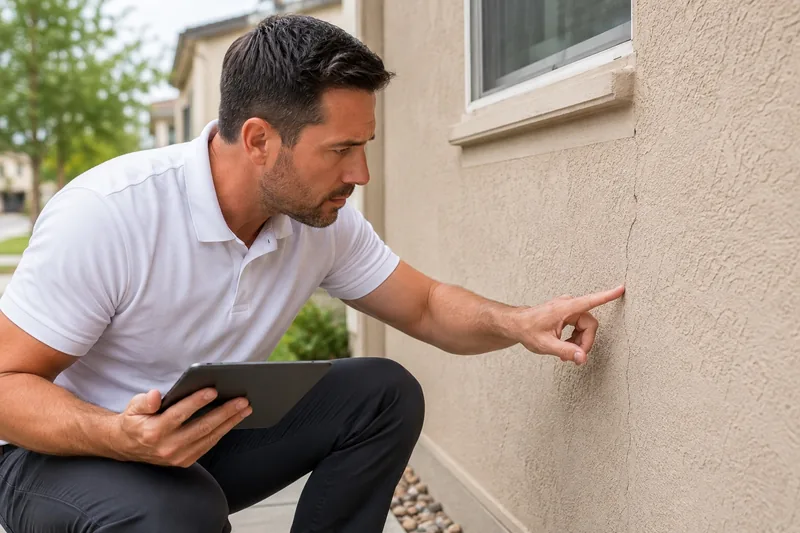
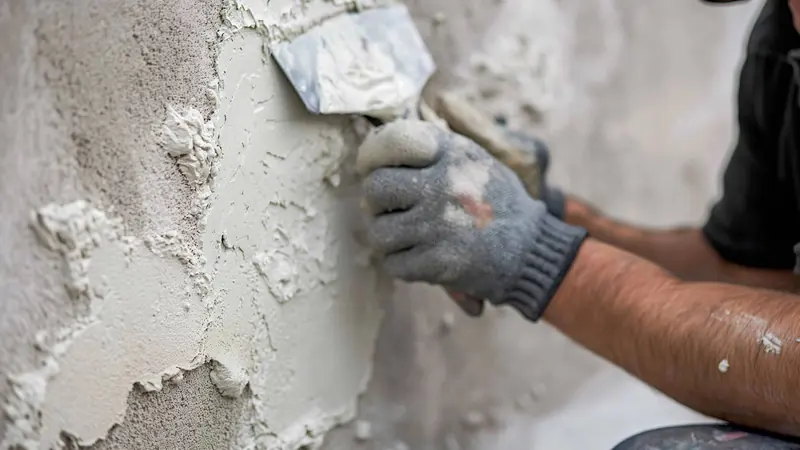
Cracks show up first where the wall is broken by an opening or a joint, running diagonally out from window and door corners and along the control joints built in to let the wall move. Instead of judging one crack by itself, our stucco experts look across your entire wall for a pattern. That pattern helps us find the cause and decide whether to seal a small crack, repair one damaged area, or recommend more extensive work.
Stucco Painting & Coatings
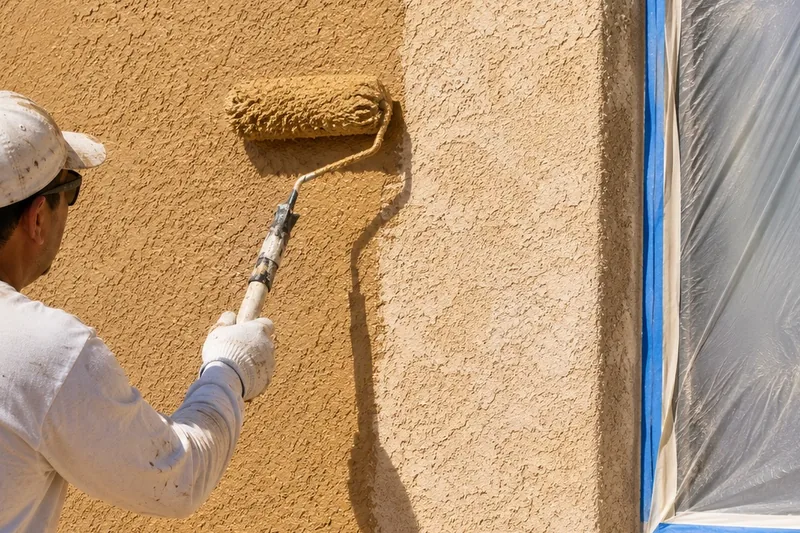
Sun exposure usually fades south- and west-facing walls first, leaving two sides of a house looking weathered while the others still look sound. We rub the surface to check for chalking, which is the powdery residue that aging stucco can leave behind. We also test the stucco’s alkalinity before deciding whether a mineral coating or an elastomeric coating is appropriate.
Stucco for Block Walls
Many privacy, courtyard, and property walls in the St. George area are built from concrete block. When the block is in good condition, stucco can usually be applied directly to the masonry without the metal lath required on framed walls. We prepare the surface first, then apply the stucco in two coats for a durable, even finish. If the block is especially smooth, painted, or sealed, we add a rough bonding coat first so the stucco has something to grip. We also carry existing joints through the finish where needed rather than simply covering them, which helps reduce the chance of cracks forming along the same lines later.
Commercial Stucco
Retail stores, offices, and multi-family properties often need to remain open while we work on their walls. We complete the building in planned phases so tenants can continue operating. Before the crew arrives, we coordinate lift and scaffold access with the property manager rather than trying to resolve access problems after work has begun.
Stucco Replacement & Removal
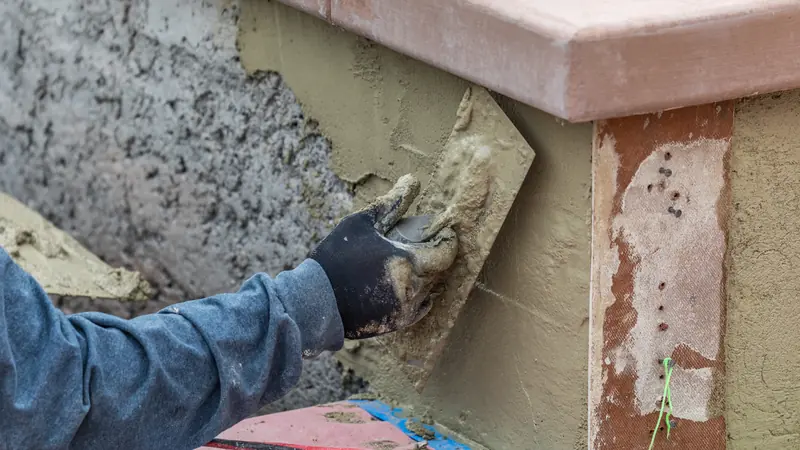
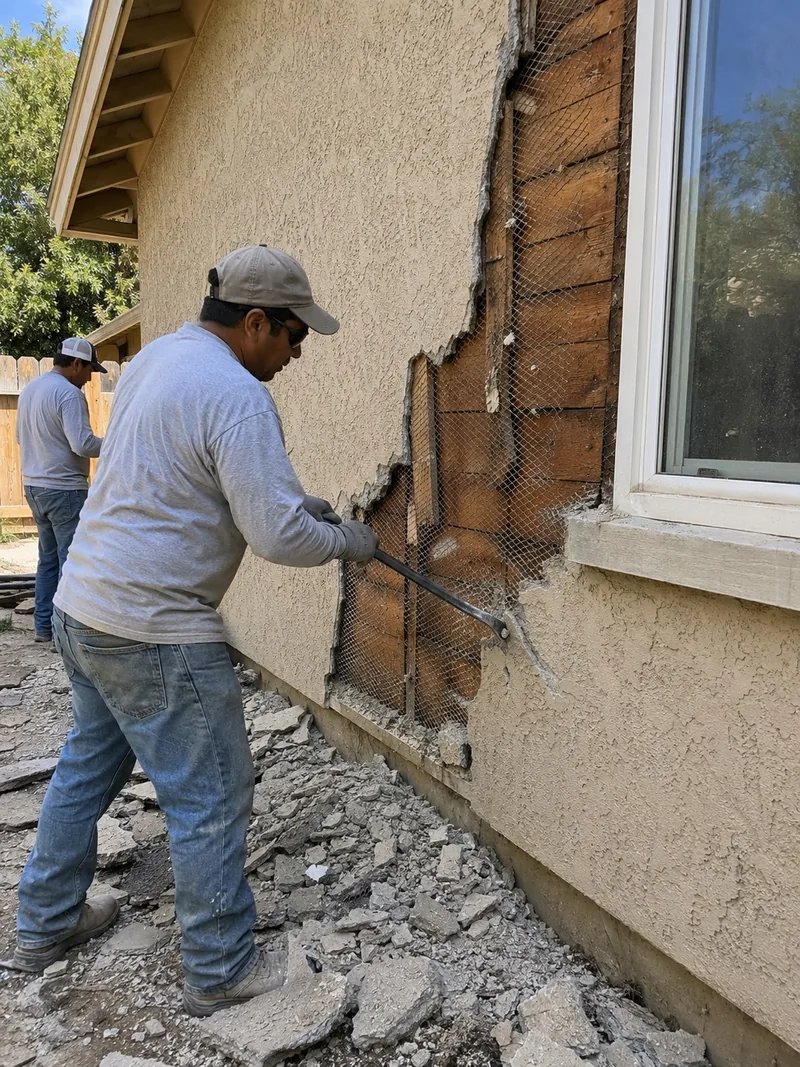
When the layers behind stucco have failed, we remove the wall finish down to the sheathing. This exposes hidden moisture, deterioration, and other damage so we can see what needs to be corrected before covering the wall again. Some older homes in Old Town may still have coatings that were applied decades ago. If the home was built before 1978, we arrange laboratory testing for lead in those older coatings before tear-off begins.
Stucco Remediation
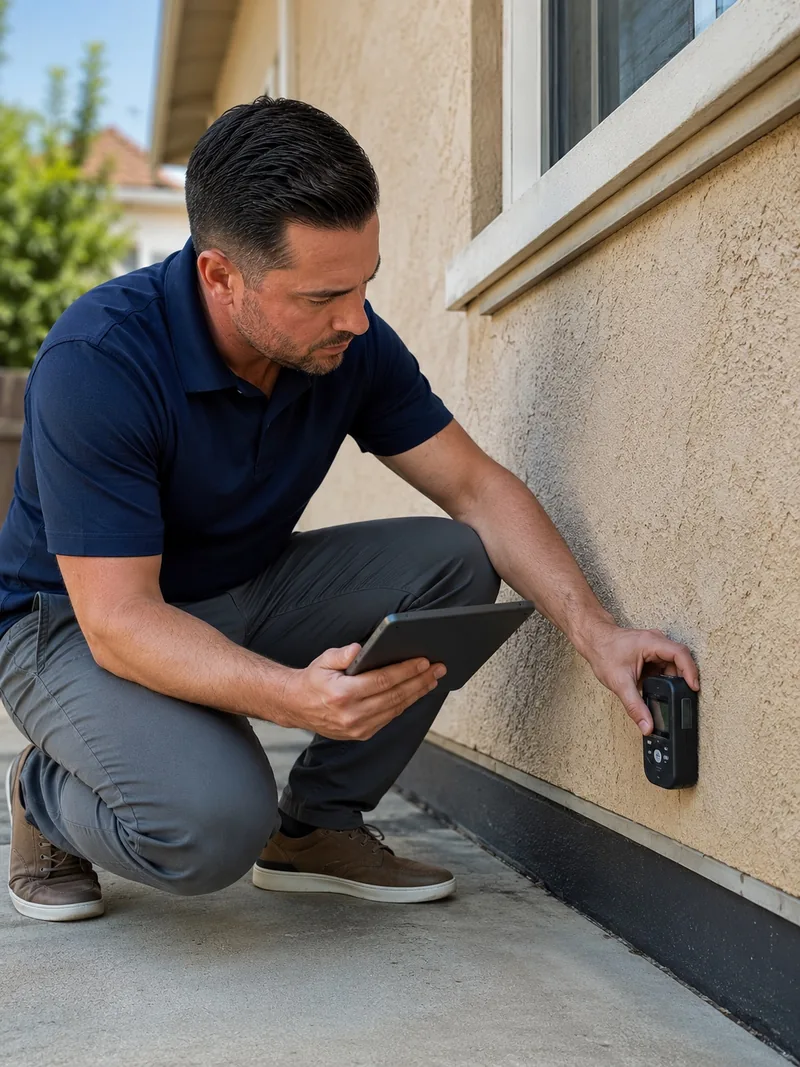
Drip emitters and spray heads in desert landscaping often sit close to foundation walls, where repeated watering can soak the wall. The first visible sign is often efflorescence, a white mineral bloom on the stucco face. Because moisture behind the finish can extend well beyond the visible stain, we use a moisture meter to map the wet area before deciding how much work the wall needs.
Plastering Services
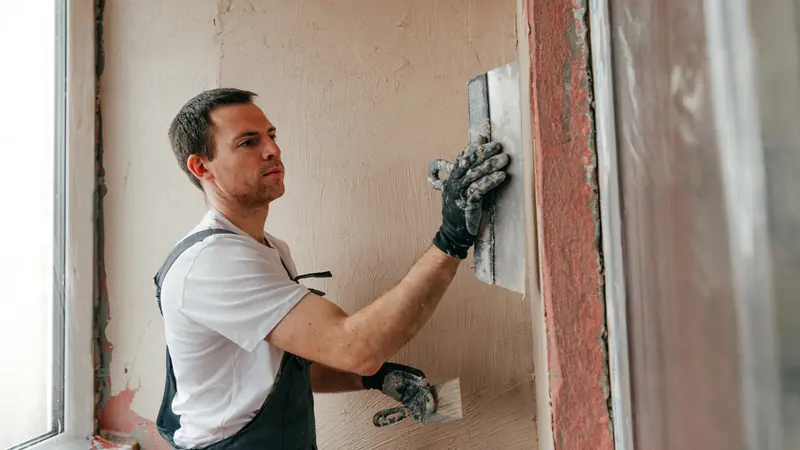
Interior plaster belongs to a different material family than the cement plaster used outside, so we use different products and application methods. We apply veneer plaster over blueboard under ASTM C843, the standard for thin-coat interior plaster. In older Old Town houses that still have traditional plaster, we also work with full-thickness gypsum and lime.
Stucco Installation
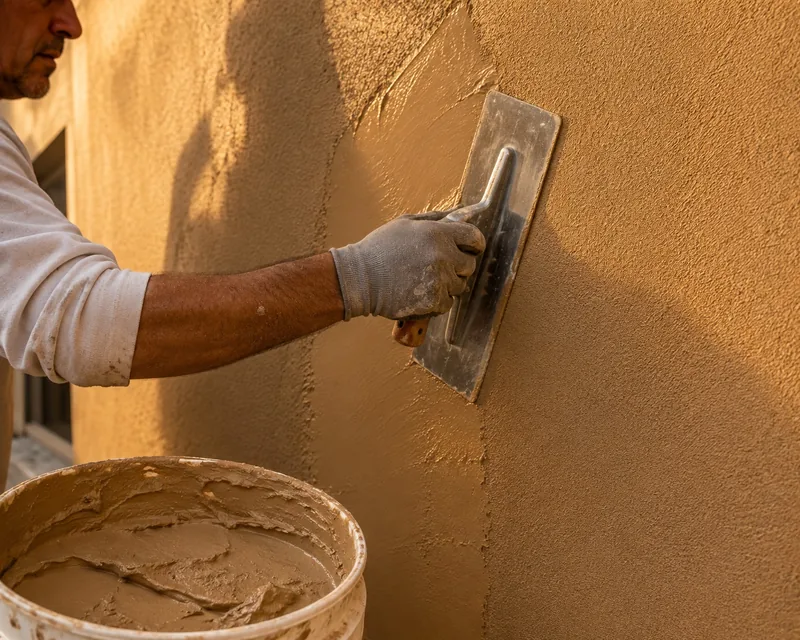
Some walls in Washington have never had stucco, while others need a new stucco system after siding, stone, or another type of cladding is removed. In either case, the finish is only one part of the wall. The layers behind it help manage moisture, give the plaster a secure surface to bond to, and reduce the chance of cracking or water getting into the structure. Before we mix and apply the stucco, we install metal lath over two layers of water-resistive barrier, then add the casing bead, corner reinforcement, and control joints needed around edges, openings, and larger wall areas. Once those components are in place, the wall is ready for the plaster coats that form the finished stucco surface.
Stucco Resurfacing & Recoating
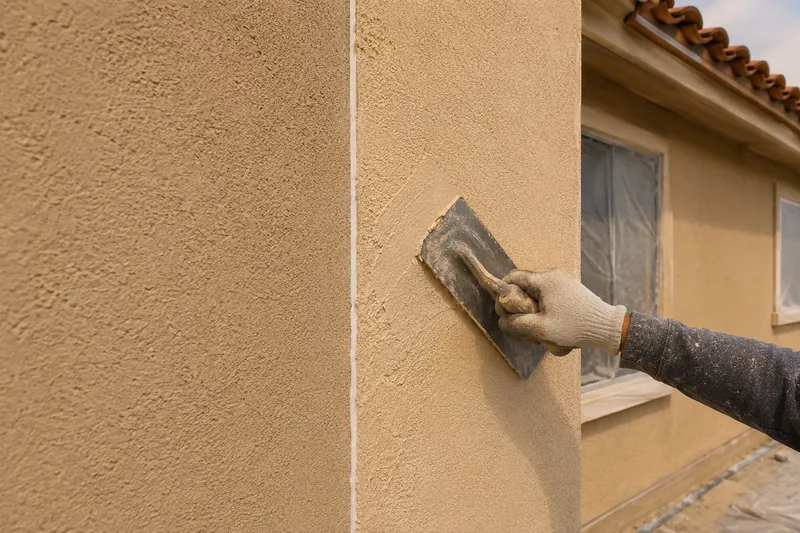
Resurfacing is one of the most common stucco jobs in Washington because many stucco finishes are old enough to need renewal. For light fading, we can apply a fog coat. A worn or dated texture may need a new finish coat, while more extensive surface problems may call for a full re-skin over the existing wall. We can use integral color, which is mixed into the material, with all three options.
New Construction Stucco
Crews continue to build Washington Fields block by block. We schedule the plaster after the framing, roofing, windows, and flashing so each side of the building is ready when our crew arrives. Depending on the plans, a builder may specify an engineered one-coat base or a full three-coat assembly.
Decorative Stucco & Architectural Details
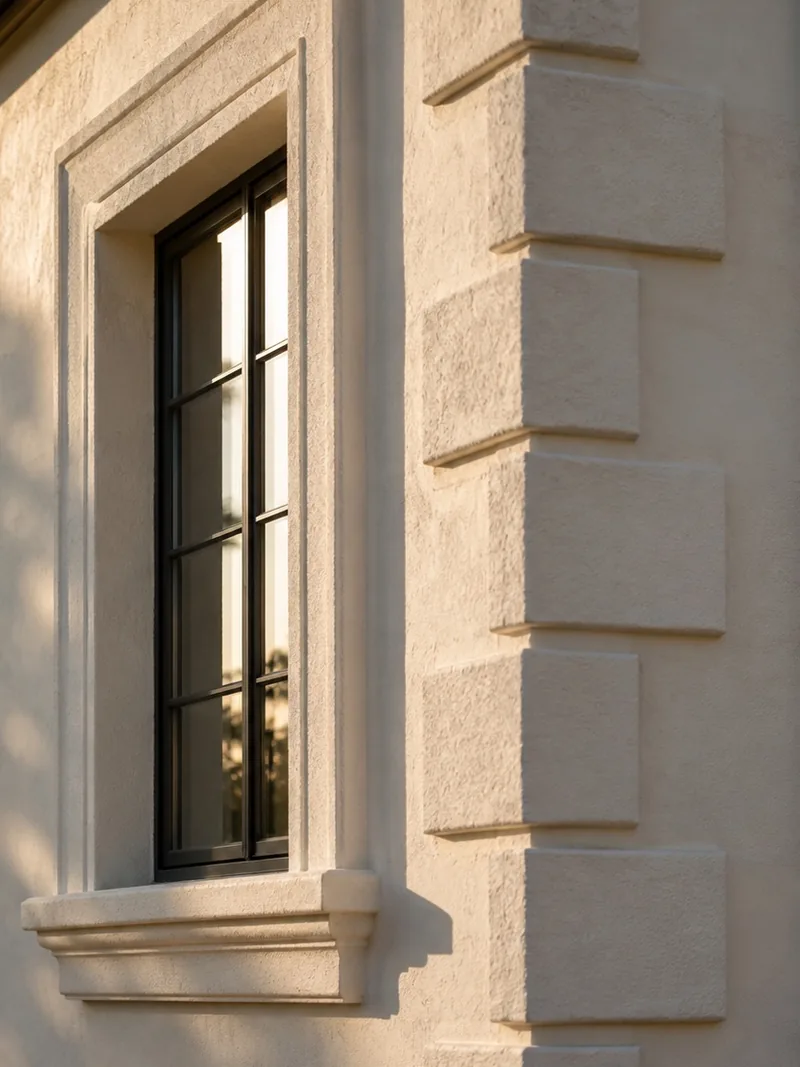
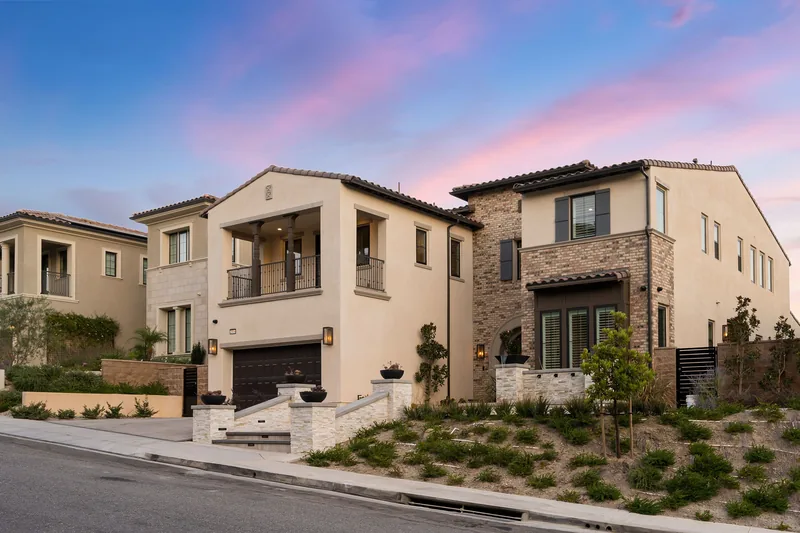
Decorative stucco details are used to add depth and definition to otherwise flat exterior walls. Around Washington, these often include raised bands, window and door surrounds, quoins at building corners, column wraps, and other shaped accents found on many newer homes and master-planned developments. We create these features from lightweight foam that is cut and shaped to fit the design, then cover it with a reinforced base coat and mesh to create a durable surface for the final stucco finish. Curved details require additional layout work. For arches and rounded openings, we establish the full radius first so the individual pieces fit together evenly and follow the shape of the opening. The completed detail can then be textured and finished to match or complement the surrounding stucco.
Stone Veneer
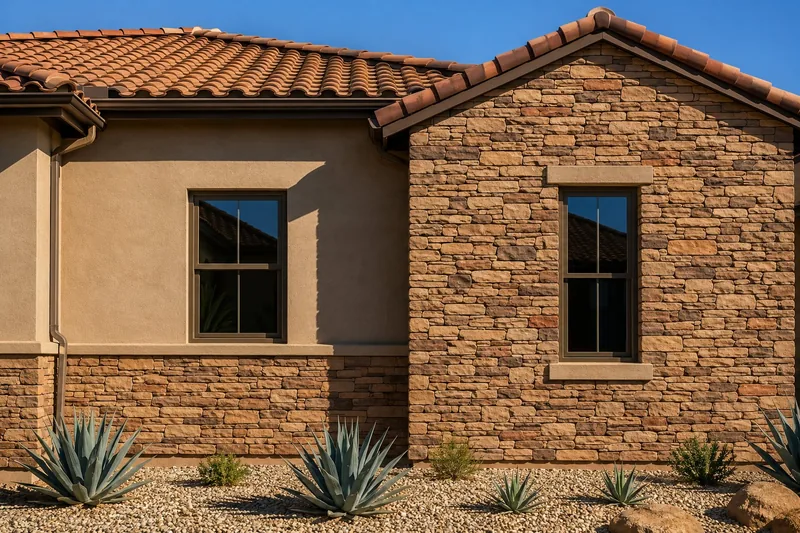
Many Washington homes combine stone and stucco on the same exterior wall. We install adhered masonry veneer over the same drainage plane used behind the plaster, including the ledger stone common on local houses. Where the two finishes meet on your home, we build the transition carefully because that detail determines whether the joint stays secure.
What a Stucco Contractor Does on Washington's Newer Walls
Walls built in the last twenty-five years tend to develop two different problems, and neither necessarily means the plaster has failed. The ground beneath the house may move, or sun, heat, and time may wear out the joints and finish. Because these problems require different materials and repairs, our stucco applicators inspect the cracking pattern and treat each condition separately.
How We Tell Shrinkage Cracks From Ground Movement
Expansive clay lies beneath much of this area. Southern Utah calls it blue clay, and the Utah Geological Survey maps it as an adverse construction condition throughout the St. George to Hurricane area, which includes Washington. The clay swells as it absorbs water, then shrinks as it dries.
The crack alone does not tell the whole story. A stronger sign of ground movement is a properly made patch that opens again along the same line. A shrinkage crack usually stops moving once the plaster has finished curing. A crack caused by ground movement may reopen season after season, so covering it with a skim coat only conceals it until the wall moves again.
When we find a recurring crack, we route out the joint and fill it with an elastomeric sealant that can move with the wall without tearing. If the movement could affect the structure, we pause the stucco work and ask you to have a structural engineer evaluate it before the repair proceeds. No one can answer that structural question by looking only at the outside finish.
First-Cycle Maintenance for 2000s Production Stucco
Ordinary aging usually appears around wall openings before it shows across the open face of the wall. Sealant joints around hose bibs, lights, vents, and transitions between stucco and other materials often fail before the plaster. When a bead separates over its backer rod, water can enter the wall assembly. Around the same time, exposed elevations may show fading pigment and a chalky surface. These are not structural problems, and we can usually address the worn finish with a recoat.
We also check where a roof eave ends against a sidewall. Kick-out flashing directs runoff onto the roof and away from the wall, while step flashing protects the sloped roof-to-wall joint behind the plaster. If the kick-out is missing, runoff from the entire roof plane can drain behind the finish without leaving an obvious warning at first.
About Washington, Utah
Washington sits directly east of St. George along the Interstate 15 corridor at 2,894 feet. The city's old core lies north of the interstate, while its newest neighborhoods extend south and east. Subdivisions built in nearly every decade fill the space between them.
The Washington Cotton Mill and the Washington School museum still stand in the old core, while Elephant Arch serves as the town's rock landmark. Crimson Cliffs High School serves the newer neighborhoods on the southeast side. As local stucco contractors, we notice how heavily Washington's buildings lean toward recent construction. The city has a handful of nineteenth-century buildings, a thin layer from the middle of the last century, and block after block completed since 2000.
You can see that compressed building history from the street. A wall built in Buena Vista in the 1980s has faced decades more sun and weather than one built in Washington Fields in the 2010s. Because builders also used different materials and construction methods in those periods, the walls age differently and develop different kinds of problems.
How Stucco Work Varies Across Washington Neighborhoods
Washington grew quickly, so homes in different neighborhoods often belong to distinct building eras. Builders used different materials and methods in each period, and walls that went up around the same time tend to develop similar wear. Your neighborhood gives us useful context before we arrive, but we still need to inspect the wall itself.
Coral Canyon: Resurfacing and Recoating Homes From One Build Era
Coral Canyon covers about 2,600 acres of master-planned land around its golf course and has its own association. Because many exterior elevations were built during the same era, they have weathered at roughly the same rate. We often evaluate recoating one elevation at a time rather than treating every house as a separate case. The amount of surface wear determines whether we apply a fog coat or a full finish coat.
Green Springs: Changing Colors on Coated Walls Above the Interstate
Green Springs sits above the interstate and includes many separately named plats. When you choose a new exterior color, we check the proposed match against the plat where your house is located, not simply the street it faces. Before applying any coating, we prime bare areas and previous patches so the color and finish cover evenly. We also mask window joints and fixtures before applying the new coating.
Washington Fields: Plaster on Blocks Still Being Built Out
Washington Fields is the city’s newest area, spreading across former farmland southeast of the old core, and builders are still filling it in. On an active construction lot, the order of the work matters as much as the plaster mix. If a crew arrives before the flashing is correct, it will have to return. During multi-lot phases, crews move from elevation to elevation rather than finishing one house at a time, which helps the builder keep the scheduled date.
Old Town Washington: Repairing and Replacing the City’s Oldest Finishes
Old Town has the oldest walls in Washington, and some houses still retain their original interior plaster. We scope pre-1978 work differently, including when stucco or plaster removal is required. Materials hidden behind the finish are less predictable here than on a newer block, so we allow more time for the inspection. Where removal exposes wood lath or metal lath, we match the replacement plaster thickness to the surrounding plane.
Buena Vista: Finding Hidden Moisture in 1980s Walls North of Interstate 15
Buena Vista is an established subdivision north of Interstate 15, off North Green Spring Drive, and most of it was built during the 1980s. Those walls have had four decades for a hidden moisture path to develop, far longer than walls in newer subdivisions. We begin remediation work here with a moisture meter because the size of the wet area determines how much of the wall we need to address.
How We Cover Washington From the St. George Base
Washington’s newer development brings us a different mix of customers than we would typically see in an older town. We work with homeowners, builders completing the remaining lots in a development, property managers responsible for commercial buildings, and association boards paying for work on a shared elevation. They may all request an estimate for similar stucco work, but they need different details from it. We also have to plan the schedule around other trades, occupied properties, business hours, and board decisions.
Who We Work For in Washington
When homeowners call us, they usually want a straightforward explanation of what is wrong with the wall, what we would do to correct it, and what that work will cost. An association board needs a written scope that owners can review before they vote on spending shared funds. Builders need a dependable date so they can coordinate the trades scheduled before and after the stucco crew. Property managers need to know which elevations we will work on and when that work will take place.
We list repairs and repainting as separate parts of the bid, so you can compare our price with another estimate line by line instead of trying to untangle one combined number. We begin scheduling after we receive your written acceptance. The date range we give you accounts for our current crew load, the size of your project, and the season in which the work will be done.
Scheduling Around Heat and Occupied Buildings
Washington County sits in climate zone 3B. For stucco work, that climate mainly changes how we schedule and sequence the job rather than which material we use. Portland cement gains strength through hydration, a chemical reaction that requires the base coat to retain enough water. When a wall is already hot and the air is dry, that water can leave the fresh plaster too quickly.
To manage those conditions, we choose the order of the elevations carefully rather than applying fresh plaster wherever the afternoon sun moves next. That may mean working on a shaded wall before turning to one with stronger sun exposure. We also leave the scaffold in place while the finish cures. If we remove it before the plaster has hardened, the work itself can leave marks on the new surface.
On occupied retail and multi-family properties, we use your business hours to decide when and where each phase of the work will take place.
Permits, Inspections and HOA Review in Washington City
There are two approvals in play on a stucco job in this city, and they are not the same approval. One comes from Washington City. The other comes from your subdivision, if your subdivision has an association. Holding one does not get you the other, and they run on different timelines, so it is worth knowing which apply to your property before you plan the work.
Washington City Permits Its Own Work
A job at a Washington address is permitted and inspected by Washington City rather than by St. George, even though the two run together at the line. That catches people out who assume the larger city handles everything around it.
Contractor licensing works the other way around. Utah licenses construction trades at the state level, through the Division of Professional Licensing, and state law bars a city from adding a contractor license requirement of its own on top. So what is genuinely local here is the permit and the inspection, not the license. Washington City's building department publishes its own requirements and updates them, which makes the department itself the place to check.
Architectural Review in the Master-Planned Subdivisions
Coral Canyon and Green Springs are governed communities. Old Town largely is not. If your property sits in one of the governed ones, a color or texture change goes to architectural review before it goes onto the wall, and that step is separate from anything the city asks for.
We supply product color and texture samples for the submittal, then schedule installation after written approval comes back. One thing is worth knowing about that approval: it covers what was submitted. The sample and the finish that eventually goes onto the house have to be the same product, or what you are holding is an approval for something else.
Stucco Questions From Washington Homeowners
These come up most often from property owners here, with the short answer to each.
The same crack keeps coming back in the same spot. Is that the stucco?
Usually not. A patch made soundly that opens again in the same place is reporting movement behind the finish. What you should get back from us is an estimate that names which of the two conditions was found, because the wrong one costs you the repair twice.
My house is from the mid-2000s and the color has gone chalky. Recoat or re-stucco?
A recoat, in almost every case. A finish that has chalked has usually given up its pigment while the plaster behind it is untouched, and the two age on completely different clocks. Full replacement is a structural answer to a cosmetic problem.
Do I need a permit from Washington City, or approval from my HOA?
They are separate approvals and neither substitutes for the other. The one people are caught out by is sequence. An association can approve a color the city never sees, and the city can issue a permit for work your association will refuse.
Can you match the original builder color across a whole elevation?
Yes, and the honest unit is the elevation rather than the patch. A finish is carried to a control joint so that the stopping point is a line the wall was designed around. Weathered color gets matched on a sample first.
How do I know whether my wall is one-coat or three-coat?
It is established at the inspection rather than guessed from the surface, because the two are built to different thicknesses. The system you have decides the repair method, which is why your estimate names it.
Do you work in Washington, or only in St. George?
Washington is part of the regular coverage area rather than an out-of-area job, and the crews that work St. George work here. Give us the property address when you call and we will confirm it before we schedule a visit.
Get a Free Stucco Estimate in Washington
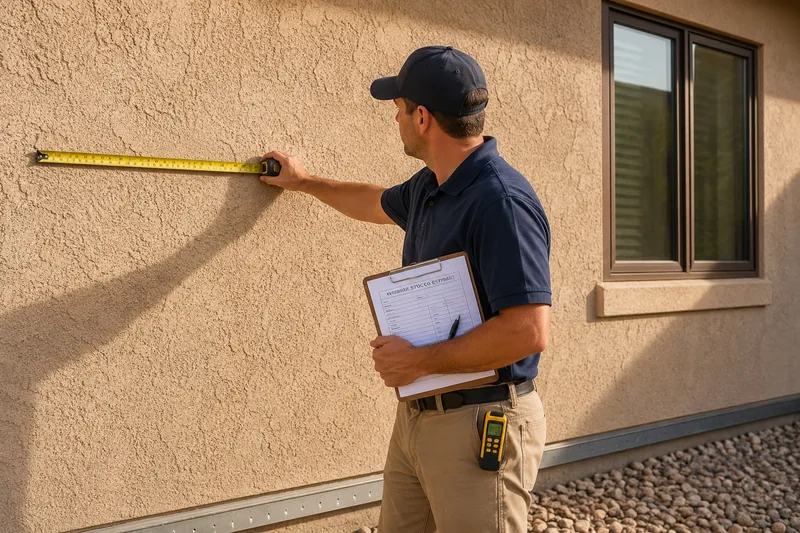
St. George Elite Stucco will look at any wall in Washington and tell you what it needs. We measure the wall areas, account for whatever scaffolding or lift access your property calls for, and itemize the scope so the number on the page means something. You receive the estimate in writing, and the visit is free. Call (435) 236-2699 or request a free estimate through our quote form.