Stucco Contractor in Gunlock, UT: Repair, Replacement & Coatings | St. George Elite Stucco
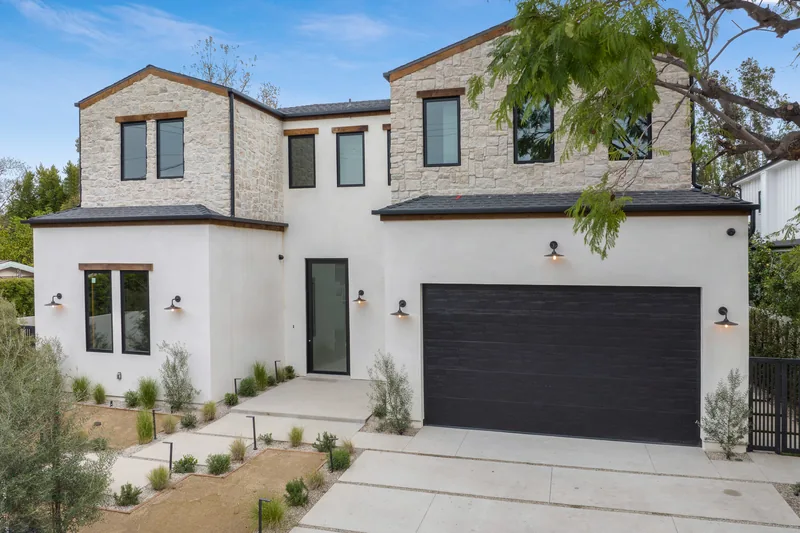
St. George Elite Stucco has worked as a stucco contractor serving Gunlock, Utah, for 15 years. We are licensed and also serve the rest of Washington County. Most calls here start with a repair: we patch cracks and chips or rebuild sections where the stucco is failing. If your walls have turned chalky, we can paint or coat them. When the finish is too badly damaged for a patch, we remove and replace it. We also stucco the block walls between properties and around farm ground.
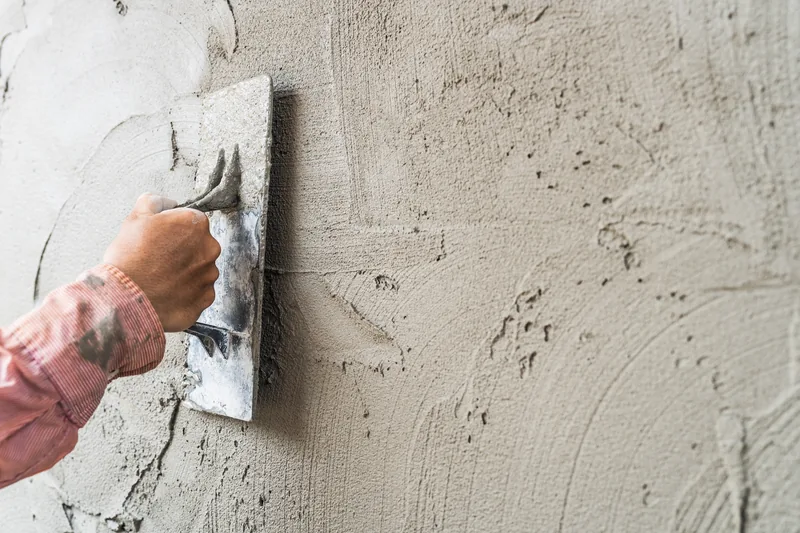
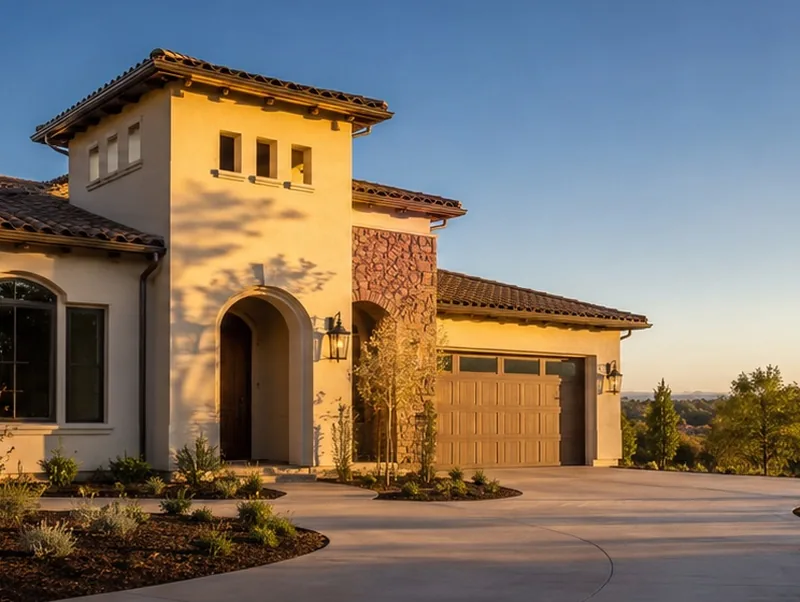
For bare walls, we apply the first stucco coats. If an existing finish remains sound but looks worn, we can resurface or recoat the whole wall instead of making scattered patches. We handle commercial buildings and new construction as well as homes. You can also call us for decorative stucco details, stone veneer, and interior plaster that accompanies the exterior stucco work.
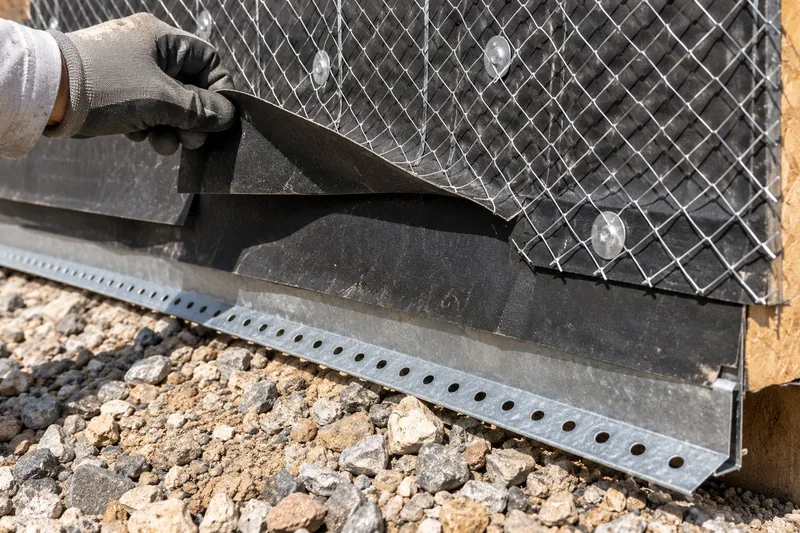
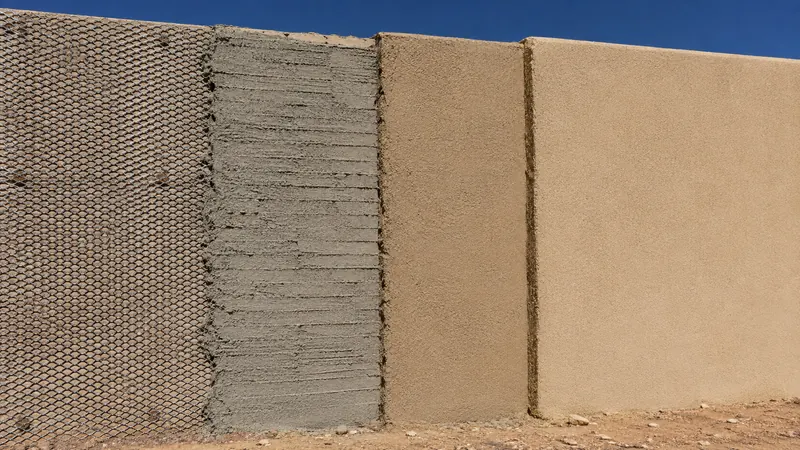
We check the same essentials on every job, including clearance under the weep screed, the metal strip along the wall's lower edge that lets water drain out, and the water-resistive barrier, the water-shedding layer behind the stucco. One-coat stucco, three-coat stucco built to ASTM C926, and EIFS, a foam-based synthetic system, are different systems, so we quote each one separately. Your free written estimate identifies the system you are buying rather than grouping them under a general stucco price.
Gunlock sits in a narrow valley at 3,648 feet, with the Santa Clara River running through it from north to south. The river and nearby irrigated ground make walls here behave differently from walls on the St. George bench, so we inspect each Gunlock wall from the ground up. Call (435) 236-2699 or send the quote form, and we will come out to examine your wall.
Why Choose St. George Elite Stucco for Gunlock Stucco Work
In Gunlock, moisture damage often appears near the bottom of a wall, not just where rain strikes higher up. That is why we begin at the base course and work upward when examining your stucco. Following the wall upward from that starting point helps a licensed stucco contractor distinguish a localized finish problem from damage that extends behind it. We are licensed and insured, and we inspect the wall before deciding what the job requires.
We open a small test area to identify the wall’s construction before pricing the work.
We inspect the base course first, including soil, gravel, or bark touching the wall at grade.
Your written estimate identifies the stucco system, its thickness, and the finish material.
Before application, we match the new finish to the surrounding wall’s texture and color.
You have one point of contact, with the same person overseeing the work from the first look at your wall through completion.
Before we work on your wall, you can verify our license and insurance coverage. We carry general liability and workers' compensation. Certificates are available before work starts, and our license number goes on every written estimate.
Licensed & Insured | 15 Years of Experience | Free Written Estimates | Residential & Commercial
Call (435) 236-2699 or use our quote form to schedule a free on-site estimate. We are also the stucco contractor in Shivwits, which is the next community downstream on the Santa Clara, if your property is farther down the river.
Gunlock properties include houses, farm buildings, and long stretches of block wall, but the valley has no commercial land. Because the same property may have a house, an outbuilding, and perimeter walls that need different work, you may ask us to handle two or three services during one visit.
Stucco Repair
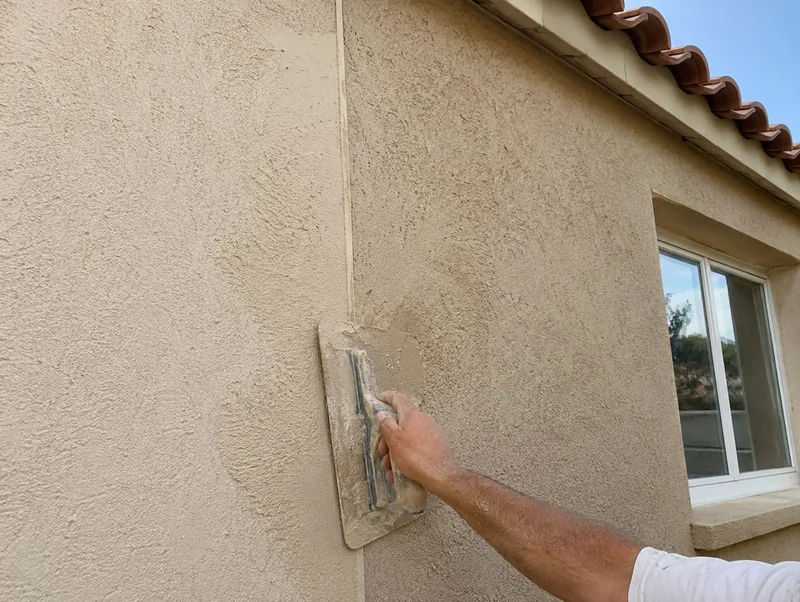
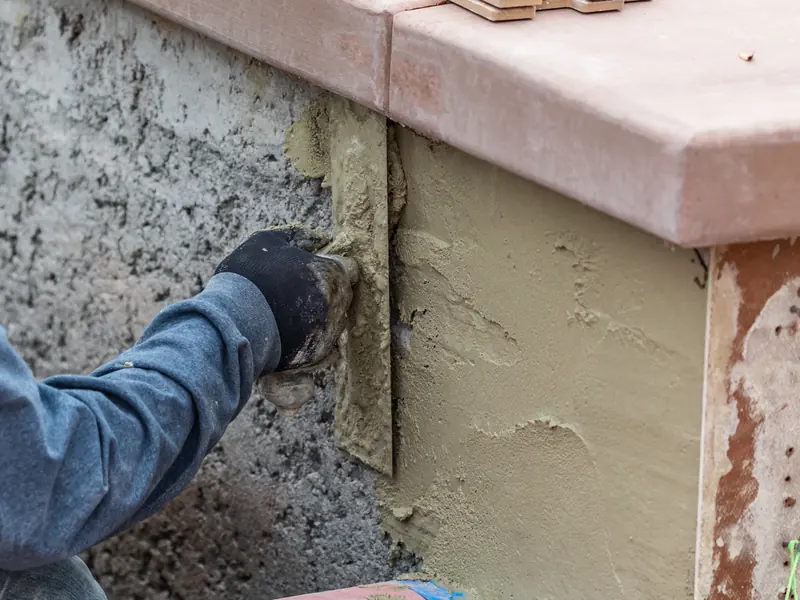
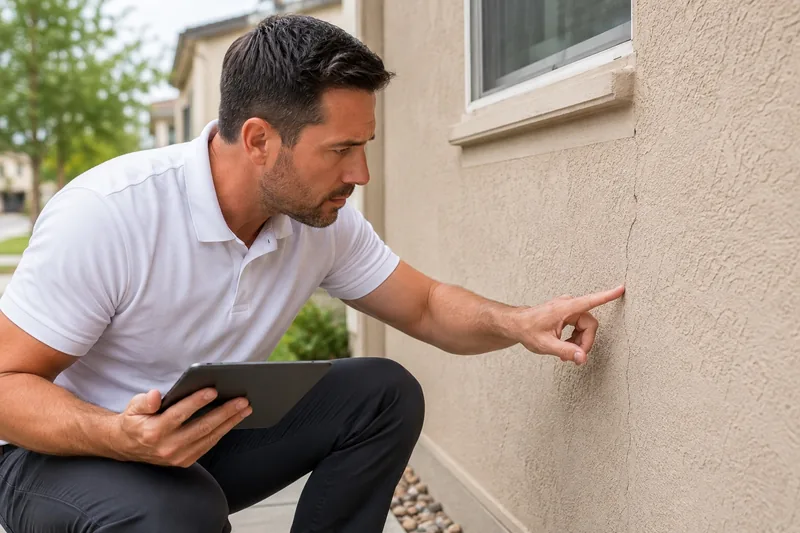
Many repairs here begin low on the wall, where you may notice cracks, flaking material, or a spot that sounds hollow when tapped. We open a small test patch before quoting because damage in the base course, the lowest section of stucco, can hide very different conditions underneath. If the material behind the damaged area remains sound, we repair it. If it does not, we tell you plainly rather than covering the problem with a patch.
Stucco Painting & Coatings
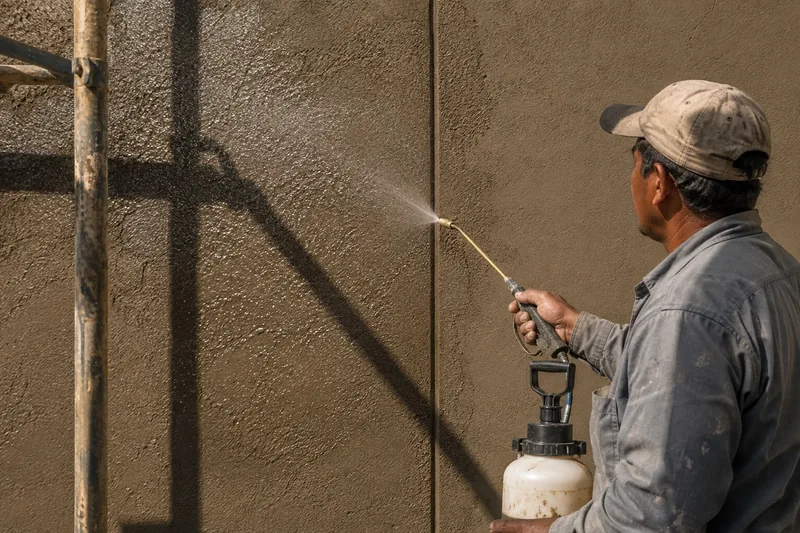
On the Gunlock bench, constant sun is often harder on a wall than damp ground, so the finish may need a coating rather than rebuilding. We clean and prepare your wall before applying it. Integral pigment mixes the color into the finish instead of leaving it only on the surface. A fog coat, a thin colored cement coating, can refresh an aged wall without a rebuild. We will not apply an elastomeric coating, a flexible waterproof finish, while the wall is still taking in water.
Stucco for Block Walls
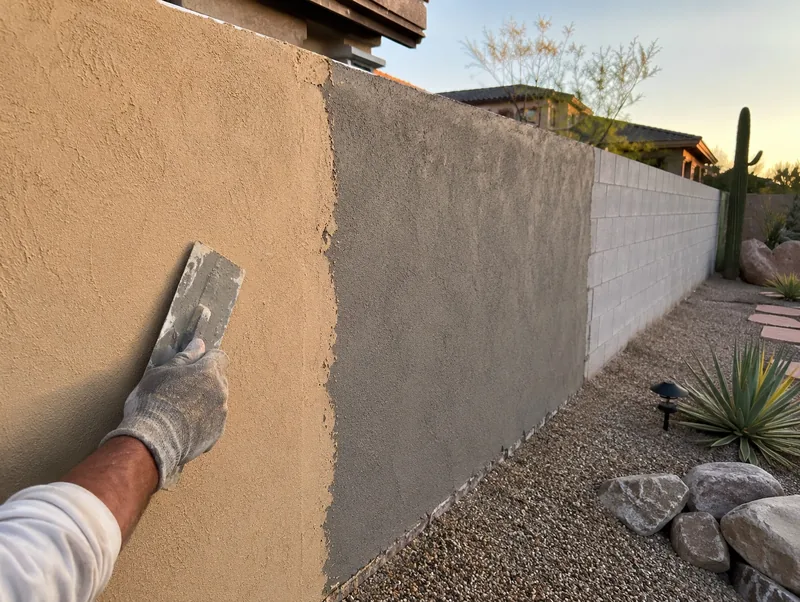
Farm and perimeter block walls run along the north end of the valley, and we both build and stucco them. A concrete masonry unit, commonly called a concrete block, behaves differently at grade than framing does, so we inspect that lower area differently. Your perimeter wall still needs the same ground clearance required around the stucco on your house.
Commercial Stucco
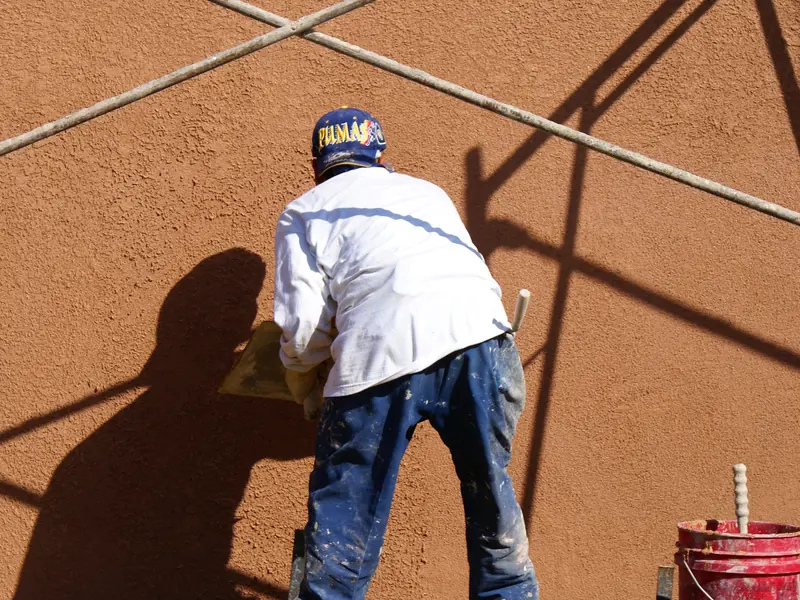
Commercial stucco in Gunlock usually involves shops and outbuildings that someone uses for a business. We allow more time for that work than for a house and plan the scaffold setup before starting. During one visit, we sequence the work around the building so you can keep part of it available for its current purpose.
Stucco Replacement & Removal
After more than one patch, your wall is usually beyond another repair. We remove the stucco down to the substrate and inspect the lath, the mesh that holds the stucco in place. Opening the wall also reveals how it was originally built, including the layers beneath the finish and the condition of the supporting materials.
Stucco Remediation
If water is entering behind your stucco instead of remaining on the surface, you need remediation rather than another patch. We open the affected area, trace the water to its entry point, and address that source before closing the wall. On houses in this area, water commonly enters around penetrations for pipes or vents, where trim meets another material, or at flashing that should direct water away.
Plastering Services
We also plaster interiors. The same crew can handle your interior and exterior work, so you do not have to coordinate two trades. Inside, we can apply veneer plaster over blueboard made to bond with plaster. That system differs entirely from exterior stucco, and ASTM C843 governs how we apply the thin coat.
Stucco Installation
For a new stucco installation in Gunlock, we first detail the base of your wall for ground moisture. We set the weep screed and barrier before applying any stucco because correcting either one later requires opening the finished wall. For a three-coat system, we follow ASTM C926 for applying and curing each coat. We install and overlap the lath according to ASTM C1063, which also governs how we fasten it.
Stucco Resurfacing & Recoating
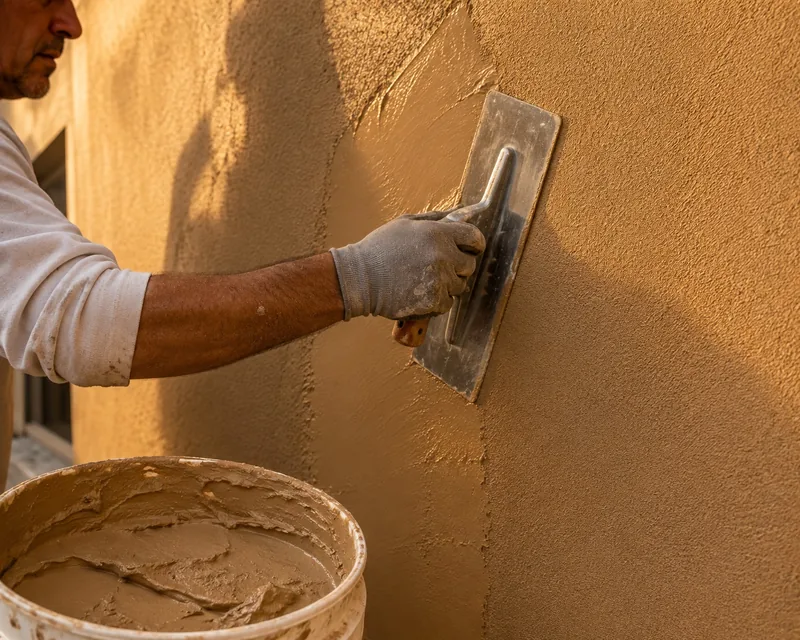
If your wall has faded but remains solid, you may need resurfacing rather than repair or replacement. We cover the sound base coat with a new finish coat. We then match the existing texture across the entire wall face. Recoating on a regular cycle before the finish cracks or loosens saves you the added work of removing failed material later.
New Construction Stucco
Because new construction is uncommon here, we approach each new wall as an individual project rather than part of a repeated tract-home installation. We coordinate our work with your builder’s schedule and the county inspection sequence. On unincorporated land, those inspections go through the county building department rather than a city. We install the barrier and screed before the wall is closed because the crew cannot reach either component afterward without opening the completed surface.
Decorative Stucco & Architectural Details
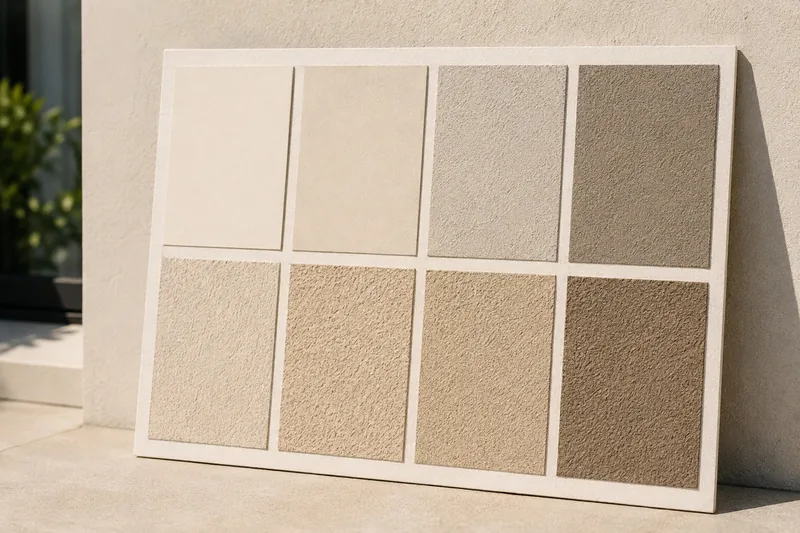
Most decorative stucco work in the valley involves adding a window surround or horizontal band to an older, otherwise plain wall, rather than decorating the entire facade. We form each detail and blend its edges and texture into the surrounding finish so the addition belongs with the original wall. Before we shape anything on your building, you select the profile, meaning the detail’s outline and depth, from a sample.
Stone Veneer
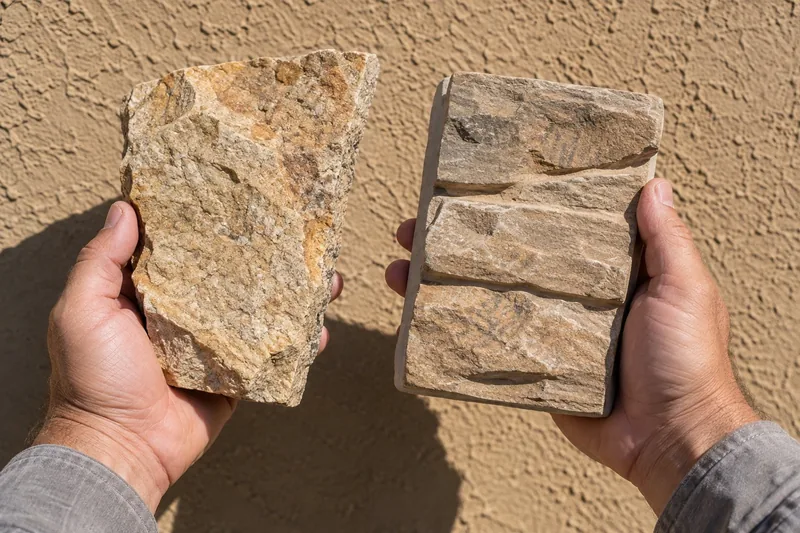
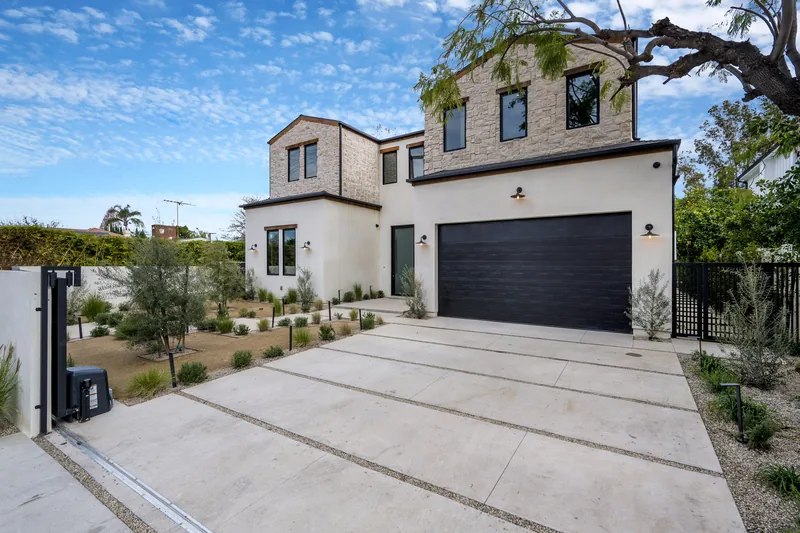
Stone veneer at wainscot height, covering the lower portion of your wall, protects an area repeatedly reached by rain splash and irrigation. IRC R703.12 covers adhered masonry veneer and applies the same barrier rule used for cement plaster. That means the layers behind the stone matter as much as the stone you choose. We detail flashing at the top of the wainscot to direct water outward instead of letting it enter behind the veneer.
What a Stucco Contractor Finds on Walls Along the Santa Clara River
The Santa Clara River runs the length of this valley, keeping nearby ground wetter than most soil a stucco contractor encounters elsewhere in the county. That ground moisture reaches the base of the wall before stains, flaking, or crumbling become visible higher up.
Water That Arrives at the Bottom of the Wall
Irrigation at the north end and the river through the middle keep the base course damp for much more of the year than on a drier bench lot. The water does not remain at ground level. It wicks upward through small spaces in the wall materials, and the finish at the base of the wall eventually shows how far that moisture has traveled.
This rising damp makes the clearance below your weep screed especially important. The weep screed is the metal strip that lets water drain from the bottom of a stucco wall. IRC R703.7.2.1 sets that height, and it requires the weep screed to sit not less than 4 inches above the earth, or not less than 2 inches above paved areas. If you pile soil, gravel, or bark against the screed, you eliminate that clearance.
What We Change at Grade Because of It
Because water can enter from below, we change how we build the area where your wall meets the ground. We install a capillary break, a material layer that stops the wall from drawing moisture directly from the soil. Over wood-based sheathing, we install a water-resistive barrier behind the stucco using two layers of Grade D building paper, or a barrier with equal or better water resistance.
We install those two layers independently so water can drain between them instead of becoming trapped behind one bonded sheet. Together they form a drainage plane, the concealed path that carries water down and out of the wall. Before deciding whether your wall needs repairing, we inspect this barrier instead of judging only the visible finish. We also mark the screed line on your estimate so anyone landscaping later can see how high those materials may go.
About Gunlock, Utah
William Hamblin settled here in 1857, giving Gunlock its long history. The community adopted his nickname, Gunlock, as its name. His brother Jacob settled Santa Clara a few miles down the river. Washington County’s own plan identifies Gunlock as one of the county’s older communities. This unincorporated community sits on the Santa Clara River northwest of the Red Mountains and has its own ZIP code, 84733.
Several local landmarks can help you place a property within the valley. Gunlock Cemetery and the Gunlock rodeo grounds are inside the community. Gunlock State Park and Gunlock Reservoir are south of Gunlock and lower along the river.
Old Highway 91 follows the route that once carried traffic west from Santa Clara over Utah Hill. The Red Mountain Wilderness lies southeast, while the Sand Cove Reservoirs sit above the bluff to the east. As you drive into Gunlock, these landmarks frame a small island of private property surrounded by public land.
The Four Parts of the Gunlock Valley
Washington County’s plan names four areas within the Gunlock valley. We work throughout all four, including properties beyond the houses visible from the main road.
Gunlock Townsite: Repairing Cracks and the Base Course Along the One Road
Gunlock Townsite is the built settlement, with homes strung along the single road that runs the length of the valley. You can walk from one end of the community to the other, and neighboring houses remain in view along the same line. When we repair cracks or the existing base course, the new texture and color need to blend with the surrounding wall because the work remains plainly visible from nearby properties.
The Gunlock Bench: Resurfacing and Recoating Above the River Line
The bench is the higher ground on the west side, sloping from the ridge toward the river. Walls here sit above the damp instead of directly in it. Because sun and wind drive the wear on these exposed walls, we resurface your stucco and apply a fresh finish coat. That means carrying an even color across an entire open elevation, which takes a different approach than blending a small patch into a less visible wall.
The North-End Farms: Block Walls and Farm Buildings
Farming began on the ground at Gunlock’s north end when the community was settled, and a single operator has worked it ever since. Irrigated land reaches these walls more directly than walls elsewhere in the valley. We can quote your house, a farm outbuilding, and a perimeter wall built from concrete masonry units during the same visit because they belong to one property.
The South End Toward the Reservoir: Painting and Protective Coatings
The Gunlock rodeo grounds mark the community’s south end, and the county includes the land between there and Gunlock Reservoir as part of Gunlock. This open, downstream section leaves buildings exposed instead of sheltered against the bench. If your building has already stood through years of weather and its stucco remains serviceable, we prefer to paint or coat the surface to protect it instead of taking the wall apart.
Repair or Replace on Gunlock's Older Buildings
Buildings in this valley went up one at a time from 1857 onward, so walls along the same road can differ in age, materials, and builder. That history keeps the choice between repairing and replacing stucco genuinely open here. On a subdivision street, where houses usually share the same construction, the answer is often more predictable.
What the Test Opening Decides
We cut a small opening where the finished work will cover it, then inspect the lath, substrate, and barrier behind the finish. The opening shows whether those concealed layers can support a repair or need to be rebuilt. We consider how much of the wall has failed, but the condition of the material behind it matters more. A wall can look widely damaged while remaining sound behind the finish, or look fine while the concealed layers are failing. One section can remain sound while another has failed. Nobody can determine that from outside a finished wall, regardless of what they say on the phone.
Sometimes the honest answer is neither repair nor replacement. A stair-step or diagonal crack pattern can point to movement under the house, and no finish, whether patched or replaced, will fix that. When we see this pattern, we explain what it means and tell you to get a structural opinion before spending anything on the wall.
Why a Patch Sometimes Comes Back
The finish coat does not keep water out of your house. The barrier behind it does. Once that barrier fails, patching only the visible surface can put the same repair back on your calendar a year or two later. When stucco repair is not enough, we use stucco replacement to rebuild the drainage plane instead of covering the problem. That is the real difference between the two options. Replacement costs more that day, but it can cost less over time. We include our finding and the reasons behind it in your written estimate rather than leaving you with a verbal opinion at the truck. It states which option we recommend and identifies the concealed condition that led us there.
County Approvals and Access for a Gunlock Job
Washington County reviews and inspects the work, and the county also maintains the road used to reach the community. Those two responsibilities affect both the approval process and how we schedule the job.
Washington County Handles Building Approvals
Because Gunlock is an unincorporated community, the Washington County building department handles the entire approval chain. For work here, the county issues the building permit, reviews the plans, and conducts the required inspections. There is no municipal permit counter between you and the county.
Building inspection for dwellings and other construction out here runs through the county, which sets that out in its own community plan (washco.utah.gov/wp-content/uploads/cdev/pdf/cgp/community-gunlock.pdf). In practical terms, we complete your work according to what the county reviews and inspects. We also arrange our schedule around those inspection points, and we handle the timing rather than leaving you to track each one.
One Road In, and What It Changes About a Job
The community has two main approaches, from the south on Old Highway 91 and from the north and east on SR-18 at Veyo, plus a secondary route past the Sand Cove Reservoirs. Washington County’s plan also tells residents to expect isolation from the rest of the county when the Santa Clara floods.
To keep your job from stalling halfway through, we bring the crew and materials to your property in one trip. We decide where to unload and stage everything beforehand, so the materials and the workers who need them remain together if a road closes.
We also avoid dividing the work into stages that depend on the road being open each time we return. On a property this far up the valley, careful staging can determine whether your project keeps moving or stalls because people and materials cannot reach the same place.
Stucco Questions From Gunlock Homeowners
Here are answers to questions we hear from Gunlock homeowners.
Our place is close to the river. Is that why the bottom of the wall keeps failing?
Very likely, especially if the damage forms a fairly even band across the base course and stops at a consistent height above grade. That is the most common wall problem we are called to inspect in Gunlock. If the damaged area follows a crack, a leaking pipe, or another defined path instead, you are probably dealing with a different problem. We study the shape and limits of the damage first because they help us determine what needs repair.
We irrigate right up to the house. Do the sprinklers matter?
Yes. Where the spray lands matters more than the total amount of water. IRC R703.7.2.1 sets the clearance your weep screed must keep, but sprinkler heads can throw wet soil and mulch against that line and eliminate the required space. You can check this yourself: crouch where the wall meets the soil and look for the screed’s metal edge. If you cannot see it, the soil or landscaping has risen too high against your wall.
Gunlock was never a planned settlement. Does that show up in the walls?
Yes, which is why we never assume two Gunlock walls were built the same way. Washington County’s plan quotes the county history describing the settlement as individual enterprise rather than a planned colony. From 1857 onward, families built one house at a time where they had staked their land. As a result, your house may not share a builder, construction year, or substrate with another property on the same road.
Does summer traffic to the reservoir get in the way of the work?
It changes how we stage your job, but it does not stop us from coming. Gunlock Reservoir draws visitors throughout the warm months, so we arrange delivery onto your property and stack the material there instead of using the roadside as a work area. With one road serving the community and heavier holiday traffic passing through, keeping our delivery load and vehicles off the road also avoids creating an unnecessary obstacle for your neighbors.
How do you decide whether to patch a wall or replace the finish?
We base that decision entirely on the test opening. Before you compare quotes for your Gunlock house, remember that there is no percentage rule. No code and no ASTM standard sets a damage threshold for repair versus stucco replacement, so anyone quoting you one is using a rule of thumb and calling it a standard.
Do you come out to Gunlock, or only work closer to St. George?
We come out to Gunlock and provide the free estimate on site. Seeing the property in person lets us identify how your wall was built and assess its actual condition. We cannot judge the ground around your wall accurately from photographs, so we would rather stand in front of it than guess from images on a phone screen.
Get a Free Stucco Estimate in Gunlock
Your wall is the only reliable record of how it was built and what condition it is in, so we inspect it in person. St. George Elite Stucco will explain what we found and what that means for the work your wall needs. You should expect that explanation from any stucco contractor before agreeing to a scope of work.
You receive the estimate in writing, and the visit is free. Call (435) 236-2699 or request a free estimate through our quote form.