Stucco Contractor Near Shivwits, UT: Repair, Coatings & Replacement | St. George Elite Stucco
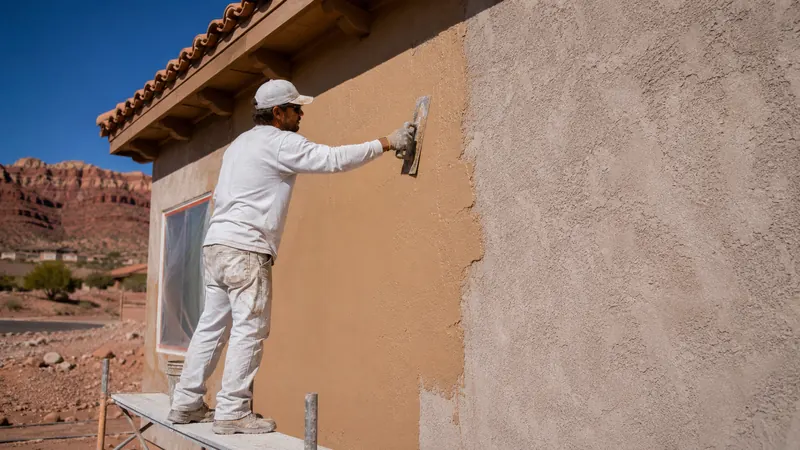
St. George Elite Stucco has worked on houses, outbuildings, and boundary walls in and around Shivwits, Utah, for 15 years. Before recommending anything, we identify how your wall was built and what condition it is in. On older masonry and concrete block, we repair cracks, chips, and damaged areas. We also replace finishes that are too deteriorated to patch and apply stucco to bare block walls that have never been coated.
On newer framed buildings, we resurface and recoat exterior stucco when the existing wall needs a consistent new color and surface. We also paint and coat stucco, and we remediate walls after water has worked behind the finish. If a framed wall has no finish, we install stucco over metal lath, the mesh that holds the plaster coats, including on new construction. Our related work includes stone veneer, interior plaster, and decorative stucco with architectural details. Our work includes residential stucco along with commercial jobs. We use portland cement plaster, a cement-based exterior finish, on nearly all of this work and apply it to ASTM C926, the standard that governs how the plaster is mixed and placed.
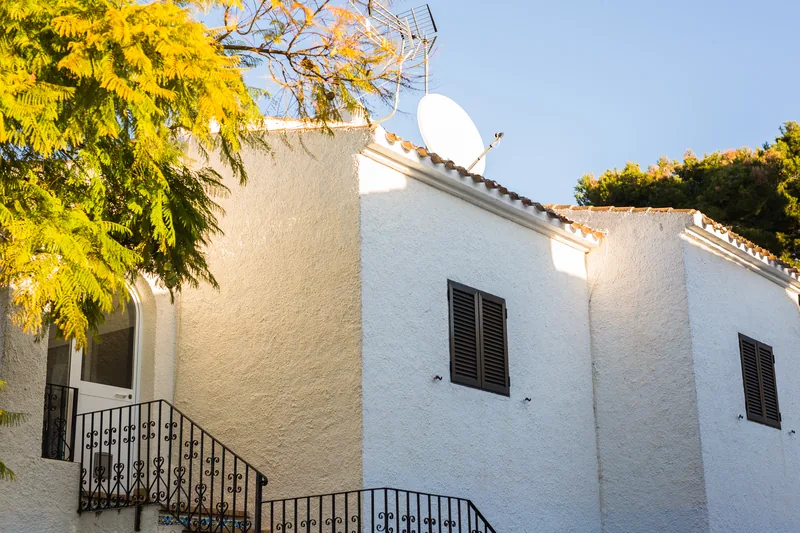
Much of the property we visit stands along the old highway frontage west beside the Santa Clara River. Even properties a short walk apart can have different crack patterns, worn finishes, and areas of exposed block. The road-facing side also often wears sooner than the other three sides, so you may need us to address one elevation, or exterior face, rather than the entire exterior.
We work across Washington County, including Shivwits, and all twelve services are available here. Your written estimate sets out the work included. Call (435) 236-2699 with the address or use our quote form, and we will provide a free written estimate.
Along the old highway frontage, you can see older block walls and newer framed walls within sight of each other, but they are not built the same way. St. George Elite Stucco identifies how your wall was built before we write the job, because the same crack or stain can have a different cause on each type of wall. Our company is a licensed stucco contractor, and the scope of work you approve describes the wall we actually found. That also lets you compare bids fairly, since a stucco company pricing a different wall system is not quoting the same job.
You receive one written scope that covers every building involved on your lot.
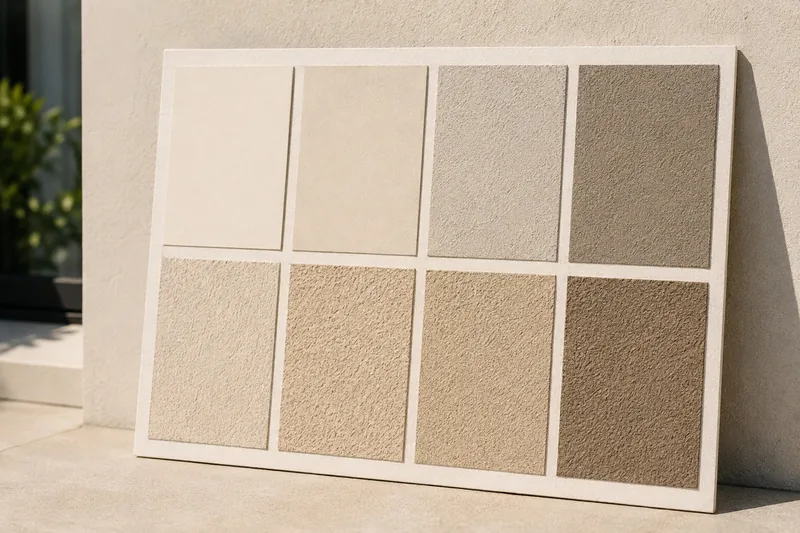
We match texture and color on a sample panel before you approve the finish for your wall.
We include bottom-of-wall clearance and drainage in your scope from the start.
One person handles your job from our first look through the final walkthrough with you.
We inspect and plan work on block walls and masonry as carefully as we do houses.
Before we work on your wall, you can verify our license and insurance coverage. We carry general liability and workers' compensation. Certificates are available before work starts, and our license number goes on every written estimate.
Licensed & Insured | 15 Years of Experience | Free Written Estimates | Residential & Commercial
We define each stucco service and its required preparation in your written scope.
Stucco Repair
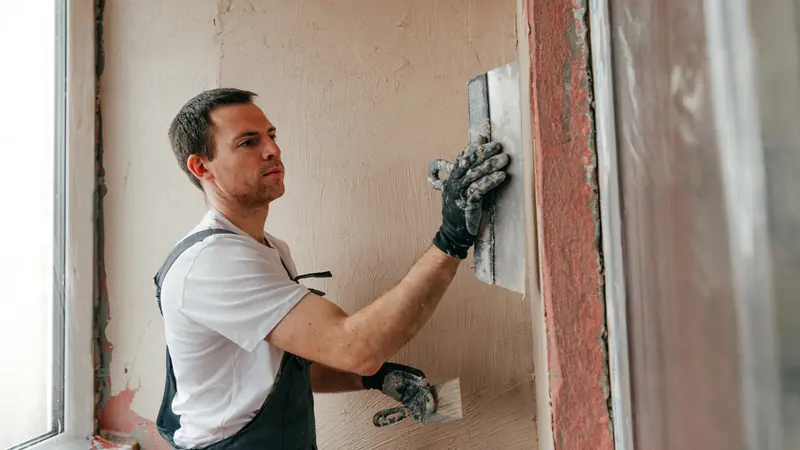
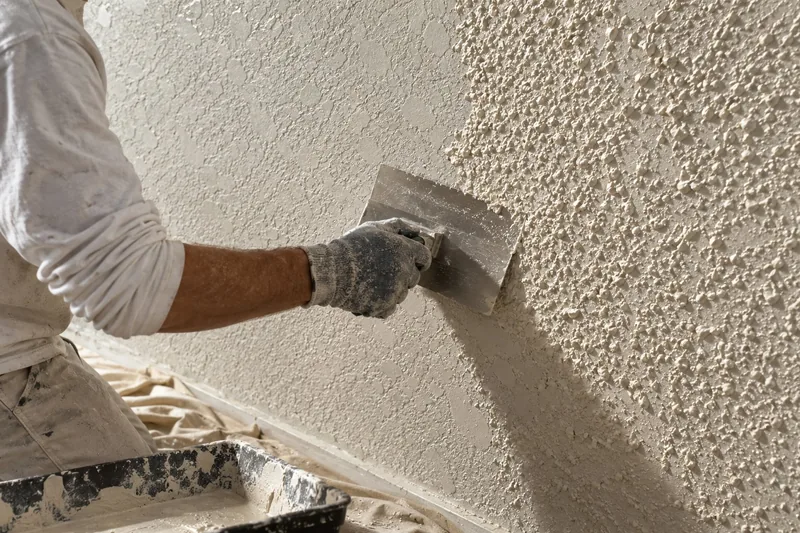
A repair here may involve one elevation, or exterior side, beyond the crack you noticed. We walk all four elevations before defining the work because damage on another side can point to the same underlying cause. We address that cause, then patch and re-texture the area to match the surrounding wall. A weathered dash, lace, or skip-trowel finish has softer ridges and a less uniform surface, so matching the texture by name alone can leave a new patch looking obvious.
Stucco Painting & Coatings
The direction your wall faces affects how quickly its color fades because each elevation receives different sun exposure. On frontage between the Beaver Dam Mountains and the Red Mountains, one side may lose color while another still looks sound. We wash a road-facing wall before applying paint or another coating. If we apply a new finish coat, the outer layer of stucco, integral pigment puts the color through that layer instead of leaving it only on the surface.
Stucco for Block Walls
We stucco boundary and retaining walls that run along a frontage. On a concrete masonry unit wall, commonly called a block wall, the base course, or lowest run of block, usually shows the wear first. Because block provides a different base surface than a house wall, we prepare and finish the wall as one continuous surface instead of treating each block separately. We finish block walls; we do not engineer them.
Commercial Stucco
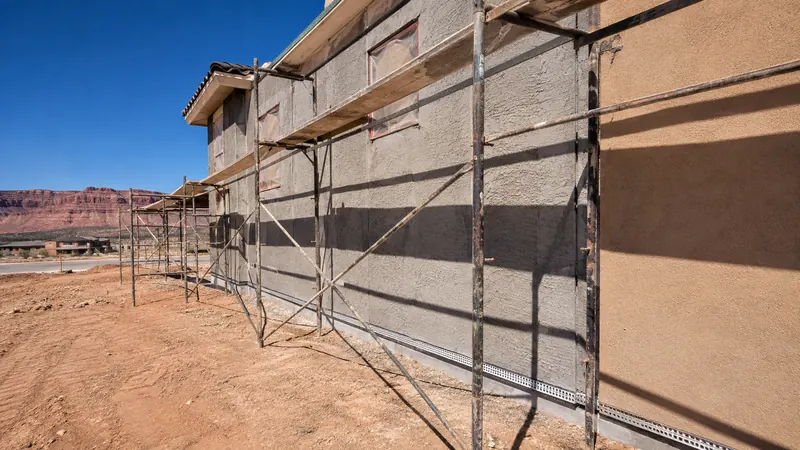
When your commercial building is small and faces the road, the stucco work takes place beside moving traffic instead of within a large parking area. We keep scaffolding and staging, the platforms and work areas our crew uses, inside your property line. We also schedule the elevations in an order that keeps the part of the building you use accessible while we work on the other sides.
Stucco Replacement & Removal
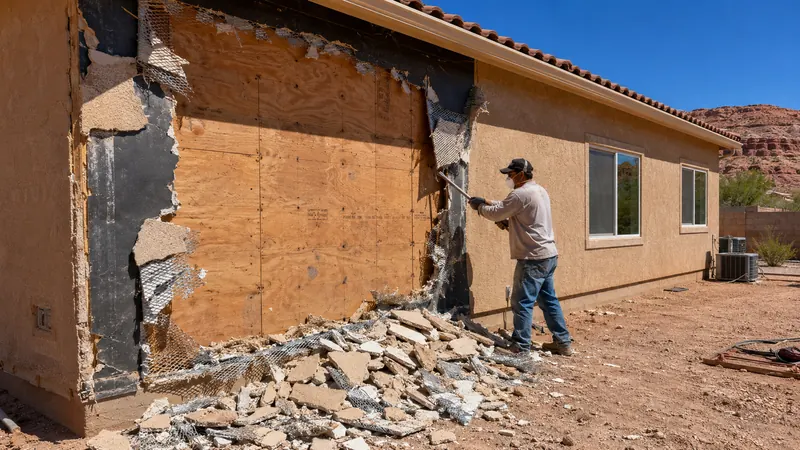
When your finish is too damaged for a reliable patch, we remove the failed material according to the written scope. On buildings from before 1978, we arrange laboratory testing for lead before demolition starts. We arrange testing for asbestos as well because older textured coatings and plaster can contain it and require different handling. We then rebuild the wall over fresh lath, the reinforcing base that supports the new stucco.
Stucco Remediation
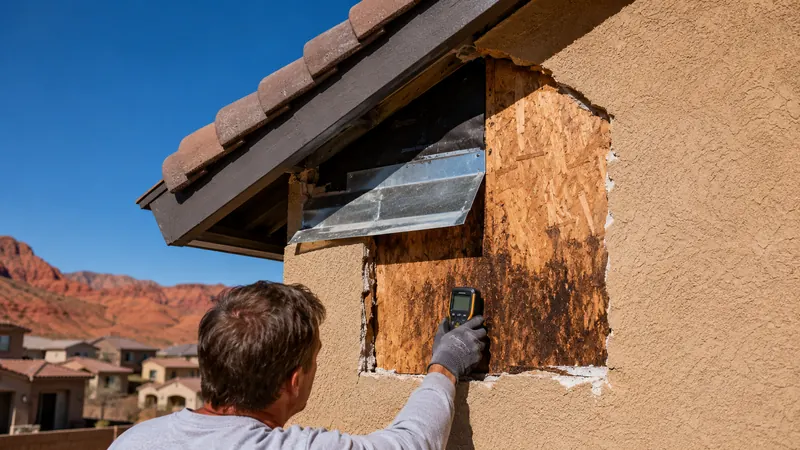
Water typically reaches your wall from runoff moving across the ground or spilling from the roofline, rather than rising from below. It often enters at a roof-to-wall termination where the kick-out flashing, a small piece that directs roof runoff away, is missing. We locate and address that entry point before closing the wall again.
Plastering Services
We also do interior plaster, which allows your project to continue when outdoor weather delays work on an exterior elevation. For interior veneer plaster over blueboard, a gypsum panel made to receive a thin plaster finish, we follow ASTM C843. This standard covers how we apply the thin plaster coat over its gypsum base, so work can continue inside while exterior conditions improve.
Stucco Installation
Before we stucco a wall for the first time, we determine how much clearance your wall needs at the bottom, especially where terrace ground or gravel aprons, the bands of loose stone bordering a building, sit close to the base. On a framed wall, the weep screed, a perforated strip that drains water at the foot of the wall, establishes that clearance. We install the lath, casing bead that forms finished edges, and the remaining accessories before mixing any stucco.
Stucco Resurfacing & Recoating
If one side of your building has weathered more than the other three, matching the existing color and texture is often the hardest part. We apply a sample panel to the wall first so you can compare it with the surrounding finish. How much of the old surface must come off determines whether we apply a fog coat, a lightly pigmented cement treatment, or replace the entire finish coat.
New Construction Stucco
New buildings here often stand beside neighbors built decades apart, so we compare your proposed texture and color with those existing finishes during the initial finish review. That keeps the choice grounded in what already stands along the property line instead of treating the building in isolation. We follow your builder’s construction sequence and hand back a finish selected with the neighboring buildings in view.
Decorative Stucco & Architectural Details
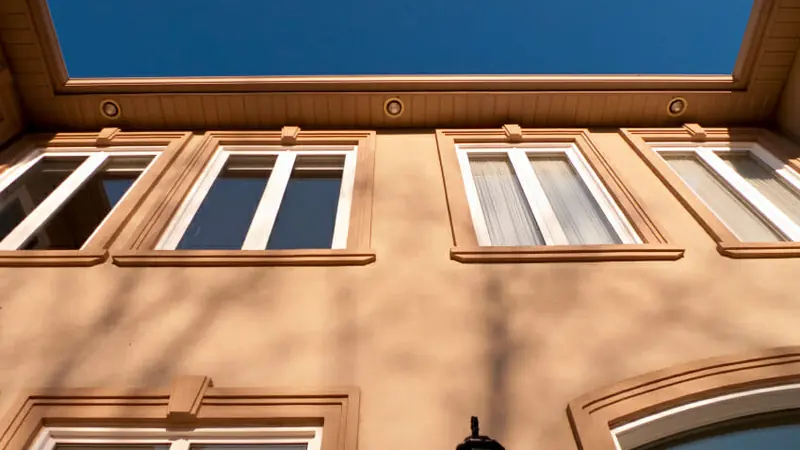
Because people see the road-facing elevation first, that is where banding, or raised trim that frames or divides the surface, along with reveals, window surrounds, and finished corner details, has the greatest visual effect. Reveals are recessed lines that divide a broad wall into smaller sections. On a long, low frontage, these projections and recesses cast shadows that give the wall definition, so we choose their depth with the sun and viewing angle in mind.
Stone Veneer
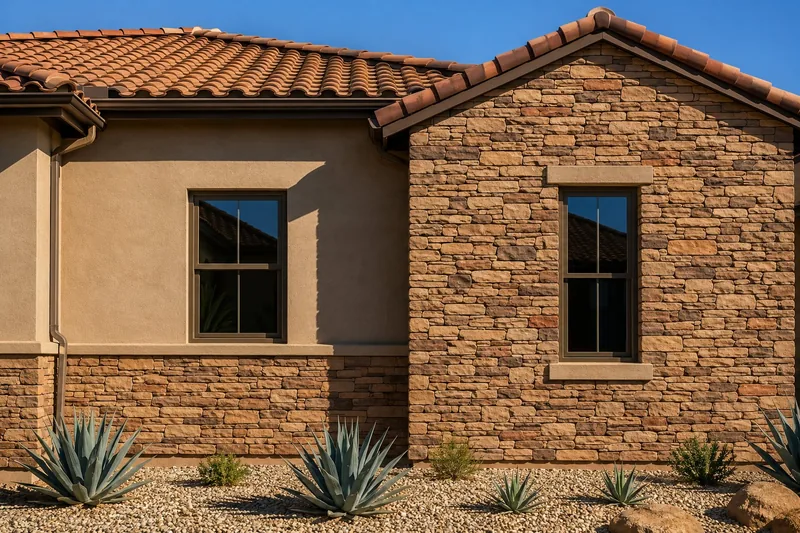
We install stone veneer, a thin facing of real or manufactured stone, around openings and along your building’s base course when the cobble in the nearby ground makes it a natural fit. On a framed wall, we place the same water-resistive barrier behind the veneer that runs behind the plaster. This protective layer directs incidental moisture away from the framing. We also form a planned transition between the stone and stucco instead of simply pressing the two finishes together.
What a Stucco Contractor Sees Along the Old Highway Line
Before an exterior stucco contractor prices work along this stretch of road, we inspect the conditions affecting your exterior. Not every building here sits directly on the frontage, and we make the same wall and site checks when yours is set farther back. Buildings beside one another may use completely different wall assemblies, while the terrace ground, a raised bench of older river sediment, is coarser and drier than the river below might suggest. Each condition changes how we diagnose stains, cracks, and damage.
What the Road Puts on a Wall, and What It Does Not
Your building’s four sides do not have the same wall exposure. The road-facing elevation, or exterior side, collects more dust and traffic film than the sheltered walls. Traffic film is the exhaust residue and road grime that passing vehicles carry onto the surface. It settles into the stucco texture, where ordinary rain may not remove it, and gradually makes the color look dull.
Traffic film does not damage stucco that is otherwise sound. If the front of your building looks gray or grimy but has no loose areas, cracks, or soft spots, it may only need washing. We make that distinction before you spend money on repairs because a dirty frontage and a failing one can look surprisingly similar from the road.
Several Ages of Building on One Frontage
Two nearby buildings along this line may have entirely different walls beneath their finishes. On sound concrete block, the plaster bonds directly to the masonry, leaving no hidden framed cavity behind it. This assembly has no metal lath and no water-resistive barrier, the protective layer that directs water away after it passes through the finish.
Framed construction places that barrier behind the stucco, where it can deteriorate even while the visible surface appears intact. A crack on a block wall may point to plaster losing its bond with the masonry, while a similar crack on a framed wall may indicate a problem in the concealed layers.
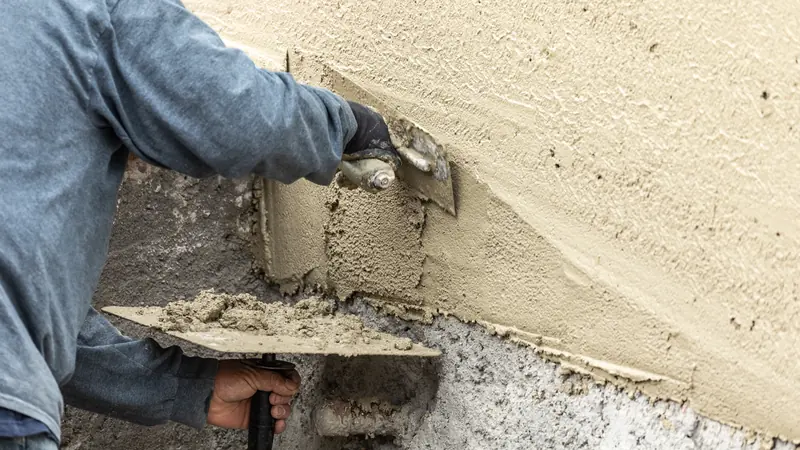
If the block surface is smooth, we first apply a dash coat, a rough cement layer that gives the plaster something to grip, or use a bonding compound. Painted block requires another check because any bonding agent is only as dependable as the paint beneath it. We can bond over paint that remains firmly attached, but loose paint must come off first.
Another option is self-furring metal lath, a reinforcing mesh that holds itself slightly away from the wall so plaster can key around it. You can notice some assembly clues yourself. Knock on the wall and listen for differences between solid and hollow-sounding areas, then look at a window opening to see how thick the wall appears.
Terrace Ground at the Bottom of the Wall
These buildings stand on the terrace above the Santa Clara River, where coarse soil drains instead of holding water around the base. As a result, the moisture affecting your wall usually arrives from above. Rain striking hard ground splashes back onto the bottom of the building, leaving a visible dirt or stain line across the frontage before problems appear higher on the wall.
Where the building uses framed construction, the weep screed needs proper space below it. Code sets the weep screed not less than 4 inches above earth or 2 inches above paved surfaces. We establish that clearance at the start of your job rather than discovering later that the wall never had it.
About Shivwits, Utah
We assess stucco walls in Shivwits within their local setting: west-central Washington County, beside the Santa Clara River and along the former route of U.S. Route 91. The community lies within the Shivwits Reservation at 3,202 feet, between the Beaver Dam Mountains to the southwest and the Red Mountains to the northeast.
Follow the river east and downstream from Shivwits, and you reach Santa Clara; upstream lies Gunlock, with Ivins and St. George also nearby. Farther downstream, land beside the river forms the Santa Clara River Reserve, which the Bureau of Land Management manages together with the cities of Santa Clara and Ivins; as a local stucco contractor, we work here on private property. If you call us, we will be looking at your house, outbuilding, or boundary wall along the old highway route.
Reaching the Shivwits Area From Santa Clara
Where buildings have road frontage on the old highway, the property shapes our day more than the drive does. We need to know how we will bring materials onto your lot, where we can safely set up, and what lies between the truck and the wall. Once our stucco experts have walked the property with you, we can plan site access around those conditions before work begins.
The Approach: Old Highway 91 West of Santa Clara
Our crews take the old highway west from Santa Clara, bringing the day’s materials and equipment with them. That makes the site walk especially important here, where properties do not share identical layouts. We load everything the job requires before leaving, including scaffold components, mixing water, plaster sand, and protective weather screening for the frontage.
We would rather spot that condition while standing at the building with you than after we have started applying a coat. We take our time and ask practical questions: What is behind this wall? How far does it run? What lies beneath the finish at the corner?
Where the Setup Stands When There Is No Sidewalk
With no curb, sidewalk, or gutter between these buildings and the road, we have to fit the entire work area onto your property. We keep materials and equipment out of the road while we work. The width of that ground determines how closely we can reach the wall. A scaffold needs level footing and enough clear space. On a narrow frontage, we often build it in shorter sections and relocate it twice instead of setting up the full length once.
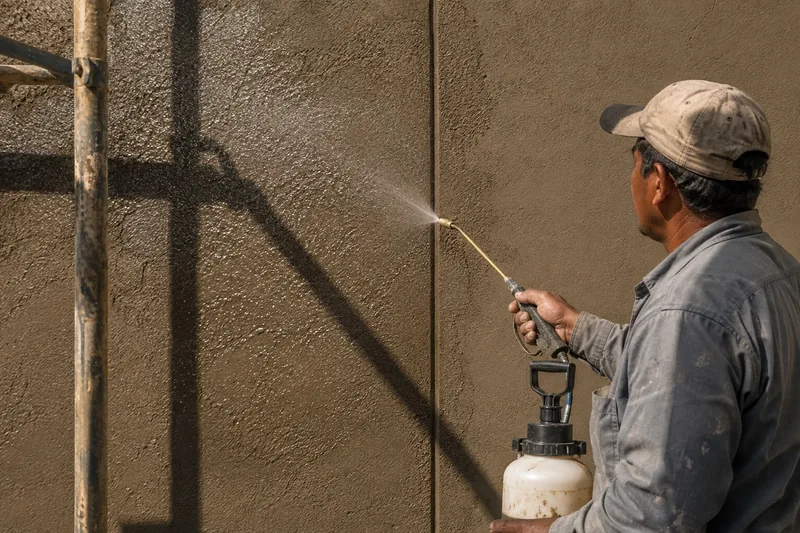
We screen the road-facing coat while it cures because windblown grit can become permanently embedded in green plaster, which is plaster that has been applied but has not yet hardened.
Crossing the Lot to the Wall
We need level ground for the mixer, but that space may not be beside the wall requiring work. During the site walk, our stucco applicators plan the barrow route, the path used to move material by wheelbarrow, and the hose run. Coarse ground and a gravel apron both affect how easily we can move material across your lot.
Access often comes down to one route in and one route out, so we agree on that path and continue using it throughout the job. We protect everything it crosses, including gravel, plantings, and the ground itself. After the work is finished, we remove the staging, clear the route, and leave the ground as we found it.
Tell us which building needs work and how you reach it, and we will walk the approach with you when we come to inspect the wall. Call (435) 236-2699, or send the details in writing through our quote form.
Who Approves Building Work in the Shivwits Area
Building work on the Shivwits Reservation is permitted by the Shivwits Band rather than by a city or by Washington County. The Band runs its own land-use review through a Land Use Commissioner, and its Land Use Ordinance (shivwits.org) governs construction on reservation property. That decides who grants building approval and whose job it is to confirm the permit, so this section covers both, along with what we hand over for the file.
Permits Come From the Shivwits Band, Not a City or the County
For every other place on our coverage list, an incorporated city or town runs its own building department, or Washington County handles property on unincorporated land. The Shivwits area is neither. Building work here falls under the Shivwits Band, whose Land Use Ordinance places permitting with a Land Use Commissioner and reaches property inside the reservation no matter who owns the parcel. That is a fact about the ground, not a complication in the stucco work. We still identify, measure, and scope your wall the same way we do anywhere else we work.
Confirming the Permit Is Our Job
The Band's ordinance puts the duty to see that a permit has been granted before construction on the builder and the contractor, not on you. So we make sure that permit is in place before work begins, and we handle that step for you. The Utah construction license is a separate matter: the state issues it through the Division of Professional Licensing, and it shows a trade qualification rather than permission from any local or tribal authority. It does not stand in for the building permit the Band requires. You can approve the estimate and the written scope while that permit is being arranged, so the paperwork does not hold up your decision.
What We Hand Over for the File
Whatever the Band's review asks to see, one document covers it. Your written scope of work names the wall system, the elevations and areas, your selected finish and texture, the accessories set at the wall base and around the openings, and where our scaffold and material staging will stand. It comes with dated photographs of the wall as we found it, and none of its contents depends on which parcel status your property has. If the Land Use Commissioner or a reviewer has questions about the scope, we answer them ourselves rather than asking you to relay technical detail.
Stucco Questions From Property Owners Near Shivwits
Who has to approve stucco work at an address in the Shivwits area?
The Shivwits Band does, through its Land Use Commissioner, and its Land Use Ordinance makes confirming that permit the contractor's job rather than yours. We handle it before work begins, and you can approve the written estimate first, so nothing waits on it.
The front of our building faces the old highway and always looks grimy. Will a new finish stay clean?
No. A cured cement finish will collect the same film, but that is a cleaning issue rather than stucco failure. You can remove most buildup with a low-pressure rinse, while a shallower texture gives grime fewer grooves in which to settle.
Can you refinish just the side that faces the road?
Yes, we can refinish only the road-facing side. Because the other three elevations have weathered, a fresh finish can look noticeably different beside them. We mount a sample panel on the wall for your daylight review. Recoating all four elevations can look more consistent.
Some of the buildings here are much older than others. Does the age change what goes on the wall?
No. What the wall is built from matters more than its age. An older masonry or block wall and a newer framed wall require different stucco systems. We identify the assembly before writing your estimate.
Where do you set up when the building sits right on the old highway?
We set up on your own ground. The written estimate identifies the staging area and any roadside protection as line items, so you approve both before the workday rather than having those details decided on arrival.
Do you take work west of Santa Clara?
Yes. St. George Elite Stucco works in the Shivwits area, which lies west of Santa Clara, as a residential stucco contractor. You can request any of our twelve stucco services here, including interior plaster, with a free written estimate.
Get a Free Stucco Estimate Near Shivwits
Tell us the address and which building needs work, and a stucco company representative from St. George Elite Stucco will arrange a property visit. Our free written estimate identifies the type of wall we find and the finish we would apply, so you can see what the proposed work covers. You receive the estimate in writing, and the visit is free. Call (435) 236-2699 or request a free estimate through our quote form.